
Introduction
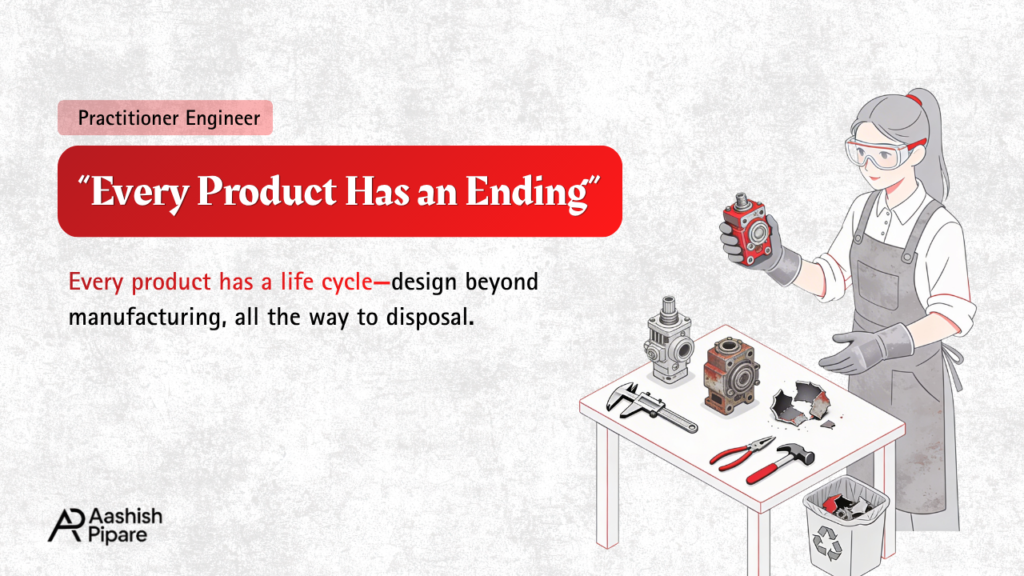
Every engineered system exists beyond the moment it is built.
Its story begins long before manufacturing—and continues long after it is used.
Thinking Beyond the Build Phase
A practitioner engineer does not see a product as a static object. It is a system that moves through stages—each with its own constraints, costs, and consequences.
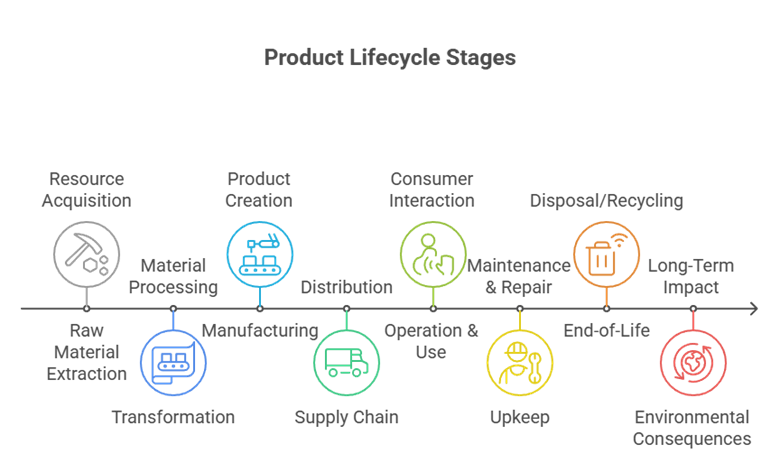
The life cycle typically begins with raw material extraction, followed by processing, manufacturing, distribution, operation, maintenance, and eventually disposal or recycling. Each stage introduces decisions that shape the system’s overall impact.
When engineers focus only on manufacturing, they optimize for a single moment in time. But real systems are judged across their entire lifespan. A design that is easy to build but difficult to maintain or dispose of is incomplete.
The question is not just “Can we build this?”
It is “What happens to this system over time?”
Why Life Cycle Thinking Matters
Every stage of the life cycle carries hidden costs. These may not appear during design, but they emerge in operation and end-of-life handling.
For example, selecting a material that is cheap and strong may reduce manufacturing cost, but it could:
- increase maintenance frequency
- create safety risks over time
- make recycling difficult
Similarly, designing for performance alone may ignore:
- energy consumption during operation
- wear and tear under real conditions
- ease of repair or replacement
A practitioner engineer understands that the true cost of a system is distributed across its life cycle, not concentrated in production.
Hidden Consequences Across Stages
Life cycle consequences are often delayed, which makes them easy to overlook.
During raw material extraction, the impact may be environmental or supply-related. During manufacturing, it may be cost and scalability. During operation, it becomes performance, reliability, and energy use. At end-of-life, it turns into disposal challenges or environmental burden.
These stages are interconnected. A decision made early—such as choosing a composite material—can make disassembly and recycling extremely difficult later.
The system does not forget earlier decisions. It carries them forward.
Engineering for Use, Not Just Creation
A system spends most of its life in operation, not in manufacturing.
This means the design should prioritize:
- reliability under real conditions
- ease of maintenance and repair
- adaptability to changing requirements
For example, a machine designed without considering maintenance access may require full disassembly for minor repairs. This increases downtime, cost, and operational risk.
A practitioner engineer asks: “How will this behave after thousands of hours of use?”
Because real-world performance defines success—not initial functionality.
Designing for End-of-Life
End-of-life is often treated as an afterthought, but it is a critical phase of the life cycle.
Products that cannot be easily disassembled or recycled create long-term environmental and logistical problems. Hazardous materials, mixed components, and irreversible assemblies make disposal complex and costly.
Designing for end-of-life includes:
- selecting recyclable or reusable materials
- minimizing material diversity where possible
- enabling disassembly without destruction
The goal is not just to build systems that work—but systems that can exit responsibly.
Visual Representation
Practical Table
| Life Cycle Stage Why It Matters Example Raw Material Selection Determines availability, cost, and environmental impact Rare materials causing supply constraints Manufacturing Affects scalability and production efficiency Complex assembly increasing production time Operation Defines real performance and energy consumption High power usage during continuous operation Maintenance Impacts reliability and lifecycle cost Difficult access leading to high repair time End-of-Life Determines disposal or recycling feasibility Non-recyclable materials increasing environmental burden |
Key Takeaways
- A product’s life extends far beyond its manufacturing stage
- Decisions made early affect every later phase of the system
- Operational performance and maintenance define real-world success
- Ignoring end-of-life leads to long-term consequences
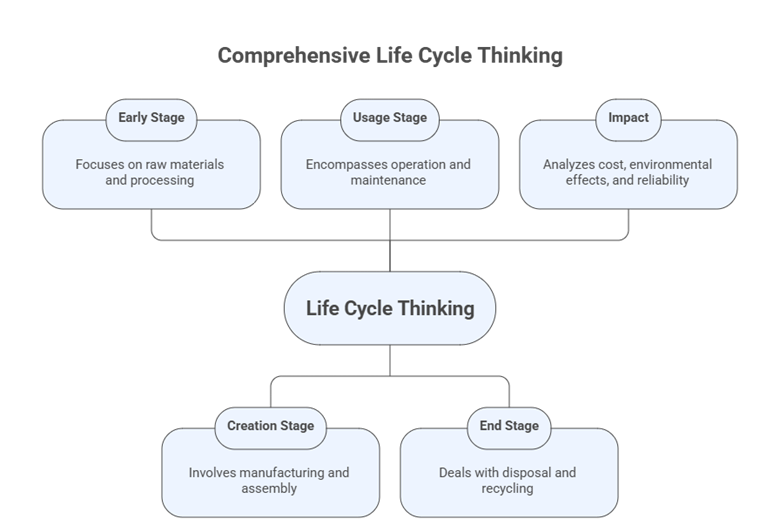
- Life cycle thinking transforms design from short-term to system-level thinking
Conclusion
A practitioner engineer does not measure success at the moment a system is completed. They measure it across the system’s entire existence.
A design that only considers manufacturing is incomplete because it ignores how the system will behave, degrade, and eventually be retired. Every decision carries forward, shaping not just performance, but responsibility.
Engineering is not about creating isolated objects—it is about shaping systems that live in the real world over time.
To think in life cycles is to move from building products to understanding consequences.