
What software tools are essential?
From my experience, the software tools that matter most in Automobile Engineering are the ones that help an engineer design, simulate, and analyze vehicle systems before a physical prototype is ever built. One of the most essential tools is AutoCAD because it helps in preparing technical drawings and component layouts. For three-dimensional modeling, software such as CATIA and SolidWorks is widely used because modern vehicle components must be designed with high precision. I have also seen MATLAB used extensively for simulation, control systems, and performance analysis, especially in engine modeling and vehicle dynamics. In recent years, Python has become useful for data analysis, automation, and predictive maintenance studies. Simulation tools such as ANSYS are also valuable for structural and thermal analysis. From what I have observed, engineers who understand both design software and analytical tools usually adapt faster in modern automotive industries.
What hardware or lab exposure is required?
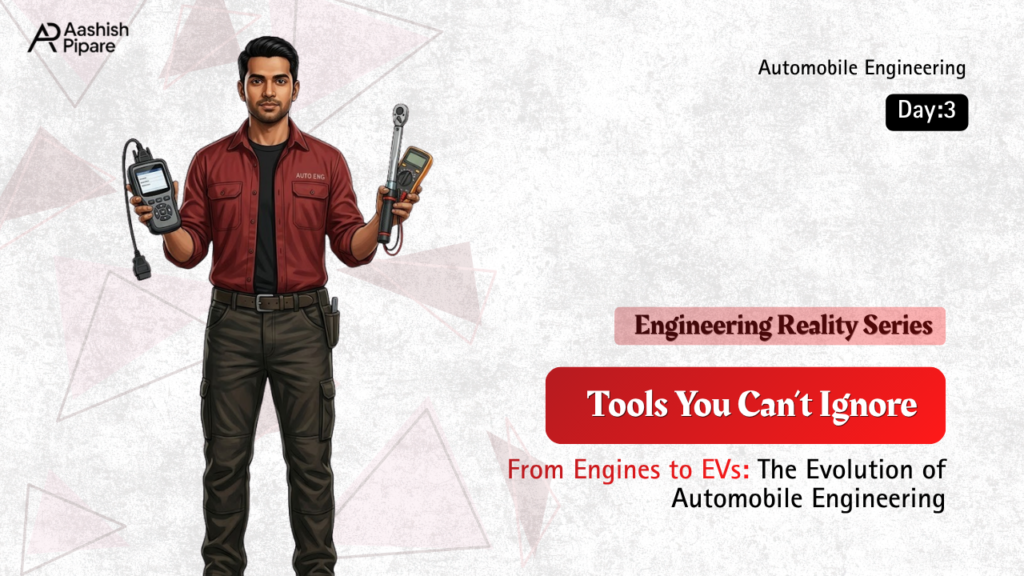
From what I have seen, practical hardware and laboratory exposure is extremely important in Automobile Engineering because vehicles cannot be fully understood through theory alone. Students benefit greatly from working with engine models, transmission assemblies, braking systems, suspension setups, and steering mechanisms because seeing internal systems physically makes technical concepts easier to understand. I have noticed that exposure to engine testing laboratories, chassis dynamometers, emission testing equipment, and vibration analysis instruments can give students a much stronger industrial perspective. Workshops that involve dismantling and assembling engines are particularly useful because they help students understand how each component functions inside a real vehicle. Exposure to electrical diagnostics tools and onboard vehicle scanning systems is also becoming increasingly important as modern vehicles become more electronic. In my experience, students who spend time in laboratories and workshops often develop confidence that purely classroom-based learning cannot provide.
Which programming languages (if any) are needed?
From my experience, Automobile Engineering does not require programming as deeply as software engineering, but programming skills are becoming increasingly valuable as vehicles become smarter. Python is one of the most useful languages because it can be used for data analysis, automation, and processing vehicle sensor information. I have also seen engineers use MATLAB scripting for simulation and control system development in advanced automotive applications. For embedded systems and electronic control units, knowledge of C or C++ can be very helpful because many vehicle control systems are programmed using these languages. In electric and autonomous vehicles, programming is becoming even more relevant because software now controls many vehicle functions. From what I have observed, a fresher may not need to become a professional programmer, but having basic coding knowledge can make an engineer more adaptable in the future automotive industry.

What are the must-have technical skills for freshers?
From my experience, freshers entering Automobile Engineering need a mix of technical understanding and practical awareness to stand out. One of the most important skills is the ability to understand vehicle systems such as engines, transmissions, suspension, and braking because employers expect basic technical familiarity from the beginning. Freshers should also know how to read technical drawings and understand CAD models because modern design work depends heavily on digital design tools. I have found that diagnostic thinking is very valuable because automotive work often involves identifying performance issues and solving them systematically. Knowledge of manufacturing processes, quality control methods, and safety standards can also make a fresher more employable. Communication skills are equally important because engineers often need to explain technical problems clearly to teams and supervisors. In my experience, the strongest freshers are usually the ones who combine academic knowledge with curiosity about how vehicles actually perform in real conditions.
What certifications add value in this domain?
From what I have observed, certifications can strengthen an Automobile Engineering profile because they show practical commitment beyond a university degree. Certification in CAD tools such as CATIA or SolidWorks can be valuable because many employers look for software proficiency. I have also seen certifications in vehicle diagnostics, electric vehicle technology, and hybrid systems becoming more respected as the industry shifts toward cleaner mobility. Training in quality systems such as ISO standards can also add value for manufacturing roles. Some students benefit from certification in automotive embedded systems or simulation software if they want to move into advanced design work. In my experience, certifications alone do not guarantee success, but they can show employers that a student has taken extra initiative to build industry-relevant skills before entering the profession.

Conclusion:
Automobile Engineering today requires a blend of design software (AutoCAD, CATIA, SolidWorks), simulation tools (MATLAB, ANSYS), basic programming, and strong hands-on lab exposure, making technical + practical skills equally important.
CTA:
Focus on learning one design tool, one simulation tool, and basic coding while gaining workshop experience—this combination will make you industry-ready faster.