

Q1. What are the core job roles in this branch?
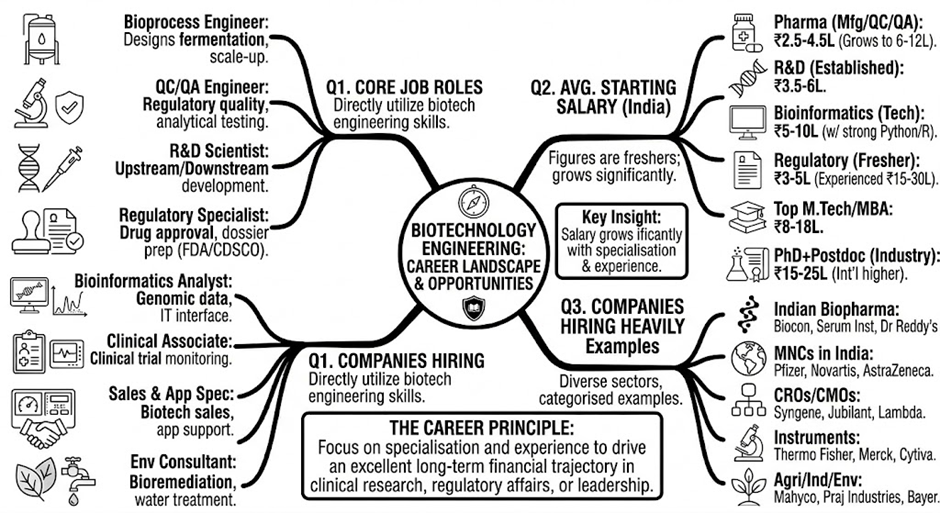
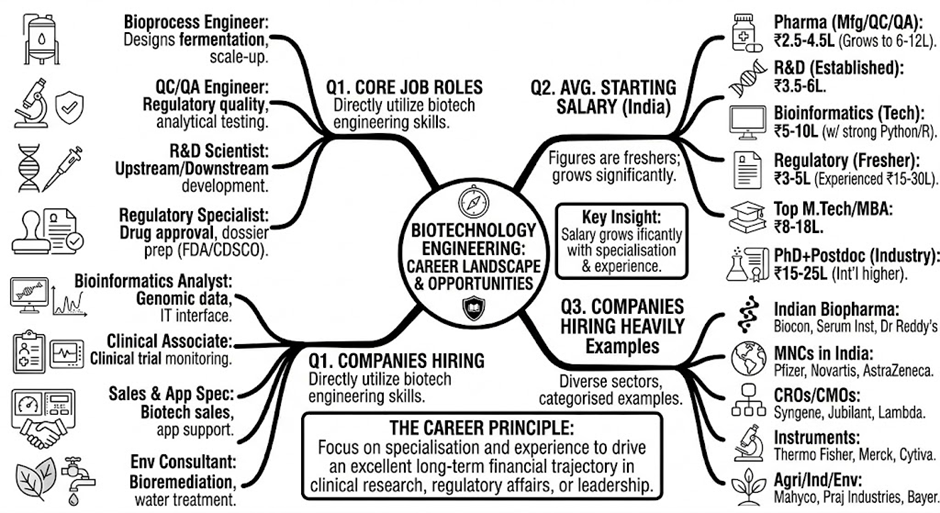
Bioprocess Engineer: Designs and optimizes fermentation and cell culture processes for drug manufacturing. Works in bioreactor operation, process development, and scale-up. This is the most classic Biotechnology Engineering role.
Quality Control (QC) Analyst / Quality Assurance (QA) Engineer: Ensures that biological products meet regulatory and quality standards. Involves analytical testing, documentation, audit preparation. High demand in pharmaceutical companies.
Research & Development Scientist: Works in upstream (strain development, genetic engineering) or downstream (purification development) R&D. Requires strong lab skills and experimental thinking.
Regulatory Affairs Specialist: Prepares and submits dossiers to regulatory agencies (CDSCO in India, FDA in the USA, EMA in Europe) for drug approval. Highly specialised and well-paid.
Bioinformatics Analyst: Analyses genomic, transcriptomic, and proteomic data. Works at the interface of IT and biology. High growth role in the current genomic medicine era.
Clinical Research Associate (CRA): Monitors clinical trials for pharmaceutical companies. Involves travel, patient data management, and regulatory compliance.
Sales & Application Specialist (Biotech Companies): Companies like Thermo Fisher, Merck, Cytiva hire biotech engineers to sell and support laboratory instruments and reagents. Excellent pay, client interaction, and continuous learning.
Environmental Biotech Consultant: Works on bioremediation projects, biogas plant design, and wastewater treatment using biological systems. Growing field given India’s environmental commitments.
Q2. What is the average starting salary in India?
I will give you honest figures based on my knowledge of the Indian biotech industry:
- Pharmaceutical Manufacturing / QC / QA: ₹2.5 – ₹4.5 LPA (freshers). After 3–5 years of experience: ₹6 – ₹12 LPA.
- R&D at Established Biotech Companies (Biocon, Dr. Reddy’s): ₹3.5 – ₹6 LPA (freshers with strong project experience).
- Bioinformatics / Computational Biology (tech companies): ₹5 – ₹10 LPA (if you have strong Python/R skills + biological knowledge).
- Regulatory Affairs: ₹3 – ₹5 LPA (freshers). Senior regulatory affairs managers: ₹15 – ₹30 LPA with experience.
- After M.Tech or MBA (top institutes): ₹8 – ₹18 LPA starting salary.
- After PhD + Postdoc (research track): Can reach ₹15 – ₹25 LPA in Indian industry; international research positions offer significantly more.
Important caveat: Salaries in biotechnology are not as immediately high as IT. However, they grow significantly with specialization and experience. The long-term financial trajectory is excellent, particularly for those who enter regulatory affairs, clinical research, or bioprocess leadership.
Q3. Which companies hire heavily in this field?
Indian Biopharmaceuticals: Biocon (Bangalore), Serum Institute of India (Pune), Bharat Biotech (Hyderabad), Dr. Reddy’s Laboratories, Lupin Biologics, Zydus Biologics, Panacea Biotec.
Diagnostics & Medical Devices: Mylab Discovery, Tulip Diagnostics, Trivitron Healthcare, Abbott India.
MNCs with Indian Operations: Pfizer India, Novartis, Roche India, Sanofi India, AstraZeneca India, Merck KGaA.
Agricultural Biotechnology: Mahyco (Maharashtra Hybrid Seeds Company), UPL Biopesticides, Bayer Crop Science, Syngenta India.
CROs and CMOs: Syngene International, Jubilant Biosys, Lambda Therapeutic Research, Divi’s Laboratories.
Biotech Instruments & Reagents (Sales/Application roles): Thermo Fisher Scientific, Merck Life Sciences, Cytiva (GE Healthcare Life Sciences), Bio-Rad, Eppendorf India.
Environmental & Industrial Biotech: Praj Industries (Pune) — a world leader in bioethanol technology; EID Parry (biotech division); Fermentation & industrial enzyme companies.
Q4. What is the future demand (2025–2040)?
This is perhaps the most exciting question I am asked, and I answer it with great confidence: Biotechnology Engineering has the highest long-term growth potential of any engineering discipline in the 21st century.
- Personalised Medicine & Genomics: The sequencing of the human genome has opened a new era. Every individual will eventually have their genome sequenced and receive tailor-made therapies. This requires armies of biotech engineers to develop, manufacture, and validate these therapies.
- Cell & Gene Therapy: CAR-T cell therapy, gene editing therapies — this is a multi-trillion dollar market by 2035. India is building its own gene therapy infrastructure (BioE3 policy, Genome India project).
- Synthetic Biology: Programming cells like computers — producing fuels, materials, and drugs. Companies like Ginkgo Bioworks are leading this revolution. Indian synthetic biology startups are just beginning.
- Climate & Sustainability: Biofuels, biodegradable materials, carbon capture using algae — biotechnology is central to India’s Net Zero 2070 commitment.
- Pandemic Preparedness: COVID-19 demonstrated that countries need strong domestic biomanufacturing capacity. India’s PLI (Production-Linked Incentive) scheme for pharmaceuticals and biotech is creating thousands of new jobs.
My 50-year perspective: I entered biotechnology when restriction enzymes had just been discovered. Today we edit genomes with surgical precision. The next 15 years will bring changes that dwarf everything we have seen. You are entering this field at the most exciting moment in its history.
Q5. Can this branch lead to entrepreneurship or startups?
Absolutely — and increasingly so. The barriers to starting a biotech company have fallen dramatically. A student with a CRISPR idea, bioinformatics insight, or a new diagnostic approach can raise seed funding more easily today than ever before. Let me give you real examples:
- Immuneel Therapeutics (Bangalore): Founded by a team with biotech engineering backgrounds to develop CAR-T cell therapy. Backed by major VCs.
- Vyome Therapeutics (Delhi): Skin microbiome startup — uses biotechnology to develop novel dermatological treatments.
- String Bio (Bangalore): Uses methane gas as a raw material for fermentation to produce animal feed — a brilliant industrial biotech startup.
- Pandorum Technologies (Bangalore): Develops lab-grown organs using bioprinting and stem cell engineering.
The key to biotech entrepreneurship: combine deep technical knowledge with understanding of regulatory pathways and business models. I recommend pursuing an MBA or entrepreneurship program after your B.Tech if you aspire to founding a company.
Conclusion:
Biotechnology Engineering offers career opportunities in pharmaceuticals, research labs, food industry, and environmental sectors. The demand for skilled professionals is growing globally.
CTA:
Explore your interests and choose the right career path early. Share this blog and continue to Day 6 to understand the role of AI in biotechnology.