What are the core job roles in this branch?
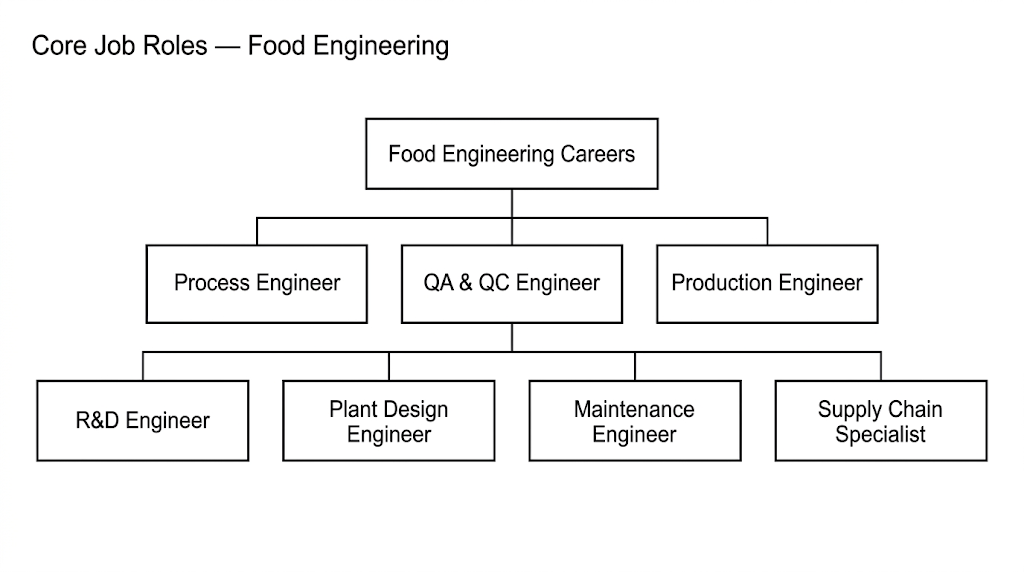
From my experience, Food Engineering offers a wider range of career roles than many students initially expect because the field supports both technical and management positions across the food industry. One of the most common roles is process engineer, where the engineer monitors production systems, improves efficiency, and ensures that food is processed safely. Another major role is quality assurance or quality control engineer, where professionals monitor food standards, hygiene, and regulatory compliance. Some graduates work as production engineers, managing daily plant operations and coordinating equipment performance. I have also seen many food engineers move into research and development roles, where they help create new food products, improve packaging, or extend shelf life. In larger industries, roles such as plant design engineer, maintenance engineer, and supply chain process specialist also become available. In my experience, the branch gives flexibility because a student can work in manufacturing, research, safety, packaging, or even technical sales depending on their interests and strengths.
What is the average starting salary in India?
From what I have observed in India, the starting salary for Food Engineering graduates can vary significantly depending on the company, location, and the student’s practical exposure. For fresh graduates entering small or mid-sized food processing companies, the starting salary often ranges between ₹2.5 lakh to ₹4.5 lakh per year, while graduates from stronger institutions or those with internship experience may receive between ₹4 lakh to ₹7 lakh per year in larger organizations. Some multinational companies may offer slightly higher packages for roles in quality systems, production management, or research. Recent campus and employer listings in India commonly show graduate trainee and food technologist roles in roughly this range, though premium roles can exceed it. From my experience, salary growth in this field often depends more on technical competence and industrial problem-solving ability than on the degree alone. Engineers who understand both production and food safety systems usually progress faster and can see strong salary growth within a few years.
Which companies hire heavily in this field?
From my experience, several major food and beverage companies regularly hire Food Engineering graduates because they need professionals who understand processing technology and quality systems. Large multinational companies such as Nestlé, PepsiCo, Coca-Cola, and Unilever often recruit for production and quality roles. In India, companies such as Amul, Britannia Industries, ITC Limited, and Parle Products also employ food engineers in manufacturing and product development. I have also noticed growing recruitment in frozen food, nutraceutical, and food packaging companies. From what I have seen, employers usually prefer candidates who can combine technical knowledge with awareness of hygiene, process control, and efficiency improvement.
What is the future demand (2025–2040)?
From my perspective, the long-term demand for Food Engineering between 2025 and 2040 appears very promising because the food industry is becoming more technology-driven every year. Global demand for safe, convenient, sustainable, and nutritionally advanced food continues to rise as populations grow and consumer expectations change. Industry forecasts consistently show growth in food processing automation, sustainable packaging, and advanced preservation technologies over the next decade. I believe food engineers will become increasingly important because industries are focusing on reducing food waste, improving energy efficiency, and developing healthier products. Areas such as plant-based foods, smart packaging, digital monitoring, and cold-chain expansion are creating new opportunities that did not exist a decade ago. In my experience, students who build strong technical skills now may find that this branch becomes even more valuable in the future as food systems become more sophisticated.
Can this branch lead to entrepreneurship or startups?
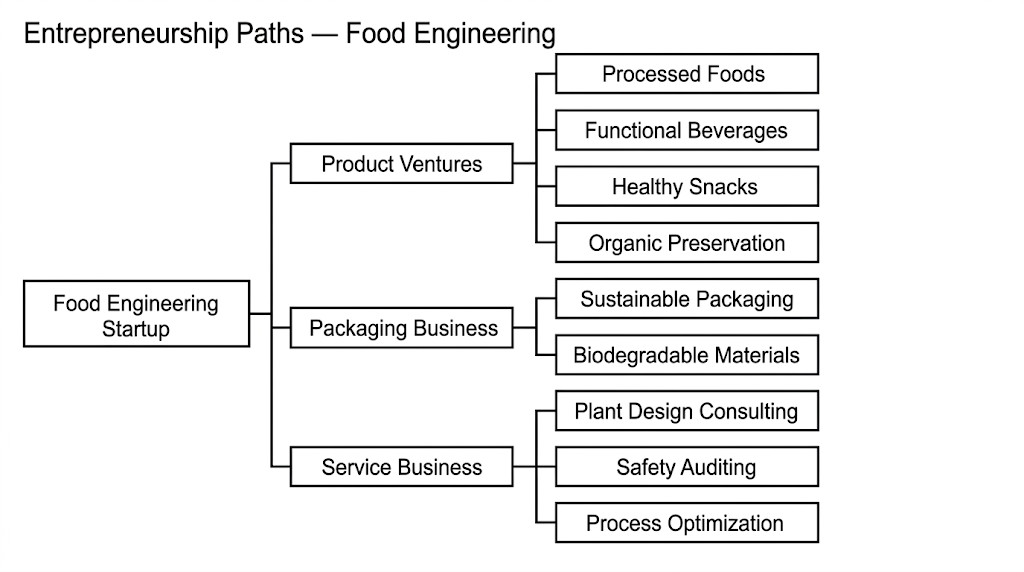
From my experience, Food Engineering can absolutely lead to entrepreneurship, and in some ways it is one of the most practical engineering branches for building a business. A food engineer can start a venture in processed foods, functional beverages, dairy products, healthy snacks, organic preservation systems, or sustainable packaging solutions. I have seen that engineers with technical knowledge often have an advantage because they understand both product development and manufacturing challenges, which reduces dependence on outside technical consultants. Small-scale startups can begin with value-added agricultural products such as fruit powders, herbal drinks, ready-to-cook foods, or regional specialty foods with improved shelf life. There are also opportunities in consulting for food plant design, food safety auditing, and process optimization. From my perspective, the combination of technical expertise and growing consumer demand makes Food Engineering a branch where a professional can move beyond employment and create meaningful business opportunities with social and commercial impact.