
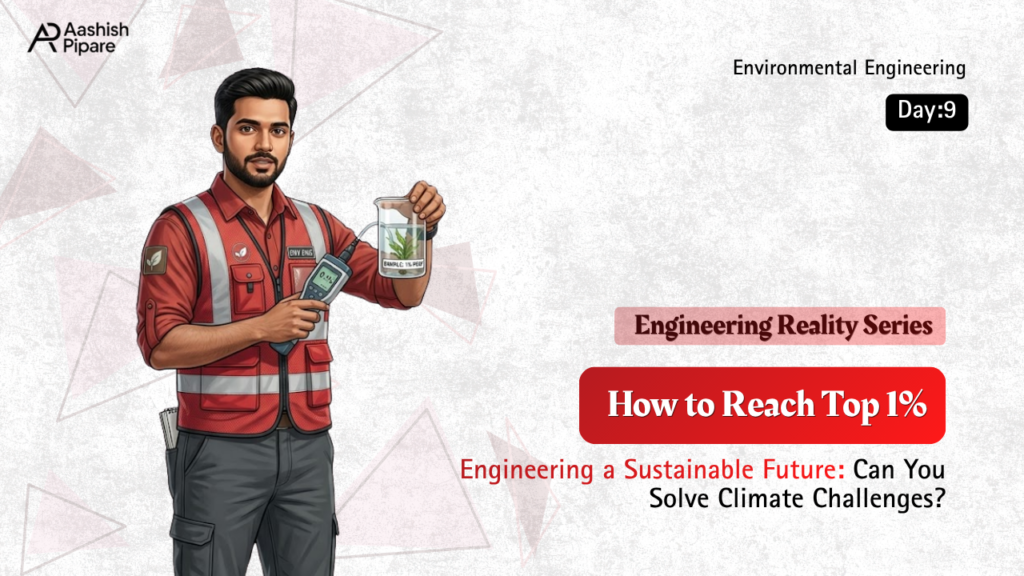
🔹 What are the specializations available?
Environmental engineering offers a wide range of specializations that allow students to focus on specific areas based on their interests and career goals. One of the most important specializations is Water Resources Engineering, which deals with water supply systems, wastewater treatment, and conservation of water resources. Engineers in this field design pipelines, reservoirs, and treatment plants to ensure safe and sufficient water supply. Another major specialization is Air Pollution Control, which focuses on reducing harmful emissions from industries and vehicles using technologies like scrubbers and filters.
Solid Waste Management is another critical area, where engineers develop systems for collecting, recycling, and disposing of waste safely. With increasing urbanization, this specialization is becoming highly important. Environmental Management focuses on planning, policy-making, and ensuring that industries comply with environmental laws. For example, environmental managers conduct Environmental Impact Assessments (EIA) before starting large projects.
Emerging specializations include Climate Change and Sustainability, which focus on reducing carbon emissions and developing eco-friendly solutions. Renewable Energy Systems is another growing field where engineers work on solar, wind, and bioenergy technologies. Additionally, Environmental Biotechnology involves using microorganisms for waste treatment and pollution control.
Each specialization offers unique career opportunities in industries, research, and government sectors. Choosing the right specialization depends on your interest, strengths, and long-term goals. Advanced knowledge in a specific field increases expertise and job prospects. Specialization also helps engineers become industry experts and leaders in their domain.
🔹 Should I pursue higher studies?
Pursuing higher studies in environmental engineering can significantly enhance career opportunities and professional growth. A postgraduate degree such as M.Tech or MS provides deeper knowledge and allows students to specialize in areas like water treatment, climate change, or pollution control. For example, a student specializing in wastewater treatment can work on designing advanced sewage systems for large cities.
A PhD is ideal for those interested in research, innovation, or academic careers. It allows engineers to work on solving complex environmental problems and contribute to scientific advancements. On the other hand, an MBA is useful for engineers who want to move into management, consulting, or leadership roles in environmental organizations. For instance, an engineer with an MBA can manage large sustainability projects or work in corporate environmental strategy.
Studying abroad is another option that provides global exposure, access to advanced technology, and better research facilities. It also opens doors to international job opportunities. However, pursuing higher studies depends on individual career goals, financial situation, and interest in specialization.
Even if one does not pursue formal higher education, continuous learning through certifications and online courses is essential. Environmental engineering is a rapidly evolving field, and staying updated with new technologies and regulations is crucial. Overall, higher studies can accelerate career growth, increase earning potential, and provide advanced expertise.
🔹 What are the research opportunities?
Research in environmental engineering is vast and plays a critical role in solving global environmental challenges. One of the most important research areas is climate change, where engineers study its impact and develop strategies to reduce greenhouse gas emissions. Another key area is water purification, where researchers work on developing low-cost and efficient technologies to provide clean drinking water, especially in rural and developing regions.
Air pollution control is also a major research field, focusing on reducing harmful emissions and improving air quality. For example, researchers develop advanced filtration systems and cleaner fuel technologies. Renewable energy is another important area, where engineers work on improving efficiency of solar panels, wind turbines, and bioenergy systems.
Sustainable materials and waste management are also gaining attention, where research focuses on recycling, reuse, and reducing environmental impact. Environmental biotechnology is used to develop biological methods for waste treatment, such as using bacteria to clean polluted water.
Universities, government research institutes, and private industries offer numerous research opportunities. For example, organizations work on projects related to smart cities, pollution monitoring, and sustainable infrastructure. Research requires strong analytical thinking, creativity, and problem-solving skills.
Students interested in innovation and scientific discovery should consider research careers. It not only provides intellectual satisfaction but also contributes to solving real-world environmental problems. Research in this field has a direct impact on society and the planet.
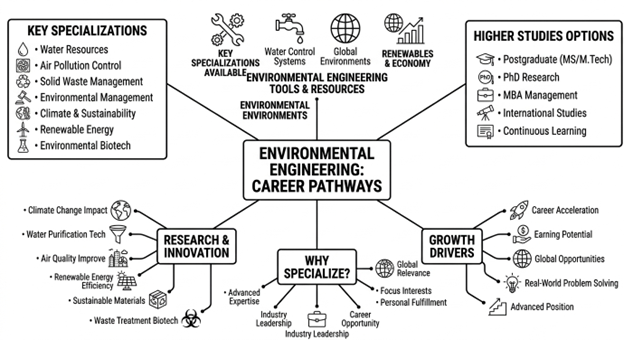
🔹 What global opportunities exist in this field?
Environmental engineering offers excellent global career opportunities because environmental challenges are universal. Countries like the United States, Canada, Germany, and Australia are investing heavily in sustainability, renewable energy, and environmental protection. These countries require skilled engineers to manage water resources, control pollution, and develop sustainable technologies.
Engineers can work in areas such as water management, climate change research, environmental consulting, and renewable energy projects. For example, developed countries hire experts to design advanced wastewater treatment plants and reduce industrial emissions. International organizations like the United Nations Environment Programme also offer opportunities for environmental professionals to work on global sustainability initiatives.
Higher studies abroad can act as a gateway to international careers by providing exposure to advanced technologies and global standards. Knowledge of international environmental regulations and practices is important for working globally. Engineers may also work on international projects related to climate change, disaster management, and sustainable development.
Global exposure enhances technical skills, cultural understanding, and career growth. Environmental engineering is not limited to one country, making it a highly flexible and globally relevant profession. With the right skills and qualifications, engineers can build successful careers anywhere in the world.
🔹 How can I become a top 1% expert?
Becoming a top 1% expert in environmental engineering requires dedication, continuous learning, and a strategic approach to career development. The first step is building strong fundamentals in core subjects like environmental chemistry, fluid mechanics, and pollution control. A deep understanding of basics helps in solving complex problems effectively.
Gaining practical experience through internships, projects, and fieldwork is equally important. For example, working on real-world projects like water treatment or waste management builds strong technical skills. Learning advanced tools such as GIS, data analysis software, and simulation tools gives a competitive advantage.
Specializing in a high-demand area like sustainability, climate change, or renewable energy can help you stand out. Publishing research papers, attending conferences, and contributing to innovative projects build professional credibility. Networking with industry experts and joining professional organizations also helps in career growth.
Staying updated with the latest industry trends, technologies, and regulations is essential. Continuous learning through courses, certifications, and workshops keeps your skills relevant. Strong communication and leadership skills are important for explaining solutions and managing projects.
Consistency, discipline, and passion for environmental protection are key factors. Experts are those who not only understand problems but also create impactful solutions. With hard work, innovation, and commitment, it is possible to reach the top level in this field.
Conclusion
Environmental engineering offers a powerful long-term growth path driven by specialization, continuous learning, and global relevance. With diverse domains like water resources, air pollution control, sustainability, renewable energy, and environmental biotechnology, students can shape their careers based on both interest and industry demand. Specialization is what transforms a general engineer into a highly valued expert.
Higher studies—whether M.Tech, MS, PhD, or even an MBA—can significantly accelerate career growth by providing deeper knowledge, research exposure, and leadership opportunities. At the same time, research and innovation remain at the heart of this field, solving global challenges like climate change, water scarcity, and pollution through advanced technologies and sustainable solutions.
What makes this branch truly powerful is its global scope. Environmental problems exist everywhere, which means opportunities exist worldwide—from developed nations to international organizations like the United Nations Environment Programme. Engineers with strong skills, global awareness, and adaptability can build careers across borders and industries.
Becoming a top 1% expert is not about shortcuts—it requires consistent effort, strong fundamentals, real-world experience, specialization, and continuous upskilling. Those who combine technical expertise with innovation, communication, and leadership will stand out and lead the future of sustainability.
In summary, environmental engineering is not just a degree—it’s a long-term growth journey with limitless opportunities for those who are committed to learning and making an impact.
Don’t just study environmental engineering—master it. Choose your specialization, build real skills, and start your journey toward becoming a top expert today. 🌍✨
Call to Action
Start building your advanced growth path step by step
- Choose one specialization that matches your interest and career goals
- Decide early if you want higher studies, research, or industry exposure
- Work on real-world projects and internships to gain practical skills
- Learn advanced tools like GIS, data analysis, or environmental modeling
- Stay updated with global trends and opportunities
Your future depends on the direction you choose today. Take clear decisions, stay consistent, and keep improving every day.