
What are the current industry trends?
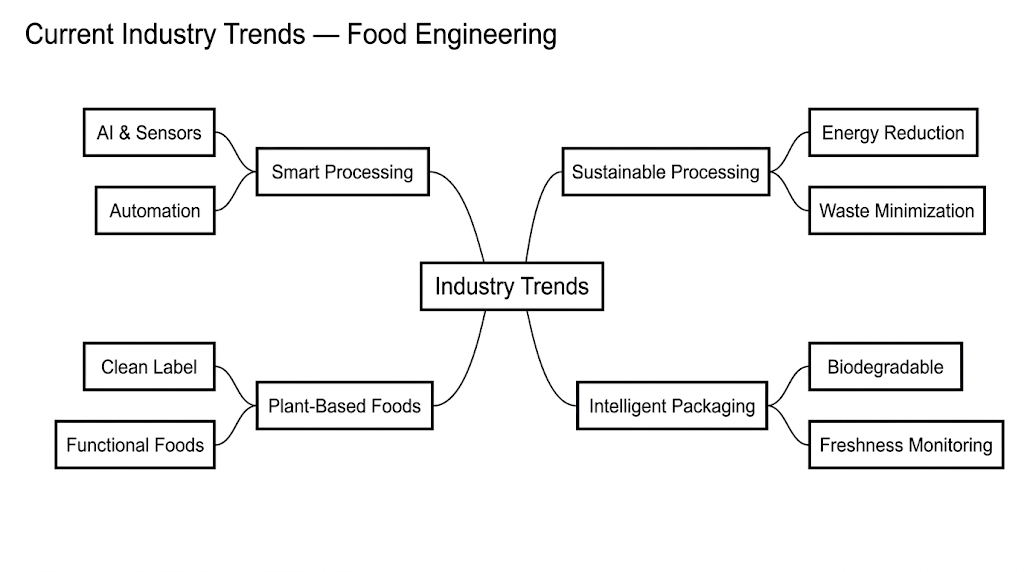
From my experience, the Food Engineering industry is changing rapidly because consumer expectations and technology are evolving at the same time. One of the strongest trends I have noticed is the movement toward smart food processing, where sensors, automation, and artificial intelligence are being used to monitor quality and improve production efficiency in real time. Another major trend is the growth of sustainable processing, where companies are trying to reduce water usage, lower energy consumption, and minimize food waste during manufacturing. I have also seen increasing attention toward plant-based foods, functional foods, and clean-label products because consumers now want healthier options with fewer artificial additives. Packaging is also changing, with industries investing in biodegradable and intelligent packaging that can monitor freshness. From what I have observed, modern Food Engineering is no longer only about preserving food; it is increasingly about creating safer, smarter, and more environmentally responsible food systems.
Which sectors are growing or declining?
From what I have seen, several sectors within Food Engineering are growing strongly while others are becoming less dominant. The sectors showing the most growth include ready-to-eat foods, plant-based protein products, nutraceuticals, cold chain logistics, and food automation systems because changing lifestyles are increasing demand for convenience and health-focused products. The dairy sector continues to grow in many regions, especially with value-added products such as probiotic drinks and specialty cheeses. I have also noticed that food packaging and preservation technologies are expanding because online food delivery and export markets require longer shelf life. At the same time, some traditional low-technology processing units that depend heavily on manual labor are slowly declining because automation is becoming more cost-effective. In my experience, the industries that adapt to health awareness and sustainability are growing fastest, while sectors that resist modernization may struggle in the coming years.
What are the major challenges faced in this field?
From my perspective, Food Engineering faces several important challenges that make the field both demanding and meaningful. One of the biggest challenges is maintaining food safety while increasing production speed because faster manufacturing can increase contamination risks if systems are not carefully designed. Another challenge is reducing food waste, since a significant amount of food is still lost during processing, storage, and transportation. I have also seen that rising energy costs create pressure because refrigeration, drying, and sterilization systems consume large amounts of power. Climate change is becoming another concern because changing agricultural quality affects raw materials before they even enter the factory. In addition, consumer demand for natural foods without preservatives creates technical difficulties because shelf life must still be maintained. From what I have observed, food engineers today must solve not only technical problems but also environmental and economic ones at the same time.
Are there government initiatives supporting this branch?
From what I have seen, governments in many countries, including India, are increasingly supporting Food Engineering because food processing is considered an important economic sector. In India, programs under the Ministry of Food Processing Industries have encouraged modernization of food processing units, cold chain development, and startup support for value-added food businesses. Schemes under the Pradhan Mantri Kisan Sampada Yojana have specifically aimed to improve food preservation infrastructure and reduce post-harvest losses. I have also noticed support for food parks, incubation centers, and research grants for innovation in packaging and sustainable processing. Universities and agricultural institutions are receiving more encouragement to collaborate with industry. In my experience, government involvement is becoming stronger because policymakers now recognize that food processing can improve farmer income, employment, and national food security.
How does this field contribute to society and economy?
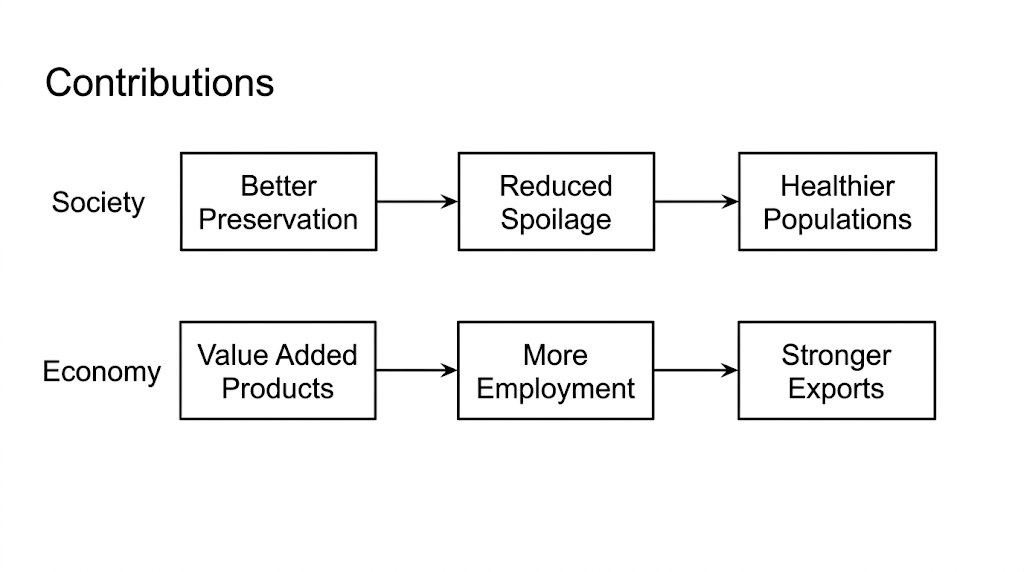
From my perspective, Food Engineering contributes to society in a way that few engineering branches can because it directly affects human health, food availability, and economic development. By improving preservation and processing systems, food engineers help reduce food spoilage and make nutritious products available to more people. I have seen that this branch supports farmers by creating value-added products that increase the market value of agricultural produce. It also generates employment across processing plants, logistics, packaging, retail, and export industries. On a larger scale, Food Engineering strengthens national economies by increasing food exports and reducing losses in the supply chain. Socially, the field improves public health by making food safer and more accessible. From what I have observed, Food Engineering is not simply about industrial production; it plays a major role in feeding populations efficiently while supporting economic growth and sustainable development.