
1. What is the core problem domain this branch solves?
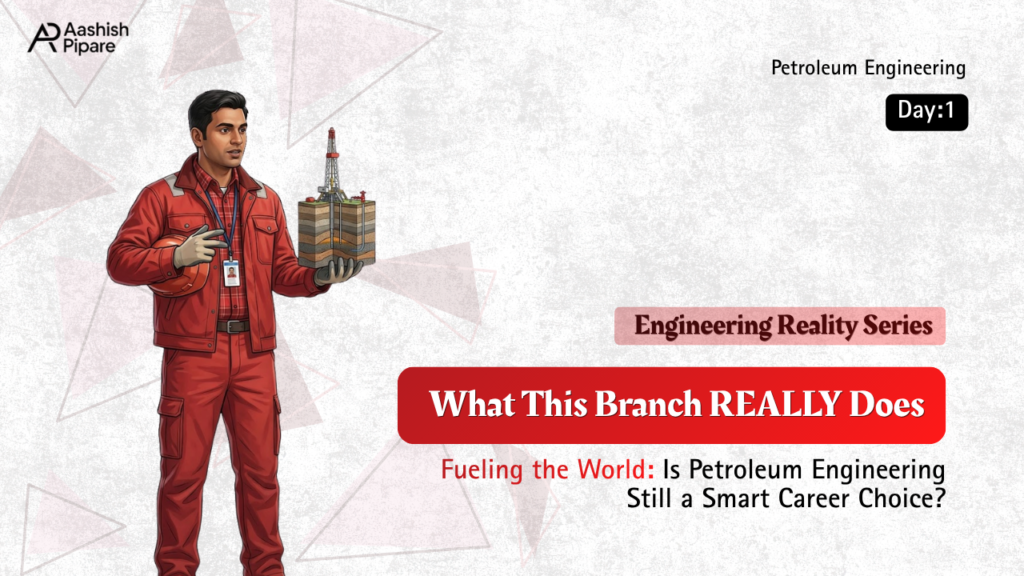
Petroleum Engineering focuses on solving the complex challenge of extracting oil and natural gas from deep beneath the Earth’s surface in the most efficient, safe, and cost-effective way. Unlike what many beginners assume, these resources are not stored in large underground pools but are trapped within tiny pores of rock formations, often located several kilometers below ground under extreme pressure and temperature conditions. Engineers must understand how fluids such as oil, gas, and water behave inside these rocks, how pressure changes over time, and how to design systems that can bring these resources to the surface without damaging the reservoir or causing environmental harm. The core problem is not just extraction but optimization—maximizing the amount of recoverable resources while minimizing financial cost, operational risk, and environmental impact. This makes the field highly analytical and deeply connected to real-world challenges.
2. What are the primary outputs of this field (products, systems, services)?
The outputs of Petroleum Engineering go far beyond simply producing crude oil. At the most basic level, it provides essential energy resources such as crude oil and natural gas, which are later refined into fuels like petrol, diesel, jet fuel, and liquefied petroleum gas. These fuels power transportation systems and industries worldwide. In addition, petroleum serves as a key raw material for petrochemicals used in manufacturing plastics, synthetic fibers, fertilizers, pharmaceuticals, and many everyday products. Beyond physical outputs, the field also develops advanced engineering systems such as drilling rigs, offshore platforms, pipelines, and reservoir simulation models that help in planning and managing extraction processes. Petroleum engineers also deliver specialized services, including reservoir analysis, drilling design, production optimization, and energy consulting. This combination of products, systems, and services makes the field a backbone of modern industrial society.
3. How is this branch different from closely related branches?
Petroleum Engineering is distinct from other engineering branches because of its strong focus on subsurface resource extraction. While Mechanical Engineering deals with machines and mechanical systems, Petroleum Engineering applies those principles specifically to drilling equipment and fluid systems operating deep underground. Chemical Engineering, on the other hand, is more concerned with refining and processing raw materials into useful products, whereas Petroleum Engineering focuses on extracting those raw materials in the first place. Civil Engineering primarily deals with infrastructure such as roads, bridges, and buildings, while Petroleum Engineering operates in underground environments that cannot be directly seen or easily controlled. It also differs from geology and geophysics, which focus on studying Earth’s structure, as petroleum engineers use that scientific knowledge to make practical decisions about drilling and production. This unique integration of multiple disciplines, applied specifically to energy extraction, sets Petroleum Engineering apart.
4. What are the real-world applications of this field?
The applications of Petroleum Engineering are deeply integrated into everyday life, even though they are not always visible. The most obvious application is fuel production, which powers cars, airplanes, ships, and industrial machinery, enabling transportation and global trade. Natural gas extracted through petroleum engineering is widely used for electricity generation and household energy needs. Beyond energy, petroleum-based products are essential in manufacturing plastics, synthetic rubber, and fibers used in clothing, packaging, electronics, and household items. The field also supports agriculture through the production of fertilizers and chemicals that enhance crop yield. In construction, petroleum derivatives like asphalt are used for building roads and infrastructure. Even in healthcare, many medical devices and pharmaceutical products rely on petrochemical materials. This shows that Petroleum Engineering plays a critical role in supporting modern lifestyles and technological development.
5. What industries heavily depend on this branch?
A wide range of industries depend heavily on Petroleum Engineering, making it one of the most impactful engineering fields globally. The most direct dependency is the oil and gas industry, which relies on petroleum engineers for exploration, drilling, and production operations. The refining and petrochemical industries also depend on this field for a steady supply of raw materials used to create fuels and chemical products. The energy and power sector relies on natural gas for electricity generation, while the transportation industry depends on petroleum fuels to operate vehicles, aircraft, and ships. Manufacturing industries use petroleum-based materials to produce plastics, chemicals, and synthetic products. Agriculture depends on fertilizers and pesticides derived from petroleum, and the construction industry uses materials like asphalt and insulation. In India, organizations such as Oil and Natural Gas Corporation play a crucial role in supporting these industries and ensuring national energy security.