
Career Landscape & Opportunities
🔹What are the core job roles in this branch?
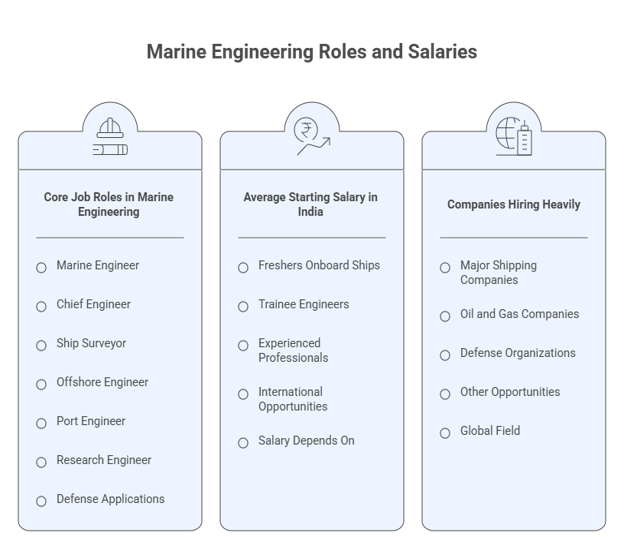
Marine engineering offers a wide range of roles, both onboard and onshore.
The most common role is Marine Engineer, responsible for operating and maintaining ship machinery.
At higher levels, engineers become Chief Engineers, managing the entire engine room and ensuring smooth operations.
Ship surveyors inspect vessels for safety and compliance with international standards.
Offshore engineers work on oil rigs and platforms, handling complex systems in extreme environments.
Port engineers manage machinery and operations at harbors.
Research engineers work on developing new technologies and improving existing systems.
Organizations like Indian Navy also recruit marine engineers for defense applications.
These roles offer both technical depth and leadership opportunities.
🔹What is the average starting salary in India?
Marine engineering is one of the higher-paying engineering fields, especially in early career stages.
Freshers working onboard ships can earn between ₹6–12 LPA, depending on company and role.
Trainee engineers receive stipends during training, which increase significantly after certification.
With experience, salaries can rise to ₹20–50 LPA or more, especially for senior roles like Chief Engineer.
International opportunities offer even higher pay due to global demand.
👉 Salary depends on:
- Certifications
- Experience
- Company
- Role
🔹Which companies hire heavily in this field?
Marine engineering has strong global demand, with companies operating across countries.
Major shipping companies include Maersk and Mediterranean Shipping Company.
Oil and gas companies like Shell recruit engineers for offshore operations.
Defense organizations such as Indian Navy offer technical roles.
Shipbuilding companies, port authorities, and logistics firms also provide opportunities.
The field is global, not limited to one country.
🔹What is the future demand (2025–2040)?
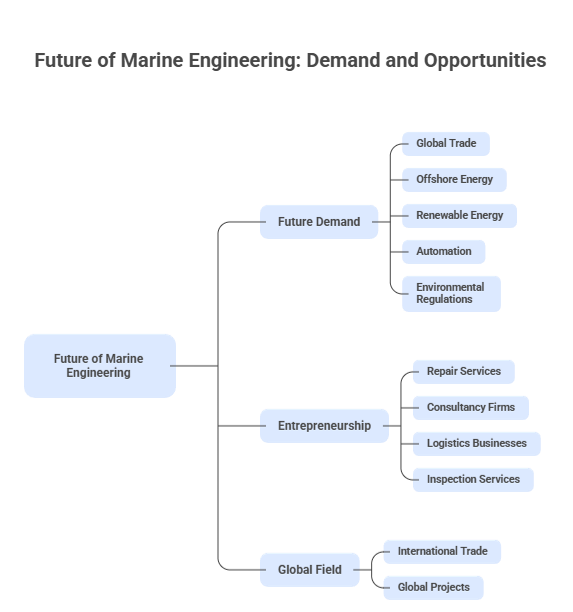
The demand for marine engineers is expected to remain strong and stable.
Global trade continues to grow, increasing the need for shipping.
Offshore energy projects, including oil and gas, remain important.
Renewable energy sectors, especially offshore wind farms, are expanding rapidly.
Automation and smart ships will create new roles requiring advanced skills.
Environmental regulations will increase demand for engineers who can manage emissions and sustainability.
The future is not declining—it is evolving.
🔹Can this branch lead to entrepreneurship or startups?
Yes, marine engineering offers several entrepreneurial opportunities.
Engineers can start repair and maintenance services for ships and marine equipment.
Marine consultancy firms provide technical advice and inspection services.
Logistics and shipping businesses are also potential startup areas.
For example, offering inspection services for vessels is a practical business model.
With experience and planning, marine engineering can lead to successful business ventures