
Difficulty, Lifestyle & Suitability
🔹How difficult is this branch compared to others?
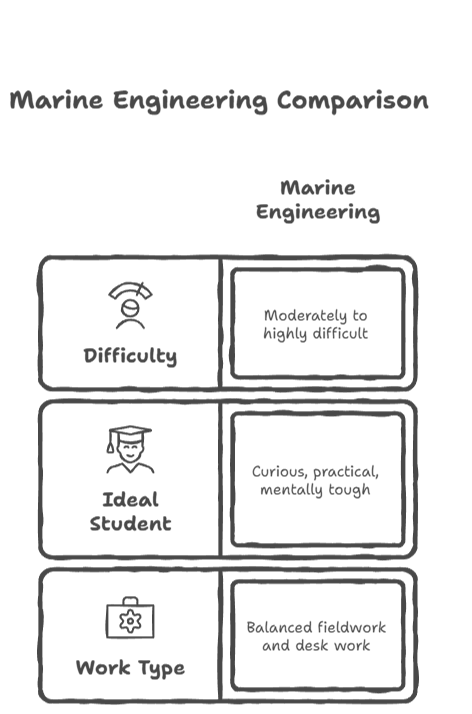
Marine Engineering is considered moderately to highly difficult because it combines multiple core engineering domains—mechanical, electrical, and thermal systems—into one practical field. Unlike purely theoretical branches, it requires you to understand, operate, and repair real machinery. Subjects like thermodynamics and fluid mechanics can be conceptually challenging, especially when applied to large-scale marine engines. Additionally, onboard conditions add pressure, as engineers must make quick decisions in critical situations. Compared to branches like IT or electronics, marine engineering demands more physical and practical involvement. However, students who enjoy working with machines and real-world systems often find it engaging rather than difficult. Regular practice, visualization, and hands-on exposure significantly reduce complexity. The difficulty is not due to concepts alone, but due to the responsibility and application level. With discipline and consistency, it becomes manageable and rewarding.
🔹What type of students excel in this field?
Students who excel in marine engineering usually have a strong curiosity about machines and how systems work in real life. A solid interest in physics and basic mechanical concepts gives them an advantage. Practical learners who enjoy working in labs, workshops, or real environments tend to perform better than those who prefer only theoretical study. For example, students who like engines, ships, or mechanical operations naturally adapt to this field. Mental toughness and adaptability are important because the work environment can be demanding. Teamwork is also crucial, as ship operations depend on coordination among crew members. Students who are disciplined and can follow safety procedures carefully succeed onboard. Problem-solving ability is essential, especially in emergency situations where quick decisions are required. Patience and attention to detail further enhance performance. Overall, hands-on learners with a strong mindset and technical interest excel the most.
🔹Does it require fieldwork, desk work, or both?
Marine engineering is a balanced combination of fieldwork and desk work, but it is more practical in the early stages of a career. Fieldwork mainly happens onboard ships, where engineers operate and maintain engines, pumps, and other machinery. For example, checking engine performance, handling breakdowns, and maintaining systems are real-time tasks. Desk work includes analyzing performance data, preparing reports, and planning maintenance schedules. Shore-based roles involve more office work, such as design, consultancy, or management. In the beginning, most engineers spend significant time in fieldwork to gain experience. This hands-on exposure builds deep understanding of systems. Later, many professionals shift to desk roles based on experience and preference. This flexibility makes the field dynamic and adaptable. Engineers can choose roles depending on their lifestyle and career goals. Thus, it offers both physical and analytical work environments.
🔹What is the typical work-life balance?
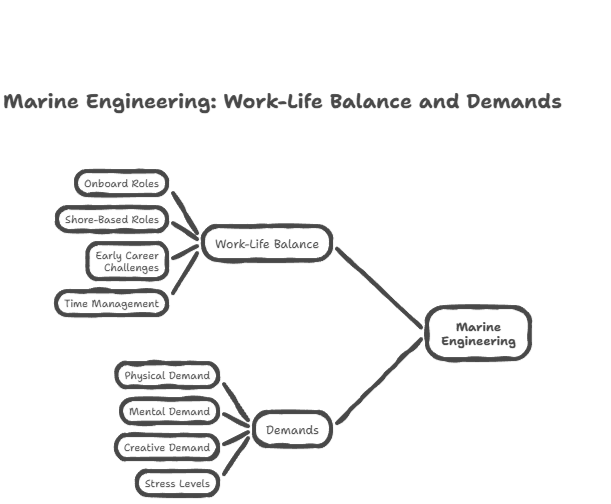
Work-life balance in marine engineering is unique and different from typical jobs. Engineers working onboard ships often stay at sea for long durations, usually 3 to 6 months continuously. During this time, working hours can be long and demanding, especially during emergencies or maintenance operations. For example, an engine failure may require immediate attention regardless of time. However, after completing contracts, engineers get extended leave periods of 2–3 months, which balances personal life. Shore-based roles offer more regular working hours and stability. In early career stages, balancing personal life can be challenging due to time away from family. Over time, engineers can move into roles with better work-life balance. Proper time management and mental resilience are essential. While demanding, the career also offers flexibility through long breaks. Overall, it is a high-intensity but rewarding lifestyle.
🔹Does it involve high physical, mental, or creative demand?
Marine engineering involves a combination of physical, mental, and creative demands, with mental demand being the highest. Engineers must constantly monitor systems, analyze data, and make decisions under pressure. For example, diagnosing an engine issue in the middle of the ocean requires strong analytical thinking. Physical effort is needed during maintenance, repairs, and inspections in engine rooms. Creative thinking is important when solving unexpected problems, especially when resources are limited. The job requires high concentration and attention to detail, as small mistakes can lead to serious consequences. Stress levels can increase during emergencies, requiring calm and quick responses. Different roles may emphasize different aspects—research roles require more creativity, while onboard roles require more physical effort. Overall, it is a demanding but well-balanced profession that develops multiple skills.