
Industry Exposure & Real-World Relevance
🔹What are the current industry trends?
Marine engineering is evolving rapidly with trends focused on automation, sustainability, and digitalization. Smart ships equipped with sensors and AI systems are becoming common, allowing real-time monitoring of engine performance. For example, predictive maintenance systems detect faults before failure occurs. Environmental regulations are pushing industries toward cleaner fuels like LNG and hybrid propulsion systems. Digital navigation and remote monitoring are improving efficiency and safety. Offshore renewable energy, especially wind farms, is a growing sector. Companies are focusing on reducing fuel consumption and emissions. Advanced materials are being used to improve durability and reduce weight. These trends are transforming traditional marine operations into modern, technology-driven systems. Engineers must stay updated with these developments to remain competitive. Overall, the industry is shifting toward smart, sustainable, and efficient solutions.
🔹Which sectors are growing or declining?
The shipping industry continues to grow due to increasing global trade, ensuring steady demand for marine engineers. Offshore energy sectors, including oil and gas, remain important but are gradually transitioning toward renewable energy. Offshore wind farms and marine renewable energy projects are among the fastest-growing sectors. Cruise and tourism industries are also expanding, increasing demand for passenger vessels. On the other hand, traditional manual operations are declining due to automation and digitalization. Older ship technologies are being replaced with modern, eco-friendly systems. Shipbuilding with sustainable designs is gaining importance. Environmental compliance and emission control sectors are also growing. Engineers who focus on modern technologies will have better opportunities. Overall, growth is stable but shifting toward innovation and sustainability.
🔹What are the major challenges faced in this field?
Marine engineering faces several challenges related to environment, safety, and operational complexity. One major issue is the harsh marine environment, where saltwater causes corrosion and damages equipment. Equipment failure at sea can be critical, as immediate external help is not available. For example, an engine breakdown during a voyage can delay shipments and cause financial losses. Environmental regulations are becoming stricter, requiring engineers to manage emissions and pollution. Harsh weather conditions add additional risks to operations. Long working hours and isolation can affect mental health. Rapid technological changes require continuous learning and adaptation. Balancing efficiency with safety is another major challenge. Skilled workforce shortage is also a concern in some regions. Overcoming these challenges requires expertise, discipline, and innovation.

🔹Are there government initiatives supporting this branch?
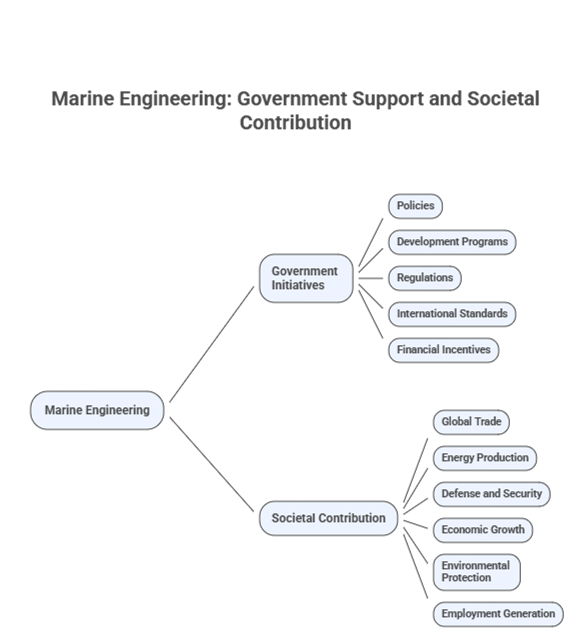
Yes, governments actively support marine engineering through policies and development programs. In India, the Directorate General of Shipping regulates training, certification, and safety standards. Programs like Sagarmala aim to improve maritime infrastructure and boost port development. Environmental regulations enforce cleaner and safer operations. International organizations like the International Maritime Organization set global standards for safety and pollution control. Governments also support shipbuilding industries and maritime education. Training institutes are approved and monitored to maintain quality. These initiatives create job opportunities and promote industry growth. Financial incentives and policies encourage investment in maritime sectors. Overall, government support plays a crucial role in industry development and sustainability.
🔹How does this field contribute to society and economy?
Marine engineering plays a critical role in global society and economy. Around 80–90% of international trade is transported by sea, making it essential for global supply chains. Engineers ensure ships operate safely and efficiently, enabling movement of goods like oil, food, and machinery. The field supports energy production through offshore oil and gas platforms. It also contributes to defense and national security through naval operations. Efficient shipping reduces transportation costs and supports economic growth. Environmental protection systems help reduce ocean pollution. The field generates employment across multiple industries. Without marine engineering, global trade and logistics would collapse. Its contribution is both economic and strategic, making it indispensable to modern civilization.