

Reality Check Questions
🔹Why should I choose this branch over others?
You should choose marine engineering if you are interested in machines, real-world systems, and a dynamic career. It offers high salary potential, global exposure, and unique work experiences. Unlike many branches, it is less saturated and highly specialized. For example, engineers can travel across countries while working. However, it requires commitment, discipline, and adaptability. It is not suitable for those who prefer stable office jobs. The field offers both challenges and rewards. Career growth is strong with experience and certifications. Choosing this branch should be based on genuine interest. It is a career that combines technical skill with adventure and responsibility.
🔹What are the biggest misconceptions about this field?
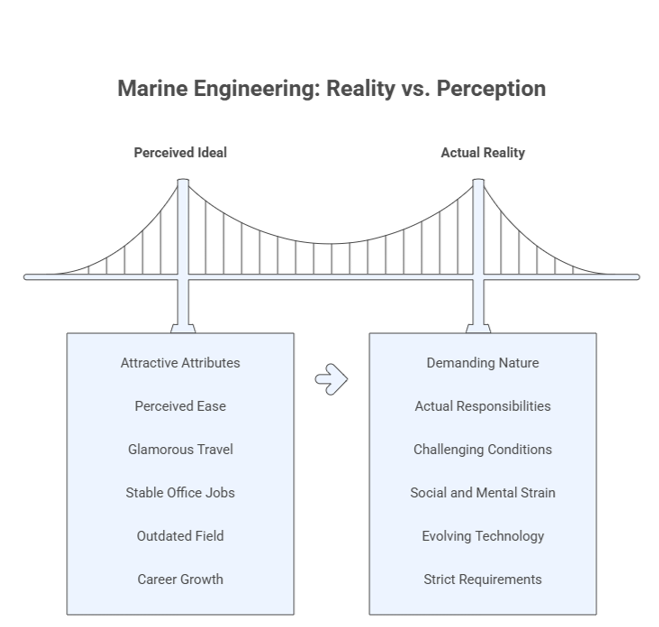
One major misconception is that marine engineering is an “easy high-paying job.” In reality, it involves hard work, long hours, and challenging conditions. Another myth is that the job is only about traveling, while it actually involves technical responsibilities. Some people believe it has limited scope, which is incorrect. For example, opportunities exist in shipping, offshore, research, and management. Another misconception is that it is outdated, while in reality it is evolving with AI and automation. Lack of awareness leads to these misunderstandings. The field is highly technical and professional. Understanding the reality helps in making informed decisions. It is a serious and demanding career path.
🔹What are the hidden challenges no one talks about?
Hidden challenges include long periods away from family and social life. Working in confined spaces like engine rooms can be physically and mentally stressful. For example, engine rooms are hot, noisy, and require constant attention. Emergency situations require immediate response without external help. Strict discipline and hierarchy must be followed onboard. Limited communication with family can be difficult. Continuous certification updates are required. Mental health and isolation are often overlooked issues. Adapting to different cultures and teams can also be challenging. These challenges are not always visible but are part of the profession. Awareness helps in preparing for real conditions.
🔹If I fail in core roles, what are my backup career paths?
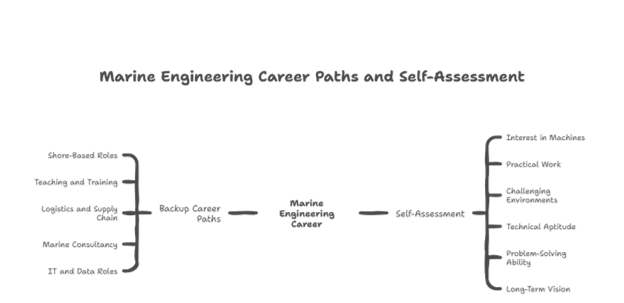
Marine engineers have multiple backup career options due to their technical background. They can move into shore-based roles like maintenance, operations, and management. Shipping companies offer office-based technical roles. Teaching and training are options with experience and higher studies. For example, engineers can become instructors in maritime institutes. Logistics and supply chain roles are also available. An MBA can open opportunities in management and business. Marine consultancy and inspection services are other options. Skills like programming can help transition into IT or data roles. The field provides flexibility and stability. Planning ahead ensures career security.
🔹Is this branch aligned with my interest, aptitude, and long-term vision?
Choosing marine engineering should be based on self-assessment and long-term goals. If you enjoy machines, practical work, and challenging environments, this field is suitable. For example, willingness to work at sea for long durations is essential. Strong technical aptitude and problem-solving ability are important. If you prefer coding or desk jobs, this may not be ideal. Long-term vision should include adaptability and continuous learning. Understanding your strengths and interests is crucial before choosing. Proper guidance and research help in decision-making. Aligning career with passion leads to success and satisfaction. This ensures a meaningful and fulfilling career path.
Conclusion
Marine Engineering is not for everyone—and that’s exactly what makes it valuable. It offers high rewards, global exposure, and a unique career, but demands discipline, resilience, and strong technical ability. If you choose it with the right mindset, it can lead to a powerful and fulfilling career. But if your expectations are unrealistic, it can feel difficult and exhausting.
Call to Action
Before choosing Marine Engineering, be honest with yourself:
Are you ready for long periods at sea and a demanding lifestyle?
Do you genuinely enjoy machines, systems, and practical work?
Can you handle responsibility and pressure in critical situations?
If your answer is yes, then:
Start preparing early with technical basics and physical/mental readiness
Learn about certifications and career paths regulated by International Maritime Organization
Talk to real marine engineers or seniors to understand the lifestyle
Choose this field with clarity—not confusion. The right decision now shapes your entire future.