
🔹 What are the core job roles in this branch?
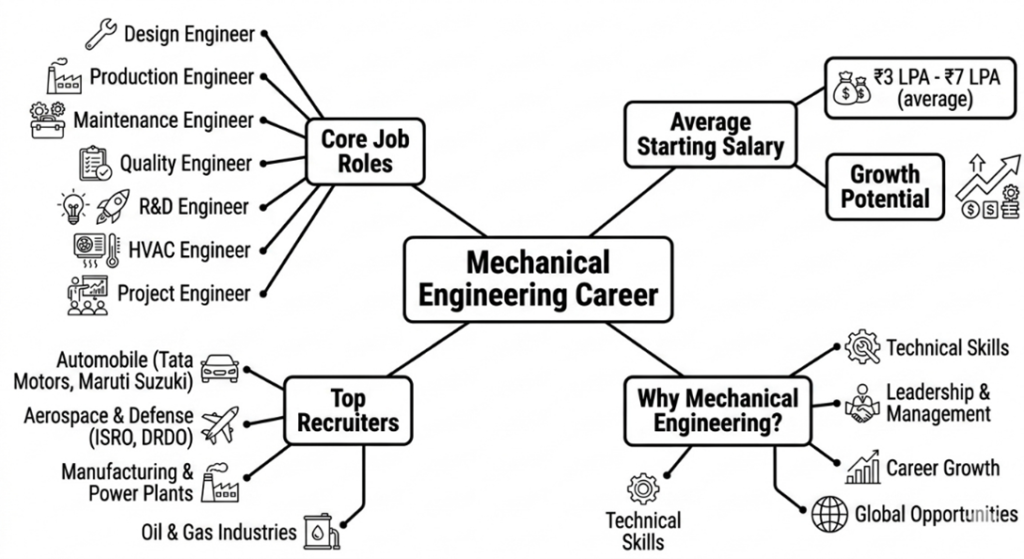
Mechanical engineering offers a wide range of job roles across industries because machines and systems are used everywhere. One of the primary roles is a Design Engineer, who creates machine components using CAD software and ensures they meet performance and safety requirements. Another important role is a Production Engineer, who manages manufacturing processes and improves efficiency on the shop floor. Maintenance Engineers ensure machines operate smoothly by preventing breakdowns and repairing faults. Quality Engineers focus on maintaining product standards by testing and inspection. In research-oriented roles, R&D Engineers develop new technologies and improve existing systems. For example, an R&D engineer may design a more efficient engine to reduce fuel consumption. HVAC Engineers work on heating and cooling systems in buildings and industries. Mechanical engineers can also work as Project Engineers, managing projects and coordinating teams. These roles provide both technical growth and opportunities to move into management positions over time.
🔹 What is the average starting salary in India?
The starting salary for mechanical engineers in India depends on factors such as college, skills, and industry. On average, fresh graduates earn between ₹3 LPA to ₹7 LPA in core mechanical roles. Students from top institutes or those with strong technical skills and internships may get higher packages. For example, companies like Tata Motors and Mahindra & Mahindra offer competitive salaries to skilled candidates. Government sector jobs may offer slightly lower initial salaries but provide stability and long-term benefits. With experience, salaries increase significantly, reaching ₹10–20 LPA or more after a few years. Engineers who specialize in high-demand areas like design, automation, or energy systems can earn higher pay. Those who move into management roles or work abroad can achieve even higher income levels. Therefore, while the starting salary may be moderate, long-term growth is strong.
🔹 Which companies hire heavily in this field?
Mechanical engineers are hired by a wide range of companies across different industries. In India, major recruiters include automobile companies like Tata Motors, Maruti Suzuki, and Mahindra & Mahindra. These companies require engineers for design, production, and testing of vehicles. Aerospace and defense organizations such as ISRO and DRDO also recruit mechanical engineers for advanced projects. Manufacturing companies, power plants, and oil and gas industries provide numerous job opportunities. For example, a mechanical engineer in a manufacturing company may work on improving production efficiency. HVAC companies and construction industries also require mechanical expertise. These organizations look for candidates with strong practical knowledge and problem-solving skills. Internships and project experience greatly improve chances of getting hired.
🔹 What is the future demand (2025–2040)?
The future demand for mechanical engineering is expected to remain stable and evolve with technology. Industries such as electric vehicles (EVs), renewable energy, and automation are growing rapidly and creating new opportunities. For example, EVs require new mechanical designs for battery systems and cooling mechanisms. Renewable energy systems like wind turbines and solar tracking systems depend on mechanical components. Automation and robotics are transforming manufacturing, increasing demand for skilled engineers. Traditional industries like manufacturing and power generation will continue to exist but will adopt modern technologies. Engineers who learn advanced tools and digital technologies will have better opportunities. Sustainability and energy efficiency will become major focus areas. Mechanical engineering will remain relevant because machines and systems are essential in all industries. Overall, the field has strong and evolving demand for the future.
🔹 Can this branch lead to entrepreneurship or startups?
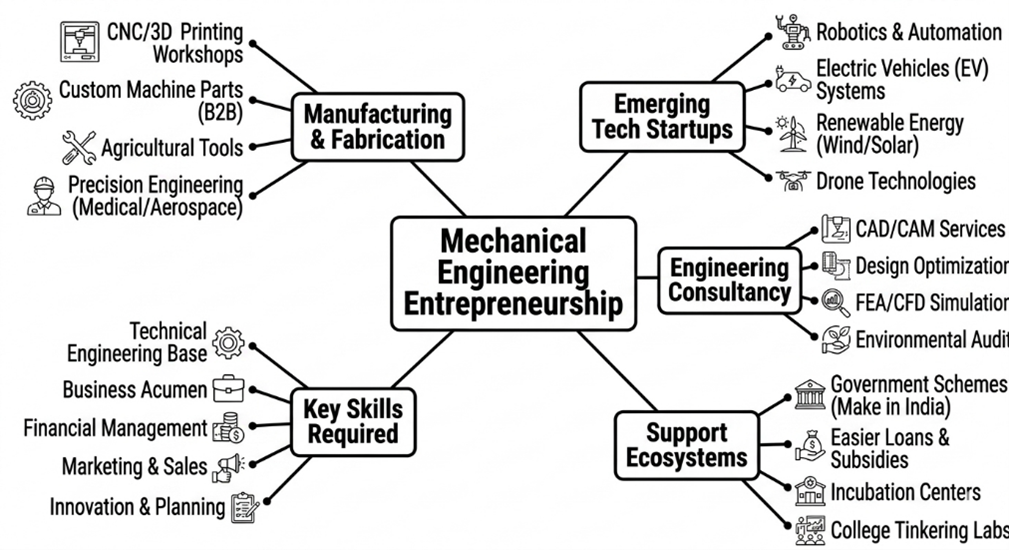
Yes, mechanical engineering offers strong opportunities for entrepreneurship and startups. Engineers can start businesses in areas such as manufacturing, fabrication, and machine design. For example, a mechanical engineer can set up a workshop to produce customized machine parts for industries. Automotive service centers and repair businesses are also common startup options. Engineers can provide consultancy services for design and process optimization. Emerging areas like electric vehicles, robotics, and renewable energy offer new startup opportunities. For instance, developing energy-efficient machines or automation solutions can lead to successful ventures. Government initiatives like “Make in India” support manufacturing startups. However, entrepreneurship requires not only technical knowledge but also business and financial skills. With proper planning and innovation, mechanical engineers can build profitable and scalable businesses. Therefore, this branch provides both job and business opportunities.
CONCLUSION
Mechanical Engineering offers a balanced return on investment (ROI):
✔ Wide range of job roles across industries
✔ Stable starting salary with strong long-term growth
✔ Opportunities in top companies and global sectors
✔ Future demand driven by EVs, automation, and sustainability
✔ Strong potential for entrepreneurship and startups
If you build strong skills and gain practical experience,
Mechanical Engineering can provide career stability, growth, and success.