
🔹 What are the current industry trends?
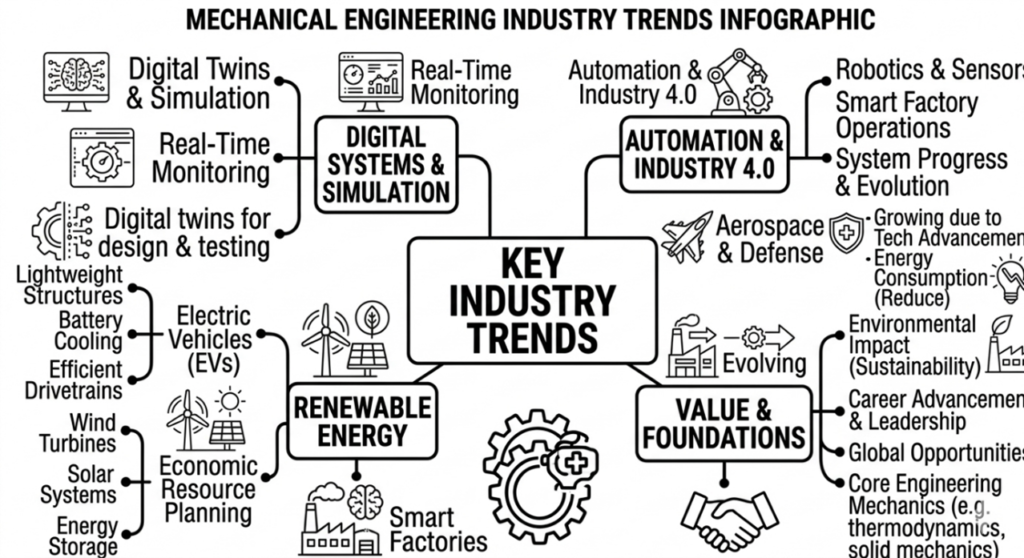
The mechanical engineering industry is evolving rapidly due to technology, sustainability, and automation. One of the biggest trends is the shift toward electric vehicles (EVs), where engineers design lightweight structures, battery cooling systems, and efficient drivetrains. Another major trend is automation and Industry 4.0, where factories use sensors, robotics, and data analytics to improve productivity. For example, smart factories can monitor machines in real time and reduce downtime. Renewable energy is also growing, with mechanical engineers working on wind turbines, solar systems, and energy storage technologies. Digital tools like simulation software and digital twins are becoming common for design and testing. There is also increasing focus on sustainable design, where engineers aim to reduce energy consumption and environmental impact. These trends are changing how mechanical engineers work, making the field more technology-driven and innovative. Engineers must continuously update their skills to stay relevant in this evolving environment.
🔹 Which sectors are growing or declining?
Several sectors within mechanical engineering are experiencing significant growth. The electric vehicle industry is expanding rapidly, creating demand for new mechanical systems and components. The renewable energy sector, including wind and solar power, is also growing due to global focus on sustainability. Automation and robotics industries are increasing demand for engineers who can design and maintain automated systems. Aerospace and defense sectors continue to grow due to technological advancements. On the other hand, some traditional manufacturing sectors are evolving rather than declining, as they adopt automation and digital technologies. Certain outdated production methods are becoming less relevant due to efficiency improvements. However, core industries like manufacturing, construction, and power generation will always exist because they are essential. Engineers who focus on growing sectors and modern technologies will have better career opportunities. Understanding these trends helps students make better career decisions.
🔹 What are the major challenges faced in this field?
Mechanical engineering faces several challenges related to efficiency, cost, and environmental impact. One of the biggest challenges is reducing energy consumption while maintaining performance. For example, designing fuel-efficient engines without compromising power is a complex task. Environmental concerns such as emissions and pollution require engineers to develop sustainable solutions. Another challenge is maintaining machine reliability and preventing failures in industrial systems. High competition in industries requires continuous innovation and improvement. Adapting to new technologies like AI and automation can also be challenging for engineers. Cost management is important, as engineers must design systems that are both efficient and economical. Safety is another critical issue, especially in industrial environments. Engineers must balance performance, cost, and safety in their designs. Overcoming these challenges requires strong technical knowledge and creative problem-solving skills.
🔹 Are there government initiatives supporting this branch?
Yes, governments actively support mechanical engineering through various policies and initiatives. In India, programs like Make in India encourage manufacturing and industrial growth, creating job opportunities for mechanical engineers. Infrastructure development projects such as highways, railways, and smart cities increase demand for machinery and engineering services. Government investment in renewable energy projects supports the development of sustainable technologies. Skill development programs help train engineers in modern technologies and improve employability. Public sector companies also provide job opportunities in areas like power, defense, and transportation. Environmental regulations encourage industries to adopt cleaner and more efficient technologies. For example, stricter emission norms push engineers to design better engines. These initiatives help strengthen the mechanical engineering sector and promote innovation. Government support plays an important role in industry growth and career opportunities.
🔹 How does this field contribute to society and economy?
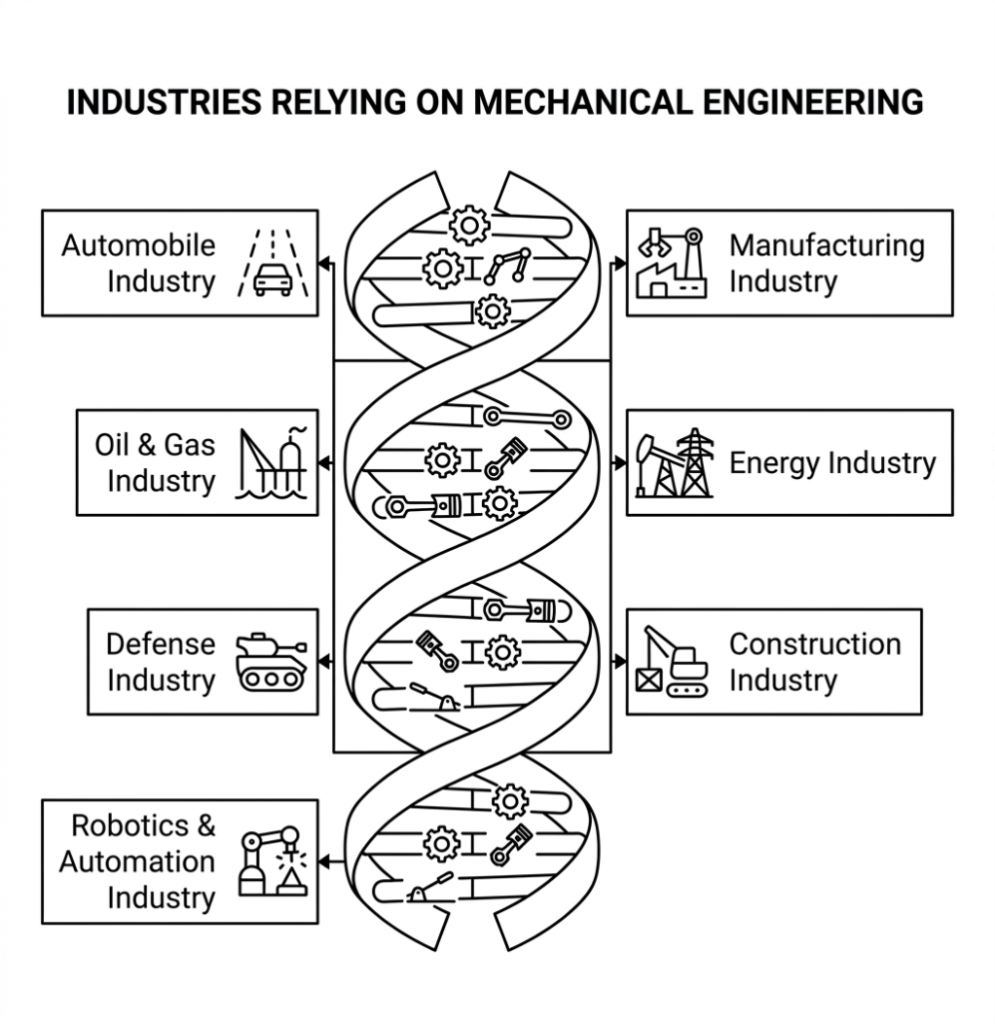
Mechanical engineering plays a fundamental role in both society and economic development. It enables the production of goods and services that are essential for daily life. For example, transportation systems like cars, trains, and airplanes are all based on mechanical engineering. The field supports industries that drive economic growth, such as manufacturing, energy, and construction. It creates employment opportunities across multiple sectors. Mechanical engineers also contribute to technological advancement by developing new machines and systems. Sustainable engineering solutions help reduce environmental impact and conserve resources. For instance, renewable energy systems reduce dependence on fossil fuels. Infrastructure development improves quality of life and supports economic activities. Without mechanical engineering, modern industries and society would not function efficiently. Therefore, its contribution is both practical and essential for progress.
CONCLUSION
Mechanical Engineering connects academic knowledge with real-world impact.
✔ Industry trends are shifting toward automation and sustainability
✔ Growing sectors include EVs, renewable energy, and robotics
✔ Challenges require innovation and problem-solving
✔ Government initiatives support industrial growth
✔ The field plays a key role in society and economy
Mechanical Engineering is not just a career—it is a driving force behind industrial and societal development.