What are some beginner-level projects in this branch?
When I first started learning CSE, I made the same mistake most students make—I focused too much on watching tutorials and too little on actually building things. It feels comfortable to follow along with someone else’s code, but the moment you try to build something on your own, you realize how many gaps you have. That’s why beginner-level projects are so important—they force you to think independently.
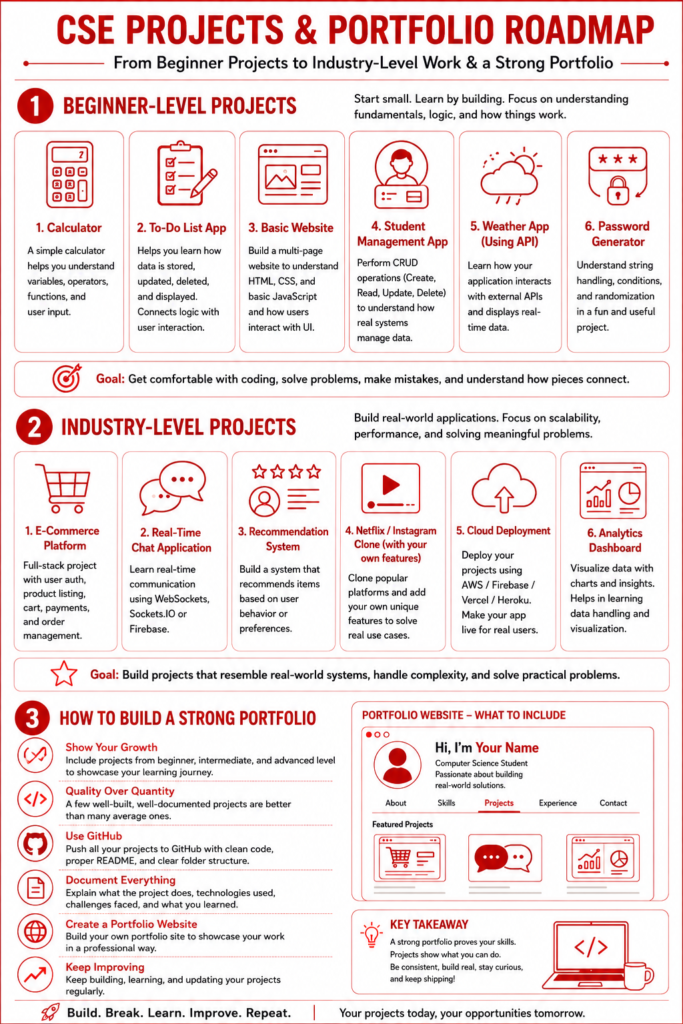
In the early stage, projects don’t need to be complex at all. Something as simple as a calculator, a to-do list, or a basic website can teach you a lot. For example, when I built my first to-do list application, I understood how data is stored, updated, and displayed. It wasn’t just about writing code—it was about connecting logic with user interaction. Similarly, building a simple website helped me understand how the frontend works and how users actually interact with what you create.
Another useful beginner project is a small system like a student management app, where you perform basic operations like adding, updating, or deleting records. This introduces you to how real applications manage data. Even something like a weather app using an API can teach you how your code interacts with external systems. From my experience, the goal at this stage is not to impress anyone but to get comfortable with building something from scratch, making mistakes, and figuring out how things connect.
What are industry-level projects I should aim for?
As you move forward, the nature of your projects needs to change. Beginner projects teach you basics, but industry-level projects are what actually make you stand out. I realized this when I compared my projects with others during placements—simple projects were not enough anymore.
At this stage, you should aim to build projects that resemble real-world systems. For example, a full-stack web application like an e-commerce platform teaches you how frontend, backend, and databases work together. When I worked on a similar project, I understood how complex even a “simple” system can be—handling users, managing data, and ensuring everything works smoothly.
Projects like chat applications help you understand real-time communication, which is something many modern apps rely on. You can also build recommendation systems, similar to what platforms like Amazon use, where systems suggest products or content based on user behavior. Even creating a project inspired by platforms like Netflix or Instagram can be valuable—especially if you add your own features instead of copying blindly.
Another important step is deploying your project using cloud platforms like Amazon Web Services. This is where your project moves from “just code on your laptop” to something people can actually use. From what I’ve seen, industry-level projects are less about complexity and more about real-world relevance, structure, and your ability to explain what you built and why.
How can I build a portfolio in this domain?
Your portfolio is one of the most important assets you’ll have as a CSE student, because it directly shows what you’re capable of. Marks can only say so much, but a portfolio proves your skills. I learned this when I saw how recruiters spend more time looking at projects than academic scores.
A strong portfolio is not about having many projects—it’s about having meaningful ones. It should show your growth over time. Start with a few beginner projects to show your basics, then include intermediate projects with better structure, and finally add one or two strong projects that solve real problems or are deployed online.
All your projects should be properly documented and hosted on platforms like GitHub. But just uploading code is not enough—you should explain what your project does, what technologies you used, and what challenges you faced. This shows your thinking process, which is something recruiters value a lot.
Creating your own portfolio website also makes a big difference. It gives a professional touch and makes it easier for someone to understand your work in one place. From my experience, a well-built portfolio can often compensate for average grades, but the reverse is rarely true.
What kind of internships should I target?
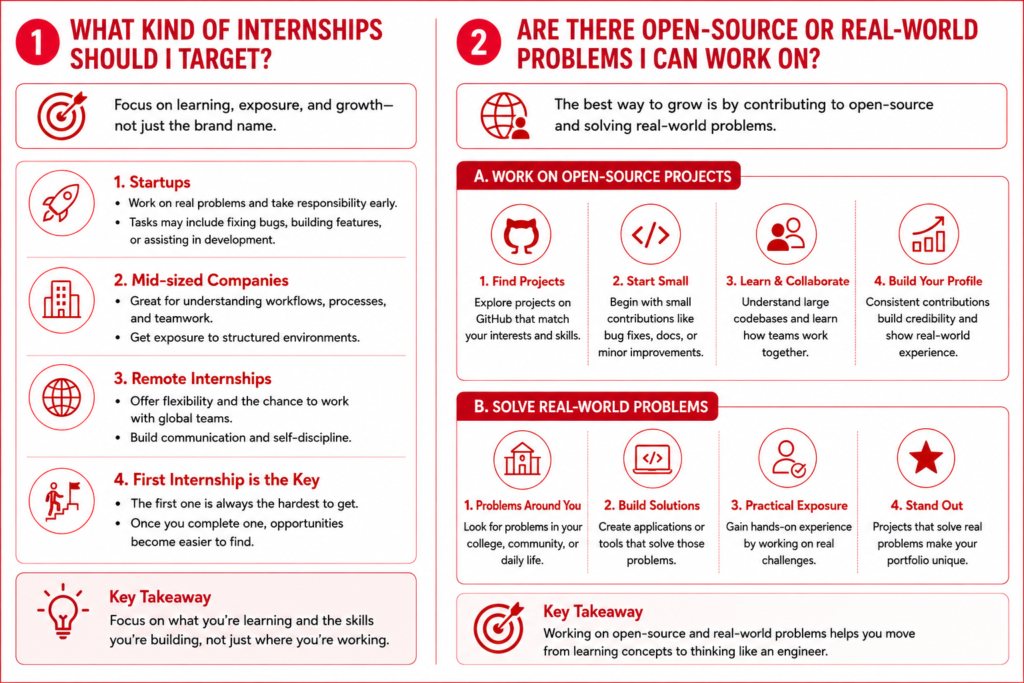
When I first started looking for internships, I focused too much on big companies, thinking that only they mattered. But over time, I realized that in the beginning, what matters more is learning and exposure, not the brand name.
Startups are actually one of the best places to begin, because you get to work on real problems and take responsibility early. In smaller companies, you might be asked to fix bugs, build features, or assist in development tasks. At first, it might feel like small work, but this is exactly where you learn how real systems function.
Mid-sized companies also provide good exposure, especially in understanding workflows and teamwork. Remote internships can be useful too, as they give you flexibility and sometimes even international exposure.
From what I’ve seen, the first internship is always the hardest to get because you don’t have experience. But once you complete one, it becomes much easier to move forward. The key is to focus on what you’re learning, not just where you’re working.
Are there open-source or real-world problems I can work on?
One of the most underrated ways to grow in CSE is by working on open-source projects. Initially, it can feel intimidating because you’re looking at large codebases written by experienced developers. But once you take the first step, it becomes one of the best learning experiences.
Platforms like GitHub host thousands of open-source projects where you can contribute. You don’t have to start big—you can begin by fixing small bugs, improving documentation, or making minor changes. Over time, you’ll understand how large systems are structured and how teams collaborate.
Apart from open-source, solving real-world problems around you can be even more powerful. For example, building a system for your college, creating a solution for a local business, or automating a repetitive task gives you practical exposure. These projects stand out because they show that you can apply your knowledge in real situations.
From my experience, working on real problems—whether through open-source or personal ideas—helps you move from “learning concepts” to thinking like an engineer.