
➤What are some beginner-level projects in this branch?
Beginner projects include paper planes, gliders, and basic drone kits. These help understand basic flight principles. Students can experiment with wing shapes and materials. For example, changing wing size affects flight distance. These projects build curiosity and interest. They require minimal resources. Beginners learn through trial and error. Simple projects develop foundational skills. They also improve creativity. Starting small is important for long-term growth.
➤What are industry-level projects I should aim for?
Industry-level projects include UAV development, rocket models, and flight control systems. These require integration of multiple concepts. Students must use software and hardware together. For example, designing a drone with autonomous navigation is an advanced project. These projects reflect real-world challenges. They require teamwork and planning. Industry values such experience highly. These projects improve problem-solving ability. They also build confidence. Advanced projects prepare you for jobs.
➤How can I build a portfolio in this domain?
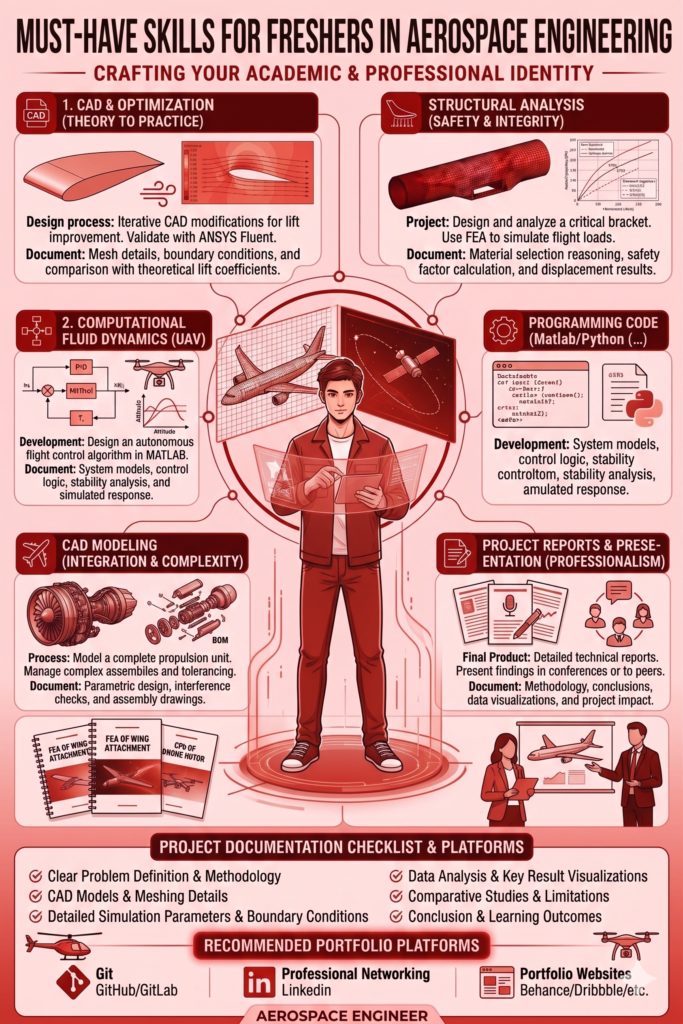
A portfolio should include designs, simulations, and project reports. Document each project with clear explanations. Include images, results, and learnings. For example, show CAD models and simulation outputs. Use platforms like GitHub or personal websites. A strong portfolio demonstrates practical skills. It helps during interviews. Employers prefer candidates with proven work. Regularly update your portfolio. Quality matters more than quantity.
➤What kind of internships should I target?
Target internships in aviation companies, space organizations, and drone startups. Even small startups provide valuable learning. For example, working on UAV design gives practical exposure. Internships help understand industry workflow. They also build professional networks. Hands-on experience is more important than brand name. Internships improve technical and soft skills. They increase job opportunities. Early internships give a strong advantage.
➤Are there open-source or real-world problems I can work on?
Yes, students can work on open-source simulations and research problems. Platforms provide datasets and design challenges. For example, contributing to open-source CFD projects improves skills. Real-world problems include improving drone efficiency. Students can also participate in competitions. These experiences enhance learning. Open-source work shows initiative. It also builds collaboration skills. Practical exposure is key to success.
Conclusion
Projects are the most important part of engineering learning, as they transform theoretical knowledge into real-world skills and make you industry-ready.