
Introduction
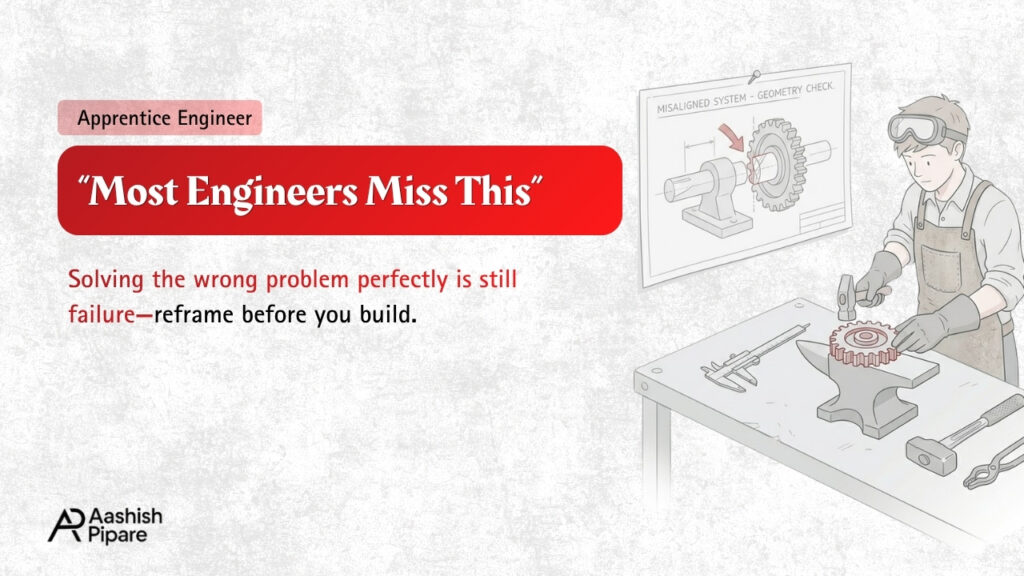
One of the most costly mistakes in engineering is not failure of execution, but failure of understanding. Engineers sometimes build elegant, precise, and efficient solutions that address the wrong problem entirely.
The Danger of Solving the Wrong Problem
Engineering work often begins with a stated requirement or an apparent issue. However, the problem initially presented is not always the true problem that needs solving.
For example, a manufacturing plant might report that a machine is operating too slowly. An engineer might immediately attempt to increase the machine’s speed. But the real issue might not be the machine itself. The slowdown may be caused by inefficient material handling, poorly scheduled workflows, or bottlenecks in another part of the production system.
If the engineer focuses only on improving the machine’s speed, the underlying bottleneck may remain unchanged. In this case, a technically correct solution fails to improve the system.
This happens because the engineer solved the visible problem, not the root problem.
Why Problems Are Often Misstated
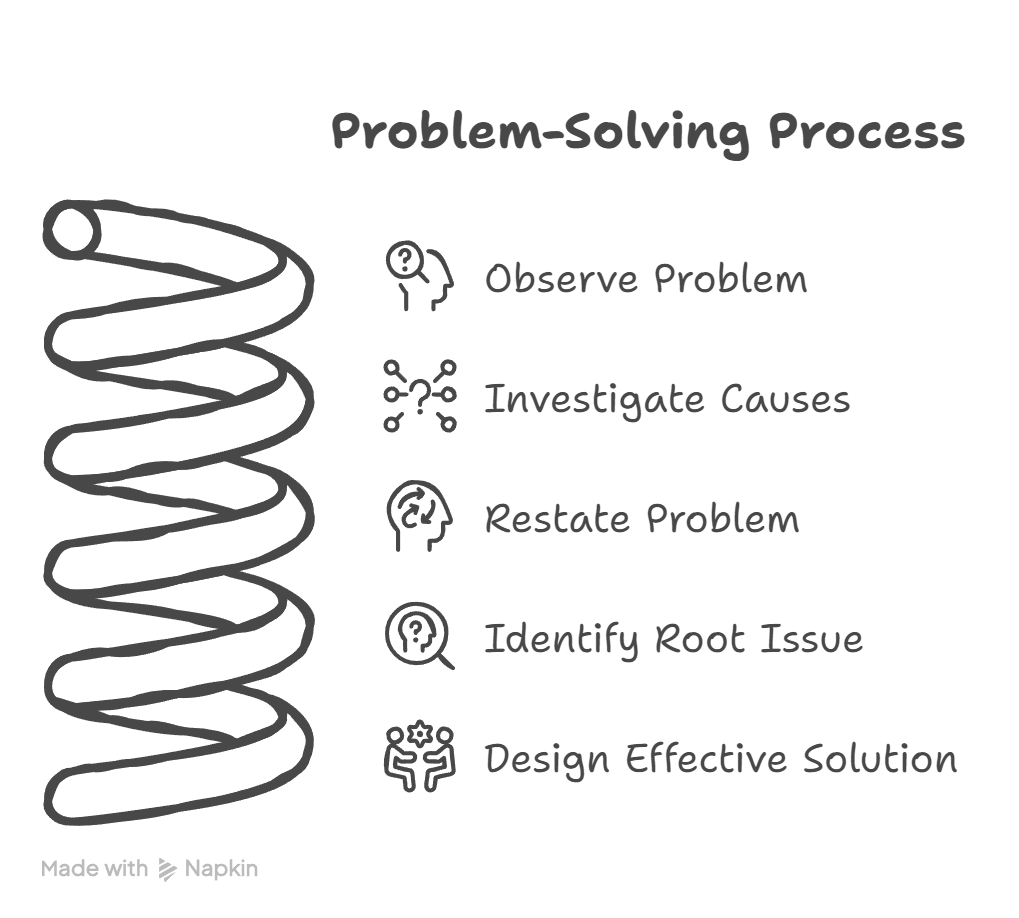
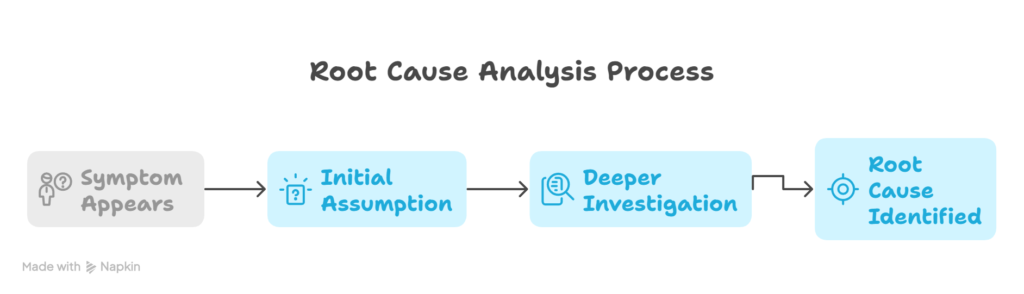
Problems are frequently misunderstood because engineering systems are complex and interconnected. The symptom of a problem may appear in one place while the cause lies somewhere else.
Several factors contribute to this confusion:
- incomplete information at the start of a project
- assumptions carried over from previous designs
- pressure to act quickly without deeper investigation
- communication gaps between different teams
In many cases, the first description of a problem represents only a surface-level observation, not a complete diagnosis.
An apprentice engineer must learn to pause before immediately applying tools or equations.
Restating the Problem Reveals Hidden Insights
One useful habit in engineering thinking is to restate the problem in multiple ways before attempting a solution.
Restating the problem forces the engineer to reconsider assumptions and examine the situation from different perspectives.
For example, a problem initially described as:
“The bridge design must support more weight.”
could be restated as:
- What factors are limiting the bridge’s load capacity?
- How can we reduce the stress on the existing structure?
- Is traffic distribution causing uneven loading?
Each version of the problem may lead to a different approach. Instead of strengthening the bridge, engineers might redesign traffic patterns or reduce load concentrations.
By examining the problem from multiple angles, engineers increase the chance of identifying the true issue.
Symptoms vs Root Causes
Another key distinction in engineering problem solving is the difference between symptoms and root causes.
Symptoms are the visible signs of a problem. Root causes are the underlying mechanisms that produce those symptoms.
For example:
- overheating in a machine may be a symptom
- insufficient lubrication, excessive friction, or poor cooling design may be the root causes
If engineers treat the symptom instead of the cause, the problem may return repeatedly.
Experienced engineers therefore focus on identifying why something is happening before deciding how to fix it.
Systems Thinking Helps Identify the Real Problem
Engineering systems often consist of many interacting parts. A change in one area can influence behavior elsewhere.
For this reason, engineers benefit from adopting a systems perspective. Instead of examining only the component where the problem appears, they study the broader environment in which the system operates.
Questions that help uncover the real problem include:
- What conditions cause this issue to appear?
- What parts of the system interact with this component?
- What changes occurred before the problem began?
- Could the issue originate elsewhere in the system?
These questions help engineers trace problems back to their true origin.
Visual Representation
Expanded concept:
Practical Questions Engineers Should Ask
| Question | Purpose |
| What exactly is happening? | Clarifies the observable issue |
| What assumptions are we making? | Identifies hidden biases |
| What conditions cause this problem? | Helps locate root causes |
| What other systems interact here? | Reveals system-level effects |
| Is this the real problem or just a symptom? | Prevents misdirected solutions |
These questions help engineers verify that they are solving the correct problem before beginning detailed work.
Key Takeaways
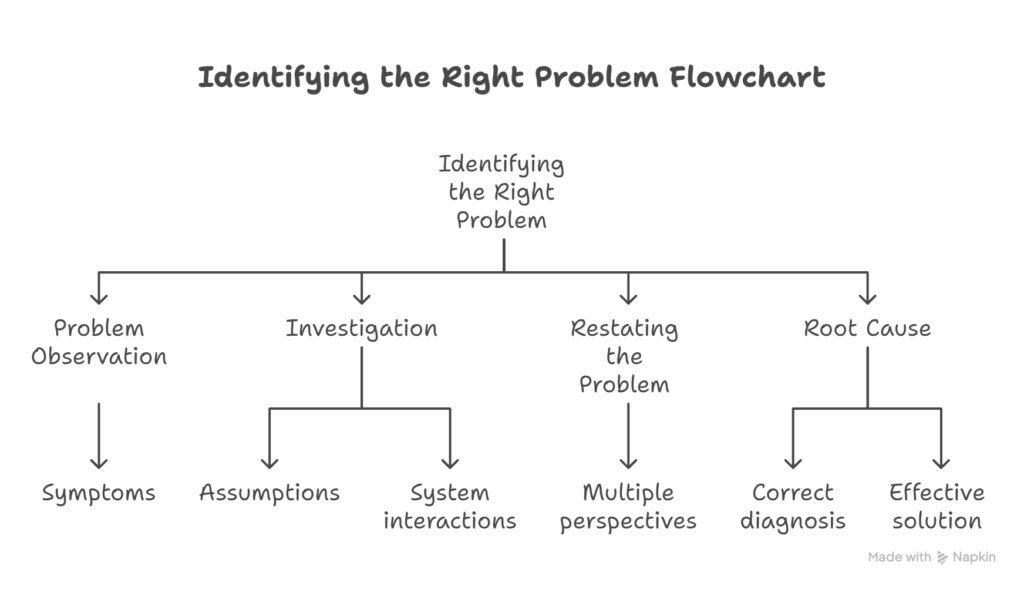
- Engineering success depends on solving the right problem, not just solving problems well.
- The initial description of a problem may only reflect symptoms.
- Restating the problem helps uncover hidden assumptions and root causes.
- Systems thinking allows engineers to identify deeper issues within complex systems.
Mind Map
Conclusion
Engineering history includes many examples of solutions that were technically excellent but ultimately ineffective because they addressed the wrong problem.
Before calculations begin or tools are used, engineers must take the time to understand what problem truly needs solving. By restating the problem from multiple perspectives and examining the broader system, engineers improve their chances of identifying the root cause.
The most effective engineering solutions begin not with action, but with careful thought about the question being asked.