Why should I choose this branch over others?
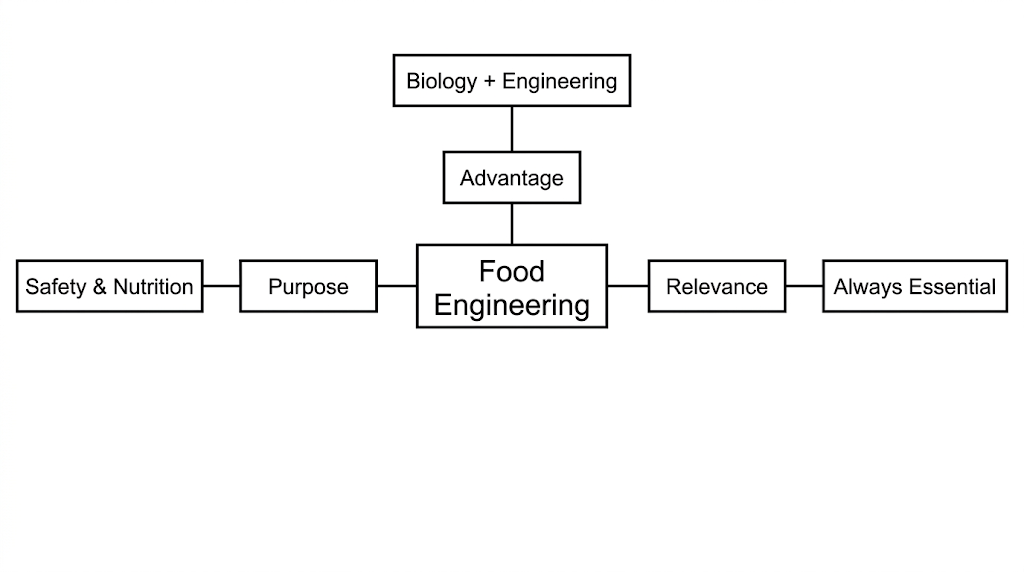
From my experience, the strongest reason to choose Food Engineering over many other branches is that it allows you to work in a field that directly connects engineering knowledge with human life every single day. Unlike some branches where the impact of your work may feel distant, Food Engineering gives you the chance to improve food safety, reduce waste, enhance nutrition, and support sustainable production for society. I have often felt that this branch offers a unique sense of purpose because the work is not only technical but also socially meaningful. If someone enjoys science but also wants their career to create visible real-world value, this branch can feel deeply satisfying. Another reason is that food will always remain an essential industry, which means the field carries long-term relevance even when markets change. In my view, students who are interested in both biology and engineering often find that Food Engineering gives them a more personally meaningful career than branches that feel purely mechanical or abstract.
What are the biggest misconceptions about this field?
One of the biggest misconceptions I have seen is that people assume Food Engineering is simply about cooking or working in kitchens, which is far from reality. Many students initially think the field is less technical because the word “food” sounds familiar, but the discipline actually involves serious engineering concepts such as thermodynamics, process design, fluid mechanics, automation, and quality systems. Another misunderstanding is that some people believe career opportunities are limited only to food factories, when in reality the field extends into research, packaging, safety, consulting, exports, and entrepreneurship. I have also noticed that some assume it is an easy branch compared with traditional engineering, but students often discover later that working with biological materials can be more unpredictable than working with metals or electronics. In my experience, the field is often underestimated simply because people do not realize how much science and engineering are hidden behind the food products they use daily.
What are the hidden challenges no one talks about?
From my perspective, one hidden challenge that few people openly discuss is the emotional pressure that comes with responsibility for food safety. A small mistake in processing conditions or hygiene can affect thousands of consumers, and that level of responsibility can feel heavier than many students expect. Another challenge is that food materials are naturally inconsistent because raw ingredients can change depending on season, climate, and storage, which means processes do not always behave predictably. I have also seen that some production roles involve shift schedules, strict hygiene environments, and long hours on the plant floor, which can surprise students who imagined a mostly laboratory-based career. In some organizations, career growth can also depend heavily on practical experience rather than academic performance alone, which can be frustrating for highly theoretical students. In my experience, the hidden difficulty of this field is that it requires both technical precision and adaptability in an industry where conditions can change quickly.
If I fail in core roles, what are my backup career paths?
From what I have observed, one reassuring aspect of Food Engineering is that even if someone does not remain in a core processing role, there are still many related career paths available. Graduates can move into quality assurance, where they focus on safety standards and compliance instead of production systems. Some transition into regulatory affairs, helping companies meet legal food safety requirements. Others enter technical sales, where they work with food machinery, ingredients, or packaging companies and use their engineering knowledge to support clients. I have also seen graduates move into research support, supply chain management, or food product development roles. For students with business interests, entrepreneurship in processed foods or consulting can become another option. In my experience, the branch provides more flexibility than many students realize because the knowledge of food systems can be applied in multiple directions even if the original career plan changes.
Is this branch aligned with my interest, aptitude, and long-term vision?
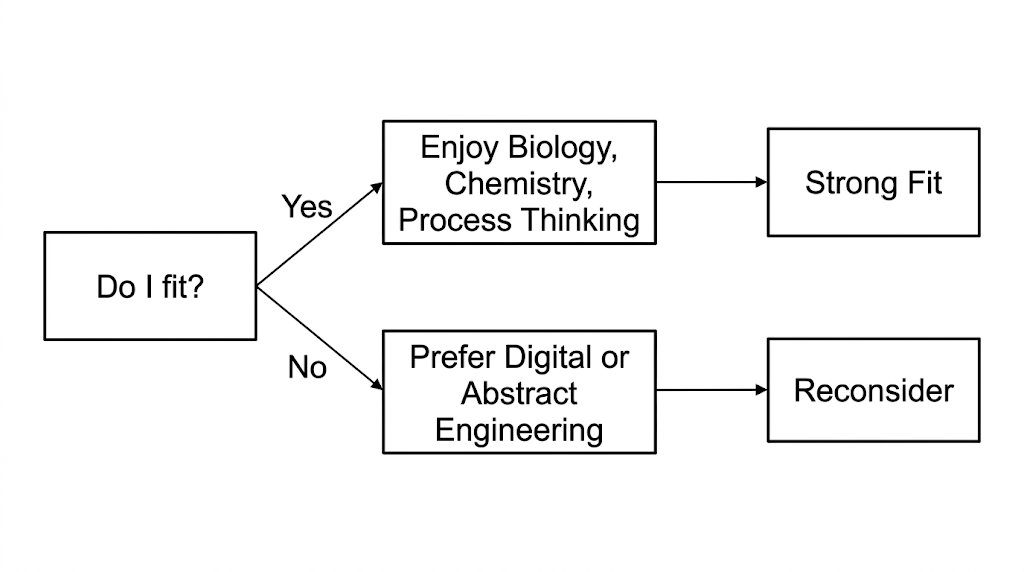
From my perspective, this is the most important question because no branch should be chosen only because it sounds promising on paper. Food Engineering aligns best with students who genuinely enjoy understanding how science can improve everyday life and who feel interested in both biological systems and engineering solutions. I have noticed that students who like chemistry, problem-solving, process thinking, and practical application often feel comfortable in this field. It can also suit people who want their work to have social relevance because food security, sustainability, and health are becoming more important globally. However, someone who prefers purely digital work or highly abstract engineering may not always feel fully satisfied here. In my experience, the branch becomes rewarding when your long-term vision includes contributing to safer food systems, innovation, or meaningful industrial development. The best choice usually happens when your natural curiosity matches the real nature of the field rather than the image people create around it.