
What are the core job roles in this branch?
From my experience, Automobile Engineering offers a broad range of career roles because the automotive industry needs engineers in design, manufacturing, testing, and innovation. One of the most common roles is design engineer, where the engineer works on developing vehicle components such as engines, suspension systems, braking systems, or body structures. Another important role is production engineer, who ensures that vehicles and parts are manufactured efficiently and consistently on the factory floor. I have also seen many graduates work as quality control engineers, where they inspect performance standards and maintain safety compliance. Some engineers move into vehicle testing and validation, where prototypes are analyzed for durability, fuel efficiency, and crash performance. With the rise of electric mobility, roles such as battery systems engineer, EV powertrain engineer, and automotive software engineer are becoming more common. In my experience, this branch gives flexibility because students can choose between mechanical systems, electronics, research, or management depending on their long-term goals.
What is the average starting salary in India?
From what I have observed in India, the starting salary for Automobile Engineering graduates depends heavily on technical skills, internships, and the type of employer. In smaller manufacturing companies or service sectors, fresh graduates often begin with salaries between ₹2.5 lakh and ₹4.5 lakh per year. Graduates who join larger automotive manufacturers or multinational companies may receive between ₹4 lakh and ₹8 lakh per year, especially if they have strong design software knowledge or electric vehicle specialization. Recent salary listings for entry-level automotive engineers in India commonly fall in this range, though premium employers may offer more for specialized roles. In my experience, salary growth in this field can become quite strong after a few years because engineers who gain practical problem-solving experience often move into higher-paying technical or leadership positions much faster than many students initially expect.
Which companies hire heavily in this field?
From my experience, several major automotive companies consistently hire Automobile Engineering graduates because the industry relies on continuous design and manufacturing improvement. In India, companies such as Tata Motors, Mahindra & Mahindra, Maruti Suzuki, Ashok Leyland, and Bajaj Auto regularly recruit engineers for production, design, and testing roles. Global companies such as Toyota, Honda, BMW, and Tesla also create opportunities for skilled professionals. I have also noticed increasing hiring in automotive component companies, battery manufacturers, and electric vehicle startups. From what I have seen, employers prefer graduates who combine technical understanding with modern digital tools.
What is the future demand (2025–2040)?
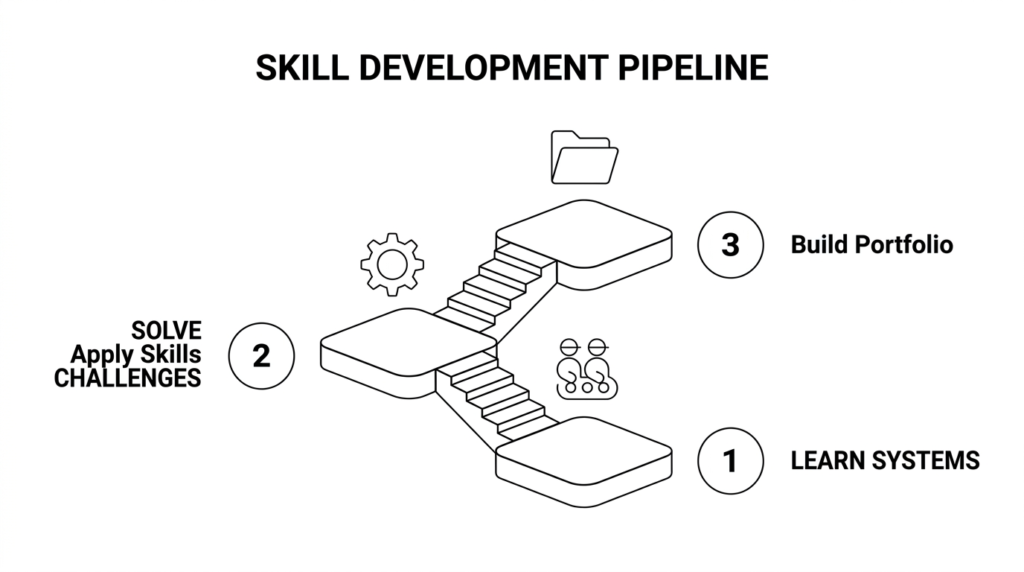
From my perspective, the future demand for Automobile Engineering from 2025 to 2040 looks promising, but the nature of the field is changing significantly. Traditional internal combustion vehicle roles may grow more slowly in some regions, while demand for engineers in electric vehicles, autonomous systems, lightweight materials, battery technology, and smart mobility is expected to rise strongly. Industry forecasts continue to show major investment in electric mobility and connected vehicle technology over the coming decades. I believe the engineers who adapt to these new technologies will find strong opportunities because transportation is becoming more digital and sustainable. I have seen that governments and private companies are investing heavily in cleaner transportation systems, which means the branch itself is not disappearing—it is evolving. In my experience, students who prepare for the future side of automotive engineering will likely find better opportunities than those who focus only on traditional systems.
Can this branch lead to entrepreneurship or startups?
From what I have observed, Automobile Engineering can definitely lead to entrepreneurship because transportation continues to create new business opportunities. Some engineers start businesses in vehicle servicing, diagnostics, custom modification, or performance tuning, while others move into electric vehicle charging solutions or battery management services. I have also seen startups emerge in areas such as smart mobility, fleet management software, vehicle safety systems, and aftermarket components. With the growth of electric mobility, there is increasing space for innovation in charging infrastructure and sustainable transportation technology. Engineers who understand both vehicle systems and market needs often have an advantage when launching a business because they can identify practical gaps in the industry. In my experience, this branch can be more entrepreneurial than many students realize, especially for those who are willing to combine technical knowledge with business thinking.
Conclusion:
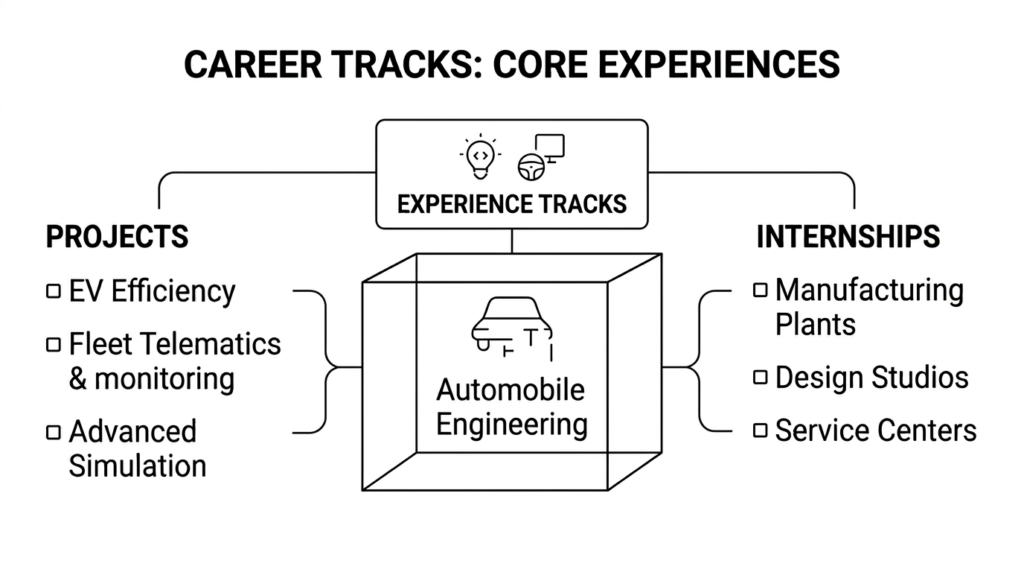
Automobile Engineering offers diverse career roles across design, production, testing, EV systems, and software, with steady salary growth and strong future demand driven by electric and smart mobility trends.
CTA:
Focus on future-ready skills (EV, software, simulation), gain practical experience, and stay adaptable—this is what will unlock the best job and startup opportunities in this field.