
What are some beginner-level projects in this branch?
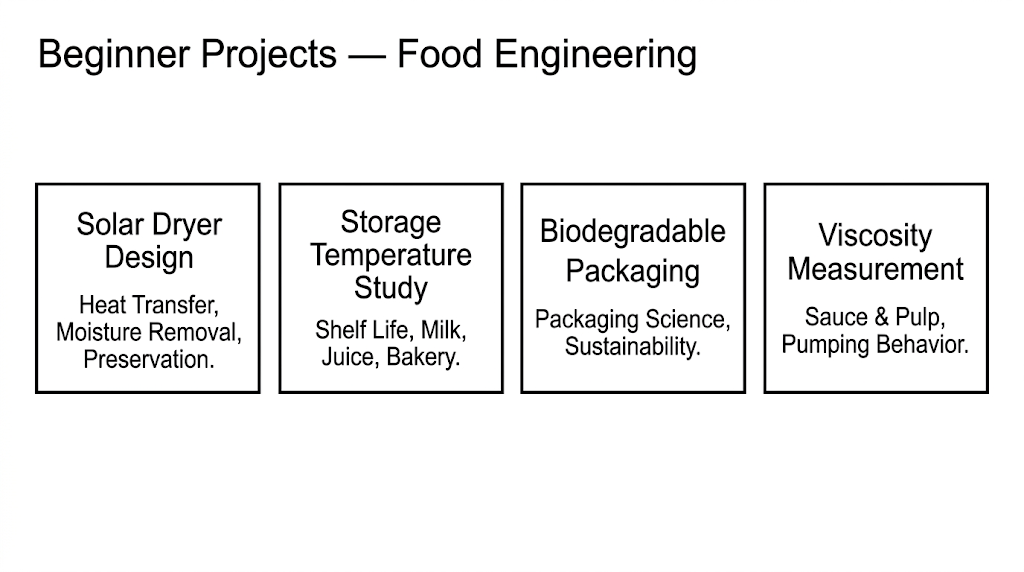
From my experience, beginner-level projects in Food Engineering should focus on helping students understand how basic engineering principles influence the quality and stability of food. One project that I often consider ideal for beginners is designing a small-scale solar dryer for fruits or vegetables because it introduces the student to moisture removal, heat transfer, and preservation at the same time. Another useful project is studying the effect of different storage temperatures on milk, juice, or bakery products to observe how shelf life changes under controlled conditions. I have also seen students benefit from creating simple biodegradable food packaging films because that introduces both packaging science and sustainability. Even a project involving measurement of viscosity changes in sauces or fruit pulps can teach how food behaves during pumping and processing. In my experience, beginner projects become meaningful when students can physically observe how a small change in engineering conditions can produce a noticeable change in the food product itself.
What are industry-level projects I should aim for?
From what I have seen, students who want to grow beyond academic work should gradually aim for projects that resemble real industrial challenges. One strong project is designing an energy-efficient pasteurization system that reduces heat loss while maintaining microbial safety because this reflects a genuine concern in dairy and beverage industries. Another valuable project is optimizing a cold chain system for perishable foods by studying temperature variation during transportation and storage. I have also noticed that projects involving automation of food production lines through sensors and control systems can make a student stand out because industries increasingly value smart manufacturing. Shelf-life prediction modeling for packaged foods is another excellent advanced project because it combines chemistry, microbiology, and engineering analysis. In my experience, the most impressive industry-level projects are those that solve problems related to safety, sustainability, efficiency, or waste reduction because these are the exact issues food companies deal with daily.
How can I build a portfolio in this domain?
From my experience, building a portfolio in Food Engineering requires showing not only academic knowledge but also practical problem-solving ability. I usually advise students to document every meaningful project they complete, including the objective, method, equipment used, data collected, and final conclusions. Photographs of laboratory setups, process diagrams, and small prototypes can make the portfolio more convincing because they show real involvement. Including software-based work such as plant layouts in AutoCAD or data analysis in Python can also demonstrate technical versatility. I have found that students who write short technical summaries explaining what they learned from each project often leave a stronger impression than those who simply list activities. In my experience, a good portfolio should show that the student can understand a food processing problem, apply engineering principles, and communicate the results professionally.
What kind of internships should I target?
From what I have observed, the best internships for Food Engineering students are those that expose them to actual production environments rather than only office-based tasks. Internships in dairy plants, beverage manufacturing units, food packaging companies, frozen food industries, and quality control laboratories can provide valuable hands-on experience. I usually encourage students to look for internships where they can observe processing operations such as pasteurization, drying, filling, refrigeration, and sanitation procedures because these reveal how theory becomes industrial practice. Internships in research and development departments can also be valuable for students interested in product innovation. In my experience, internships become truly useful when students actively ask questions about process design, equipment performance, and quality control instead of simply completing attendance requirements. The goal should be to understand how industrial food systems operate in real conditions.
Are there open-source or real-world problems I can work on?
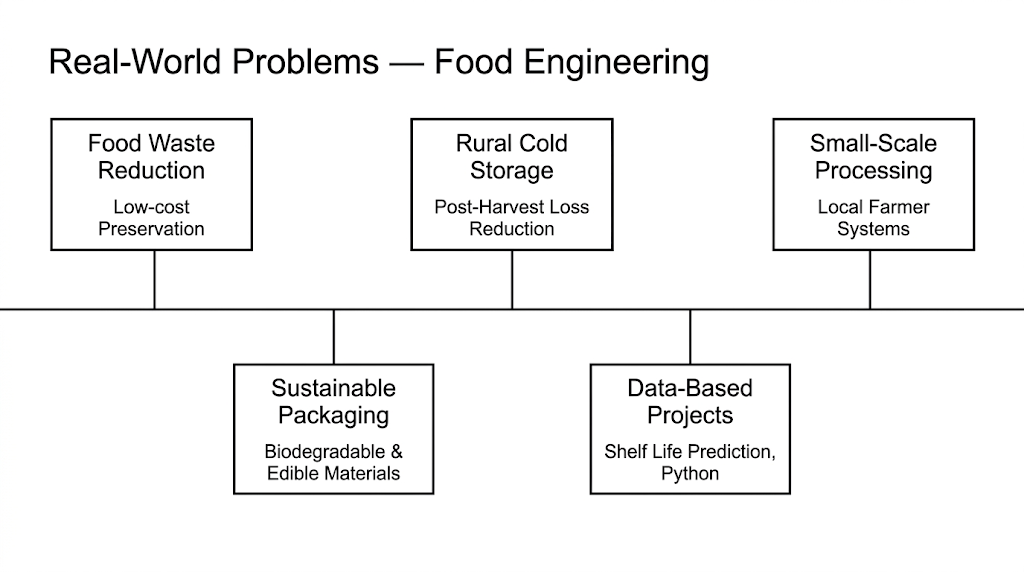
From my perspective, there are many real-world problems in Food Engineering that students can work on even without access to a large industrial facility. Food waste reduction is one area where students can explore low-cost preservation methods for local fruits and vegetables. Sustainable packaging is another important area where biodegradable or edible packaging materials can be investigated. I have also seen opportunities in improving low-cost cold storage for rural communities where post-harvest losses remain high. Data-based projects such as predicting shelf life or monitoring temperature fluctuations during storage can be explored using tools like Python. Some students also work on improving small-scale food processing systems for local farmers to increase product value. In my experience, the most meaningful projects are often those connected to genuine community needs because they show that Food Engineering can solve practical problems while creating social impact.