Q1. What are the core job roles in this branch?
- Junior Engineer (JE) / Assistant Engineer (AE): In State Irrigation/Water Resource Departments, Agriculture Departments, or NABARD-funded projects. Design and supervision of on-farm development works.
- Agricultural Engineer — Private Companies: In machinery manufacturers, drip/sprinkler companies, food processing firms. Roles include design, production, quality control, and after-sales service.
- Farm Manager / Estate Engineer: On large corporate farms, plantation companies (tea, coffee, sugarcane), and agribusiness estates. Planning and supervising all engineering operations.
- Project Engineer — Agri Infrastructure: With consultancy firms, EPC contractors, or development organisations. Designing and implementing watershed projects, cold chain infrastructure, and rural roads.
- Research Scientist / Research Engineer: At ICAR institutes, SAUs (State Agricultural Universities), CSIR labs. Requires M.Tech or higher.
- Technical Officer — NABARD / SFAC / FCI: These are prestigious government-adjacent roles in agricultural financing and food procurement. Highly competitive but very stable and respected.
- AgriTech Product / Solution Engineer: At startups and tech companies building drones, IoT sensors, precision farming platforms. The fastest-growing and highest-paying emerging role.
- Food Safety Officer / Inspector (FSSAI): For those interested in regulatory roles in food processing and quality.
Q2. What is the average starting salary in India?
- Government (JE/AE — State Departments): Rs. 35,000 – 55,000/month (Pay Level 6–7) plus DA, HRA, medical, pension. Job security is very high.
- PSUs (FCI, NABARD, IFFCO, KRIBHCO, NAFED): Rs. 40,000 – 65,000/month with perks. Entry via IBPS SO, GATE, or direct exam.
- Private Machinery & Agri Companies: Rs. 25,000 – 45,000/month for freshers. Grows rapidly with performance.
- AgriTech Startups: Rs. 35,000 – 70,000/month depending on the startup’s stage and funding. High upside.
- ICAR Scientist B (after GATE/ICAR exam): Rs. 56,100/month basic + allowances. Extremely prestigious and academically rewarding.
Q3. Which companies hire heavily in this field?
- John Deere India, Mahindra Agri Solutions, Kubota India, CLAAS India, AGCO
- Jain Irrigation, Netafim India, EPC Industries, Finolex Plasson
- ITC Agri Business, Britannia, PepsiCo India, Nestle India (food processing)
- ICAR Institutes (70+ across India), State Agricultural Universities (40+)
- State Irrigation Departments, NVDA, Cauvery Neeravari Nigam, Krishna Bhagya Jala Nigam
- NABARD, FCI, IFFCO, National Seeds Corporation
- AgriTech startups — Cropin, AgroStar, DeHaat, Fasal, Intello Labs, Stellapps
- Development organisations — ICRISAT, IWMI, FAO, World Bank projects
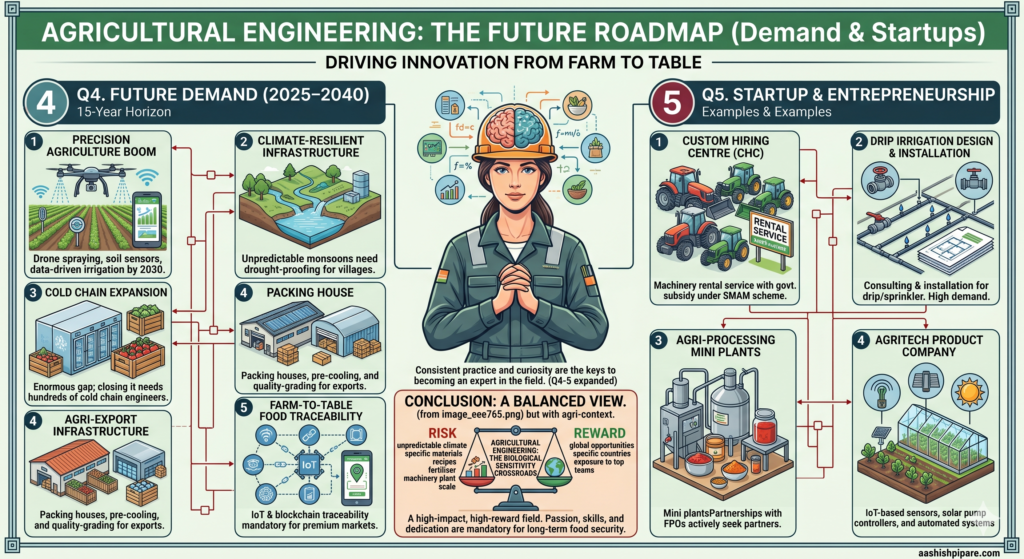
Q4. What is the future demand (2025–2040)?
I have lived through five major shifts in agricultural engineering — from bullock-drawn ploughs to GPS-guided tractors. Here is what the next 15 years will bring, and why I am more optimistic about this branch than at any point in my career:
- Precision Agriculture Boom: By 2030, most medium and large farms in India will use drone spraying, soil sensors, and data-driven irrigation. Every system needs agricultural engineers to design, calibrate, and maintain it.
- Climate-Resilient Infrastructure: With unpredictable monsoons, drought-proofing every village through micro-watersheds, check-dams, and groundwater recharge structures is a national priority. Thousands of engineers will be needed.
- Cold Chain Expansion: India has 37 million tonnes of cold storage capacity against a need of 61 million tonnes. The gap is enormous, and closing it will require hundreds of cold chain engineers.
- Agri-Export Infrastructure: India’s agricultural exports are growing. Packing houses, pre-cooling facilities, and quality-grading systems for export produce need agricultural engineers.
- Farm-to-Table Food Traceability Systems: IoT and blockchain-based food traceability is becoming mandatory for export and premium domestic markets. Agricultural engineers who understand both the field and the technology will lead this.
Q5. Can this branch lead to entrepreneurship or startups?
Absolutely yes — and this is one of the most underappreciated facts about our branch. Agriculture is a sector where technology adoption is still low and problems are enormous, which means the entrepreneurship opportunity is massive. Examples of successful ventures by agricultural engineers:
- Custom Hiring Centre (CHC): Starting a farm machinery rental service in a cluster of villages. Government subsidy under SMAM scheme covers 40–80% of machinery cost. Can be self-sustaining within 2–3 years.
- Drip Irrigation Design & Installation: A consulting + installation business for drip and sprinkler systems. High demand in Maharashtra, Rajasthan, Karnataka, and Gujarat.
- Agri-Processing Mini Plants: Setting up small-scale processing units for tomato paste, spices, dals, rice milling. FPOs (Farmer Producer Organisations) actively look for such partnerships.
- AgriTech Product Company: Developing IoT-based soil sensors, solar pump controllers, or automated greenhouse systems. Requires engineering + business acumen.