
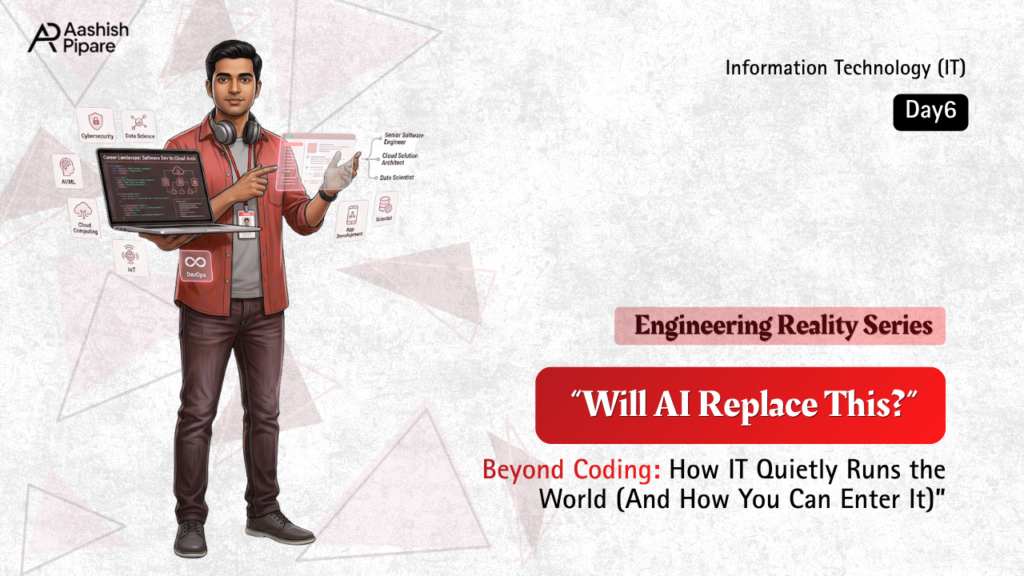
(This is not a future topic anymore—it’s already happening around us.)
What are the must-have technical skills for freshers?
(Note: Keeping your structure intact—this point overlaps with AI impact because skills determine how you survive automation.)
When I started understanding how AI is changing IT, one thing became very clear—basic skills are no longer enough. Earlier, just knowing how to code or run systems could get you a job. But now, companies expect more thinking and problem-solving ability, not just execution.
For freshers today, one of the most important skills is understanding how to use AI tools effectively, not just fearing them. Tools like ChatGPT and GitHub Copilot can already generate code, debug errors, and automate repetitive work. I’ve seen students who use these tools smartly complete tasks much faster and learn quicker.
Apart from that, strong fundamentals in programming, data structures, and system design still matter. But what’s becoming more important is your ability to break down problems, think logically, and validate AI-generated outputs.
So from my experience, the must-have skill today is not just coding—it’s working alongside AI while still thinking independently.
How will AI impact this branch?
When I first saw AI tools writing code and automating tasks, I honestly thought it might reduce opportunities in IT. But after observing closely, I realized the impact is more complex.
AI is not replacing IT—it is changing the nature of work in IT. Tasks that used to take hours, like writing basic code, testing, or documentation, can now be done much faster with AI assistance. This means companies expect engineers to focus more on design, decision-making, and innovation rather than repetitive work.
From what I’ve seen, AI is acting like a productivity booster. A single skilled engineer can now do the work that previously required a small team. This increases efficiency but also raises expectations.
So the real impact is this:
👉 AI will not reduce opportunities, but it will increase competition and skill requirements.
Those who adapt will grow faster, while those who rely only on old methods may struggle.
What parts of this field are at risk of automation?
This is something many students are concerned about, and honestly, the concern is valid—but it needs clarity.
From what I’ve observed, the parts most at risk are repetitive, rule-based tasks. For example, basic coding, manual testing, simple data entry, and routine IT support tasks can already be automated to a large extent.
Even debugging and code generation are being assisted heavily by AI tools like GitHub Copilot. This means roles that involve only following instructions without deeper understanding are becoming less valuable.
However, roles that involve decision-making, system design, creativity, and problem-solving are much harder to automate. AI can assist, but it still needs human direction.
From my experience, the biggest risk is not automation itself—it’s becoming someone whose work can be easily automated.
So instead of asking “Will AI take my job?”, a better question is:
👉 “Am I doing work that AI can easily replace?”
If the answer is yes, then it’s time to upgrade.
What skills make me future-proof in this domain?
After seeing how fast technology is evolving, I’ve realized that being “future-proof” doesn’t mean learning one technology—it means building the right mindset and skill set.
One of the most important skills is problem-solving ability. AI can generate solutions, but it still depends on humans to define problems correctly and choose the right approach.
Another key skill is system thinking—understanding how different parts of a system connect and work together. This is something AI struggles with when complexity increases.
You also need adaptability. New tools, frameworks, and technologies will keep coming, and those who can learn quickly will always stay ahead.
From what I’ve seen, combining IT with areas like data, AI, cybersecurity, or cloud computing makes your profile stronger. And most importantly, you should learn how to use AI as a tool, not see it as competition.
So future-proofing is not about avoiding AI—it’s about leveraging it while building deeper skills that AI cannot easily replace.
Is this branch evolving towards interdisciplinary roles?
This is something I didn’t fully understand at the beginning, but now it’s very clear—IT is no longer a standalone field. It is becoming deeply connected with almost every other domain.
For example, IT + healthcare is leading to digital health systems, IT + finance is creating fintech solutions, and IT + manufacturing is enabling automation and smart factories.
From what I’ve seen, companies are now looking for people who not only understand technology but also understand the domain they are working in.
Even roles are changing—today, you’ll find positions that combine skills, like data analyst with business knowledge, or software developer with AI expertise.
So yes, IT is definitely moving toward interdisciplinary roles, and this actually creates more opportunities rather than limiting them.
The advantage here is that you can shape your career based on your interests—whether it’s business, healthcare, design, or any other field.