

What are the current industry trends?
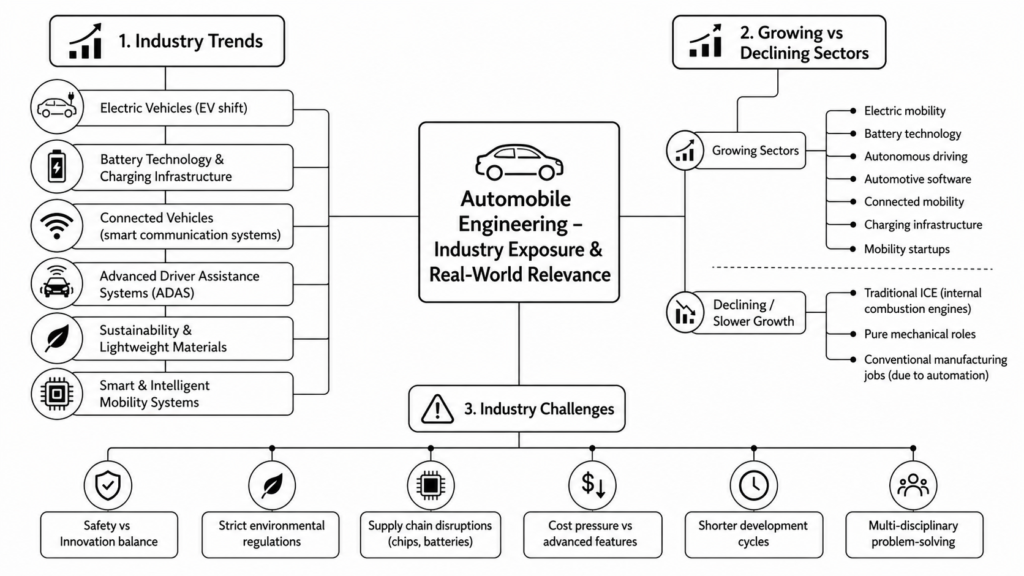
From my experience, the automobile industry is going through one of its biggest transformations in decades because technology is changing how vehicles are designed and used. One of the strongest trends I have seen is the rapid shift toward electric vehicles, as manufacturers invest heavily in battery technology, charging infrastructure, and cleaner transportation systems. Another important trend is the growth of connected vehicles, where cars can communicate with drivers, service centers, and even other vehicles through digital systems. I have also noticed a major rise in advanced driver assistance systems, where features like lane monitoring, collision warning, and adaptive cruise control are becoming more common even in everyday vehicles. Sustainability has also become a central focus, with companies trying to reduce carbon emissions and use lighter recyclable materials. From what I have observed, Automobile Engineering is no longer just about building vehicles; it is now about creating smarter, cleaner, and more intelligent mobility systems.
Which sectors are growing or declining?
From what I have seen, some sectors within Automobile Engineering are expanding rapidly while others are gradually slowing down. The fastest-growing sectors include electric mobility, battery technology, autonomous driving systems, and automotive software development because future vehicles rely increasingly on electronics and intelligent control. The market for vehicle electronics and connected mobility continues to grow as consumers demand safer and smarter transportation. I have also noticed growth in charging infrastructure and mobility startups that focus on shared transportation. On the other hand, traditional sectors that depend only on internal combustion engine development are growing more slowly in some regions because environmental regulations are becoming stricter. Certain conventional mechanical manufacturing roles may also decline as automation increases. In my experience, the field is not shrinking, but the opportunities are shifting toward technology-driven sectors rather than purely traditional automotive roles.
What are the major challenges faced in this field?
From my perspective, one of the biggest challenges in Automobile Engineering today is balancing innovation with safety. New technologies such as electric drivetrains and autonomous systems must be introduced without compromising reliability because vehicle failure can directly affect human lives. Another major challenge is meeting stricter environmental regulations while still maintaining performance and affordability. I have also seen that supply chain disruptions have become a serious issue because modern vehicles depend on semiconductors, batteries, and specialized materials from global suppliers. Cost pressure is another challenge because consumers expect advanced features without a dramatic increase in price. In addition, the industry faces constant pressure to shorten product development cycles while maintaining quality. From what I have observed, modern automobile engineers must solve technical, environmental, and economic problems at the same time, which makes the field more demanding than many people realize.
Are there government initiatives supporting this branch?
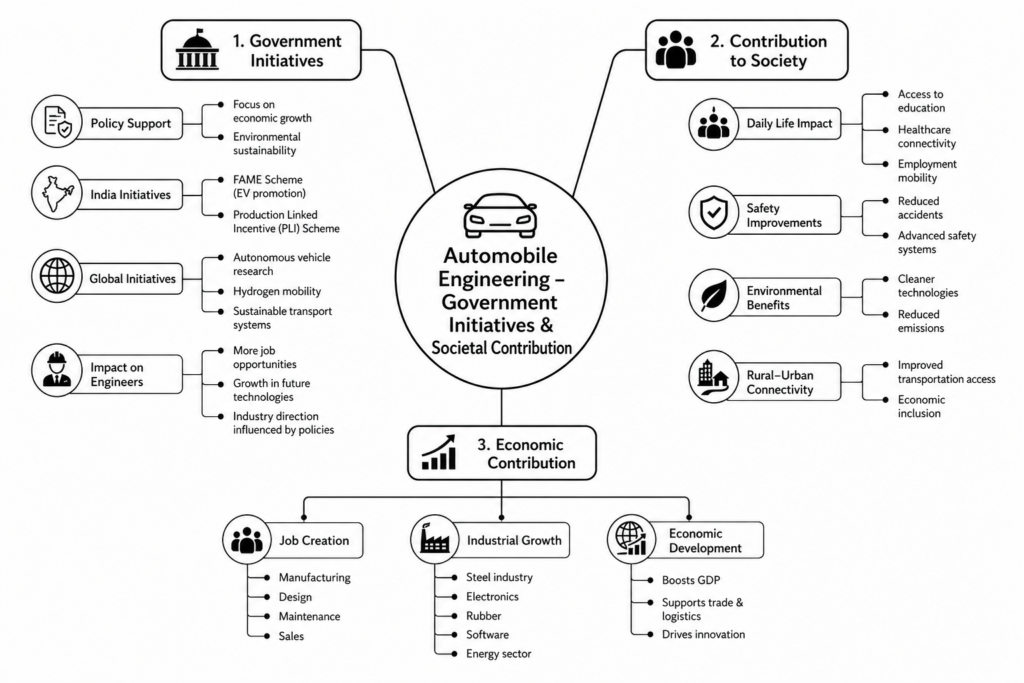
From what I have seen, governments are actively supporting Automobile Engineering because transportation plays a major role in economic growth and environmental policy. In India, programs such as the FAME India Scheme have been created to encourage electric vehicle production and adoption by offering incentives for cleaner mobility. The Production Linked Incentive Scheme has also supported advanced automotive manufacturing and battery production. I have noticed that many governments worldwide are also funding research in autonomous vehicles, hydrogen mobility, and sustainable transport systems. These initiatives create opportunities not only for manufacturers but also for engineers who can contribute to future vehicle technologies. In my experience, policy support is becoming an important factor in shaping where the automotive industry is headed.
How does this field contribute to society and economy?
From my experience, Automobile Engineering contributes to society in a way that extends far beyond transportation alone. Vehicles make it possible for people to access education, healthcare, employment, and trade, which means this field supports daily life on a very practical level. Economically, the automotive sector creates millions of jobs in manufacturing, design, logistics, maintenance, and sales. I have seen that automobile industries also stimulate related sectors such as steel, electronics, rubber, software, and energy. Socially, improvements in vehicle safety reduce accidents and save lives, while cleaner technologies help reduce environmental damage. In developing countries especially, stronger transportation systems can improve connectivity between rural and urban areas. From what I have observed, Automobile Engineering is not simply about building machines; it plays a major role in economic development, technological progress, and improving the quality of everyday life.
Conclusion:
Automobile Engineering is evolving rapidly with trends like electric vehicles, connected systems, and sustainability, while opportunities shift toward tech-driven sectors supported by strong government initiatives and real-world impact on society and the economy.
CTA:
Stay updated with industry trends, focus on emerging areas like EVs and smart mobility, and align your skills with future demands to stay relevant and competitive.