

a. What are the current industry trends?
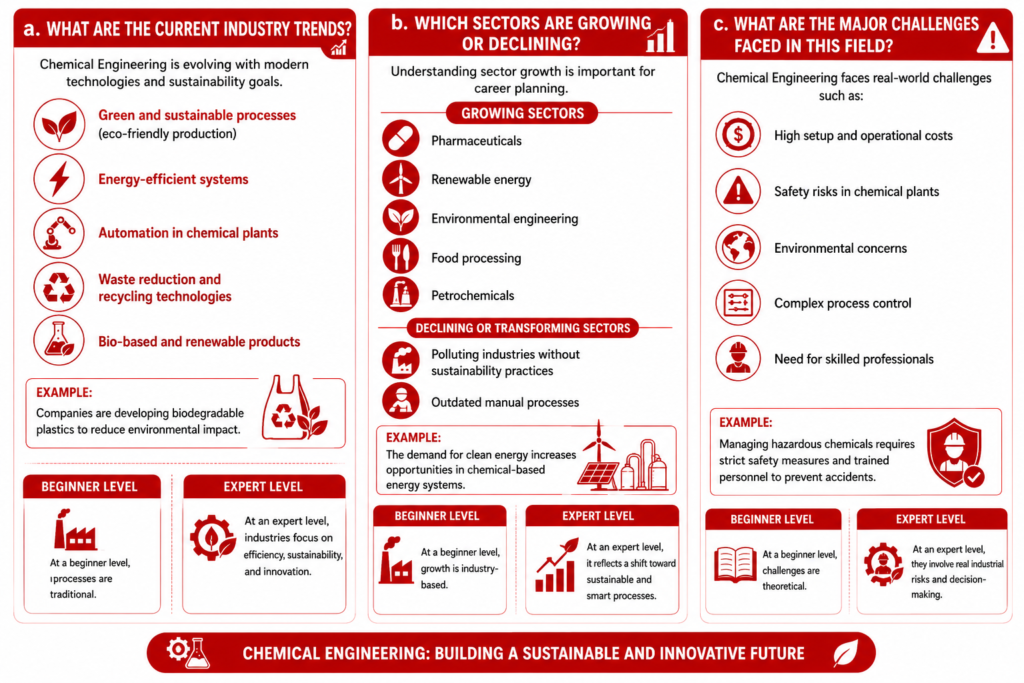
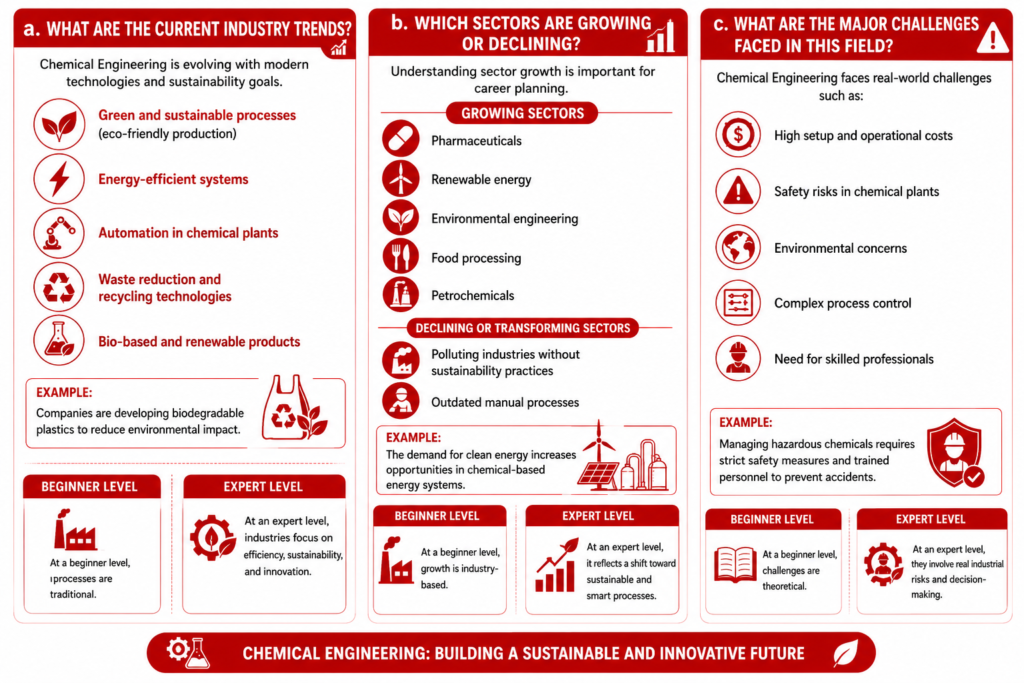
Chemical Engineering is rapidly evolving due to technological advancements, environmental concerns, and the growing demand for sustainable industrial practices. Modern industries are focusing on developing processes that are not only economically efficient but also environmentally responsible. As a result, chemical engineers play a crucial role in creating innovative solutions that improve productivity, reduce waste, and support sustainable development.
Major Industry Trends
1. Green and Sustainable Processes
One of the most significant trends is the adoption of green chemistry and sustainable manufacturing practices. Industries are designing processes that minimize pollution, reduce the use of hazardous chemicals, and lower carbon emissions. The goal is to create products in a way that has minimal impact on the environment while conserving natural resources.
Example: Many companies are producing biodegradable plastics and eco-friendly packaging materials to reduce plastic waste and environmental pollution.
2. Energy-Efficient Systems
Industries are continuously seeking methods to reduce energy consumption and improve operational efficiency. Advanced heat recovery systems, optimized process designs, and energy management technologies help lower production costs while reducing greenhouse gas emissions.
Example: Chemical plants use waste heat recovery systems to recycle excess heat and reduce overall energy usage.
b. Which sectors are growing or declining?
Understanding which sectors are expanding and which are declining is important for students and professionals planning a career in Chemical Engineering. Industry growth is influenced by factors such as technological advancements, environmental regulations, consumer demand, government policies, and global economic trends. While some traditional industries continue to evolve, many new opportunities are emerging in sustainable and technology-driven sectors.
Growing Sectors in Chemical Engineering
1. Pharmaceuticals and Healthcare
The pharmaceutical industry is one of the fastest-growing sectors for chemical engineers. Increasing global healthcare needs, an aging population, and the demand for new medicines and vaccines have created significant opportunities. Chemical engineers are involved in drug manufacturing, process optimization, quality control, and large-scale production of pharmaceutical products.
Example: The large-scale production of vaccines and life-saving medicines requires chemical engineers to design safe and efficient manufacturing processes.
2. Renewable Energy
As countries focus on reducing dependence on fossil fuels, renewable energy is becoming a major growth area. Chemical engineers contribute to the development of biofuels, hydrogen energy systems, fuel cells, and energy storage technologies. This sector offers excellent opportunities for innovation and sustainable development.
Example: Chemical engineers help produce bioethanol and biodiesel from renewable resources such as agricultural waste and plant materials.
The demand for clean energy increases opportunities in chemical-based energy systems.
c. What are the major challenges faced in this field?
Chemical Engineering is a highly important field that contributes to the production of fuels, chemicals, medicines, food products, and many other essential materials. However, the industry faces several challenges that require technical expertise, careful planning, and continuous innovation. Chemical engineers must balance productivity, safety, cost, environmental responsibility, and regulatory compliance while ensuring efficient plant operations.
Major Challenges in Chemical Engineering
1. High Setup and Operational Costs
One of the biggest challenges in chemical engineering is the high cost of establishing and operating industrial plants. Chemical manufacturing facilities require expensive equipment, advanced technology, infrastructure, utilities, and maintenance systems. In addition, the costs of raw materials, energy consumption, transportation, and labor can significantly affect profitability.
Chemical engineers must continuously optimize processes to reduce costs while maintaining product quality and safety standards.
Example: Building a new petrochemical plant may require investments worth millions or even billions of dollars, making cost management a critical challenge.
2. Safety Risks in Chemical Plants
Chemical industries often handle hazardous materials, high temperatures, high pressures, toxic substances, and flammable chemicals. Any mistake can result in accidents, explosions, fires, chemical leaks, or environmental disasters.
Ensuring workplace safety is one of the primary responsibilities of chemical engineers. They design safety systems, conduct risk assessments, implement emergency procedures, and ensure compliance with safety regulations.
Example: Ensuring safety in a refinery requires continuous monitoring of equipment, proper handling of flammable materials, and strict adherence to safety protocols to prevent accidents.
d. Are there government initiatives supporting this branch?
Yes, governments around the world actively support Chemical Engineering because it plays a crucial role in industrial development, economic growth, environmental protection, healthcare, energy production, and technological innovation. Chemical engineers contribute to sectors such as manufacturing, pharmaceuticals, petrochemicals, food processing, renewable energy, and environmental management. To encourage growth and sustainability in these areas, governments introduce various policies, funding programs, regulations, and research initiatives.
Why Governments Support Chemical Engineering
Chemical Engineering is closely linked to national development because it helps produce essential products such as fuels, medicines, fertilizers, food additives, plastics, and advanced materials. It also supports job creation, industrial competitiveness, exports, and infrastructure development. Governments recognize that a strong chemical industry contributes significantly to economic progress and technological advancement
e. How does this field contribute to society and the economy?
Chemical Engineering is one of the most important branches of engineering because it directly affects everyday life and supports economic development. Chemical engineers use scientific principles and engineering techniques to convert raw materials into valuable products that improve living standards, support industries, and drive technological progress. From the medicines people use to the fuel that powers transportation, chemical engineering plays a critical role in modern society.
Contribution to Society
1. Producing Essential Products
Chemical engineers are involved in the production of many products that people use daily. These include fuels, medicines, fertilizers, food products, cleaning agents, plastics, cosmetics, and household chemicals.
Without chemical engineering, the large-scale production of these essential goods would not be possible. Engineers ensure that products are manufactured safely, efficiently, and at affordable costs.
Example: The medicines used to treat diseases are produced through carefully designed chemical and biochemical processes developed by chemical engineers.
2. Improving Healthcare and Medicine
Chemical engineering has a significant impact on healthcare through the development and manufacturing of pharmaceuticals, vaccines, medical devices, and biotechnology products.
Chemical engineers help create safe production processes that ensure medicines meet strict quality standards while remaining accessible to large populations.
Example: The large-scale production of vaccines requires advanced chemical and biochemical engineering techniques to ensure quality and effectiveness.
CONCLUSION:
Chemical Engineering has strong industry exposure and real-world relevance, as it directly supports essential industries and daily life needs. It plays a crucial role in sustainable development, industrial growth, and innovation. This field ensures continuous opportunities by solving real-world problems and improving efficiency across sectors.