
🔹 What are the specializations available?
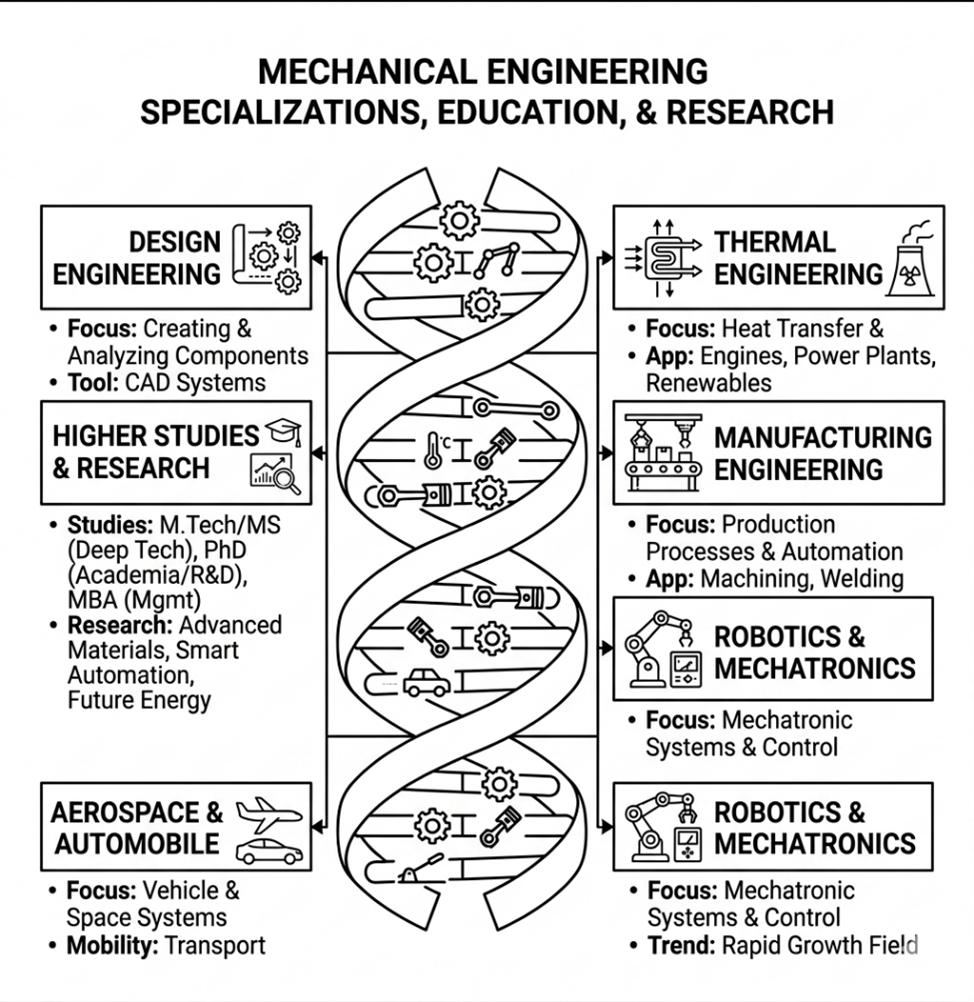
Mechanical Engineering provides multiple specializations that allow you to focus on a specific domain based on your interest. One major specialization is Design Engineering, which focuses on creating and analyzing machine components using CAD tools. Another important area is Thermal Engineering, which deals with heat transfer, thermodynamics, and energy systems such as engines and power plants. Manufacturing Engineering focuses on production processes like machining, welding, and automation. Automobile Engineering specializes in vehicle design, engines, and mobility systems. Robotics and Mechatronics combine mechanical systems with electronics and control systems, which is a rapidly growing field. Aerospace Engineering focuses on aircraft and space systems. For example, a student interested in renewable energy may choose thermal engineering to work on energy systems. Each specialization offers unique career opportunities and industry demand. Choosing the right specialization depends on your interest and career goals.
🔹 Should I pursue higher studies (M.Tech, MS, MBA, PhD)?
Higher studies can significantly enhance career opportunities, but the decision depends on your goals. M.Tech or MS is suitable for students who want deeper technical knowledge and specialization. It is useful for research roles, design positions, and high-level technical jobs. For example, a student specializing in thermal engineering can work on advanced energy systems. A PhD is ideal for those interested in research and academic careers. It allows you to contribute to innovation and scientific development. An MBA is beneficial for those who want to move into management, operations, or business roles. For instance, a mechanical engineer with an MBA can become a plant manager or operations head. Higher studies also improve salary potential and global opportunities. However, it is not mandatory—practical experience and skills are equally important. The choice should align with your long-term career vision.
🔹 What are the research opportunities?
Mechanical engineering offers vast research opportunities in both academic and industrial fields. One major area is renewable energy, where researchers work on improving efficiency of wind turbines and solar systems. Another important area is advanced materials, where engineers develop lightweight and strong materials for industries like aerospace. Robotics and automation research focuses on developing intelligent machines for manufacturing and healthcare. For example, robotic systems used in surgery are a result of mechanical research. Thermal systems and energy efficiency are also key research areas. Universities and research institutions offer projects and funding for innovation. Industries also invest heavily in research and development to stay competitive. Research requires strong analytical skills and creativity. It contributes to technological advancement and industry growth. Students interested in innovation should consider research as a career path.
🔹 What global opportunities exist in this field?
Mechanical engineering offers strong global opportunities because the demand for engineers exists worldwide. Countries like USA, Germany, Canada, and Japan have advanced industries that require skilled engineers. For example, Germany is known for its automobile and manufacturing industries. Engineers can work in sectors such as automotive, aerospace, energy, and robotics. Higher studies abroad can open doors to international careers. Global companies prefer engineers with knowledge of international standards and advanced technologies. Working abroad provides exposure to modern practices and better career growth. Engineers can also work in multinational companies operating in multiple countries. Global opportunities are not limited to jobs—research and innovation roles are also available. However, skills, experience, and adaptability are important for international success. Mechanical engineering provides a platform for worldwide career growth.
🔹 How can I become a top 1% expert in this domain?
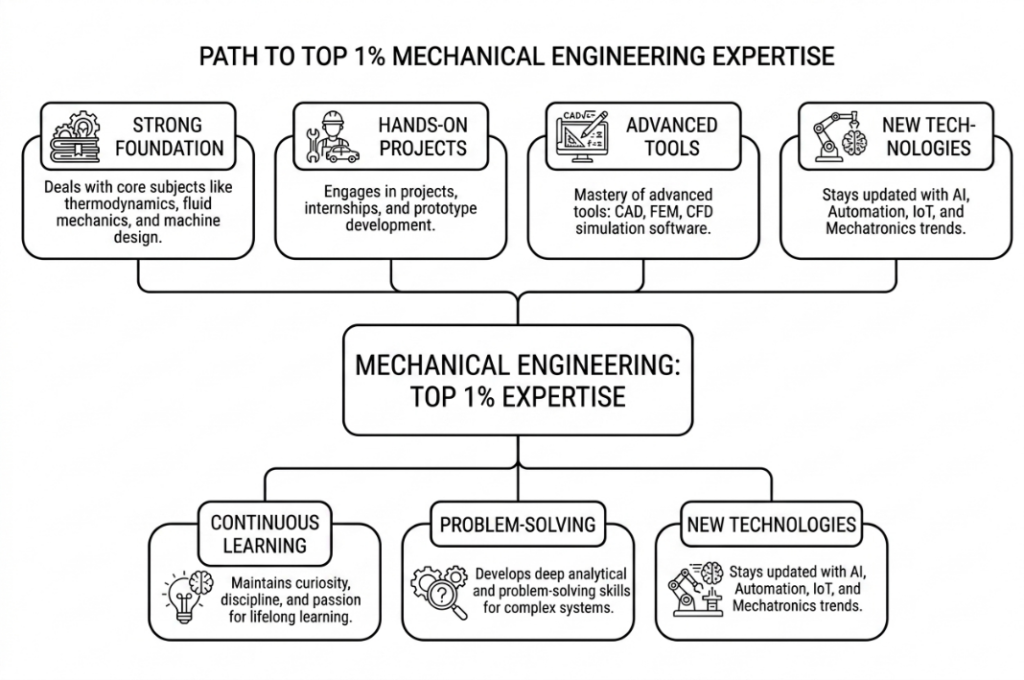
Becoming a top expert requires consistent effort, deep knowledge, and practical experience. First, build a strong foundation in core subjects like thermodynamics, mechanics, and design. Second, gain hands-on experience through projects and internships. Third, learn advanced tools such as CAD and simulation software. For example, mastering design software can make you highly valuable in industry. Stay updated with new technologies like automation and AI. Develop problem-solving and analytical skills to handle complex challenges. Networking with industry professionals and mentors helps in learning and growth. Participating in competitions and publishing research papers also builds credibility. Continuous learning is essential to stay ahead in the field. Discipline, curiosity, and passion are key factors. With consistent effort, you can achieve expert-level knowledge and success.
FINAL CONCLUSION
Advanced growth in Mechanical Engineering depends on strategic choices and continuous development.
✔ Specializations help focus your career path
✔ Higher studies open advanced opportunities
✔ Research drives innovation and growth
✔ Global opportunities expand career potential
✔ Expertise comes from consistency and learning
Mechanical Engineering is not limited to a degree — it is a lifetime journey of learning, innovation, and growth.