
What are the specializations available?
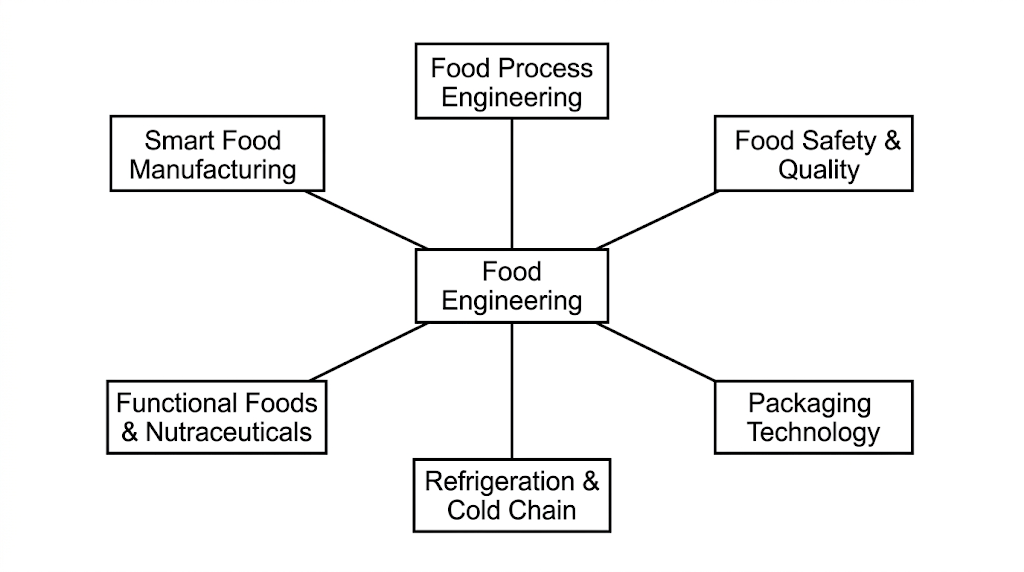
From my experience, Food Engineering offers several specializations that allow a student to move into highly focused career paths depending on personal interest. One of the most common specializations is food process engineering, where engineers concentrate on designing and optimizing systems such as drying, freezing, sterilization, and packaging. Another important area is food safety and quality engineering, which focuses on contamination control, regulatory compliance, and process validation. I have also seen growing interest in packaging technology, where engineers work on sustainable packaging materials and shelf-life improvement. Some professionals specialize in refrigeration and cold-chain engineering, which is becoming increasingly valuable because of global food distribution. Emerging areas such as functional foods, nutraceutical processing, and smart food manufacturing are also becoming more important as technology advances. In my view, the strength of this branch is that it allows an engineer to choose between traditional processing roles and newer innovation-driven fields.
Should I pursue higher studies (M.Tech, MS, MBA, PhD)?
From what I have observed, the decision to pursue higher studies depends largely on the career direction you want to follow. If your goal is to deepen technical expertise and work in process design or advanced industry roles, an M.Tech or MS can provide stronger specialization and better career growth. Students who want to move into international research or advanced technology development often benefit from an MS abroad, especially in countries with strong food innovation sectors. If someone is interested in management, operations leadership, or building a business, an MBA can become very useful after gaining some industrial experience. For those who enjoy innovation, teaching, or scientific discovery, a PhD can open opportunities in research institutions and universities. In my experience, higher studies are most valuable when they match a clear long-term goal rather than being pursued simply to delay career decisions. The degree itself matters, but clarity of direction matters even more.
What are the research opportunities?
From my perspective, research opportunities in Food Engineering are expanding rapidly because the food industry is facing new scientific and environmental challenges. One major area of research involves improving food preservation technologies that extend shelf life without damaging nutritional value. Another important field is sustainable processing, where researchers work to reduce water consumption, energy use, and waste generation during manufacturing. I have also seen strong research interest in plant-based proteins, functional foods, and personalized nutrition, where food is designed to support specific health conditions. Advanced packaging systems that monitor freshness and microbial growth are also becoming a major research area. Some researchers focus on applying AI to process optimization and predictive quality control. In my experience, Food Engineering research is especially rewarding because it often produces outcomes that can directly improve public health, sustainability, and food security at the same time.
What global opportunities exist in this field?
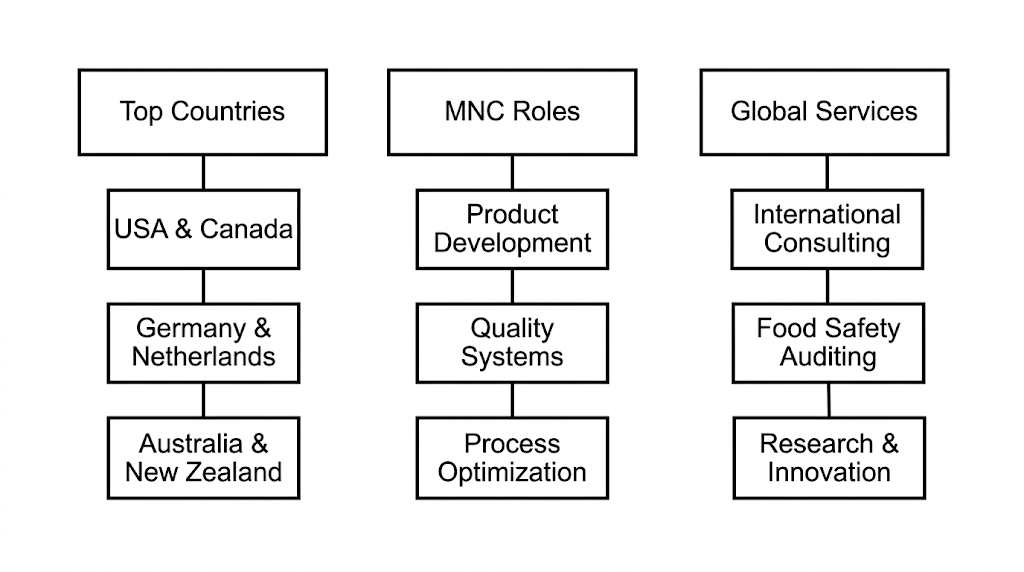
From what I have seen, Food Engineering offers strong global opportunities because food production is a universal industry that every country depends on. Countries such as the United States, Canada, Germany, Netherlands, Australia, and New Zealand have strong food processing industries and advanced research programs that actively seek trained professionals. I have noticed that multinational companies often recruit food engineers for roles in product development, quality systems, process optimization, and sustainability projects across international locations. Research opportunities in Europe and North America are particularly strong in clean-label products, alternative proteins, and smart manufacturing. International consulting and food safety auditing also provide global career paths. In my experience, a food engineer with strong technical knowledge and communication skills can build a career that extends far beyond a single country.
How can I become a top 1% expert in this domain?
From my experience, becoming a top 1% expert in Food Engineering requires going beyond academic qualifications and developing a deeper relationship with the field over time. The first step is mastering the fundamentals so thoroughly that processing problems become easier to understand intuitively. I have seen that the best experts are not only knowledgeable in food science but also comfortable with data analysis, automation, and sustainability because the field is becoming more interdisciplinary. Building hands-on industrial experience is equally important because real expertise comes from solving actual production problems, not just reading textbooks. Publishing research, attending technical conferences, and staying updated with new technologies can also make a significant difference. I believe one of the most important habits is learning to ask better questions about why a process behaves a certain way instead of simply accepting routine methods. In my view, the top professionals in this field become exceptional because they combine technical mastery, curiosity, practical experience, and a genuine commitment to improving how the world produces food.