
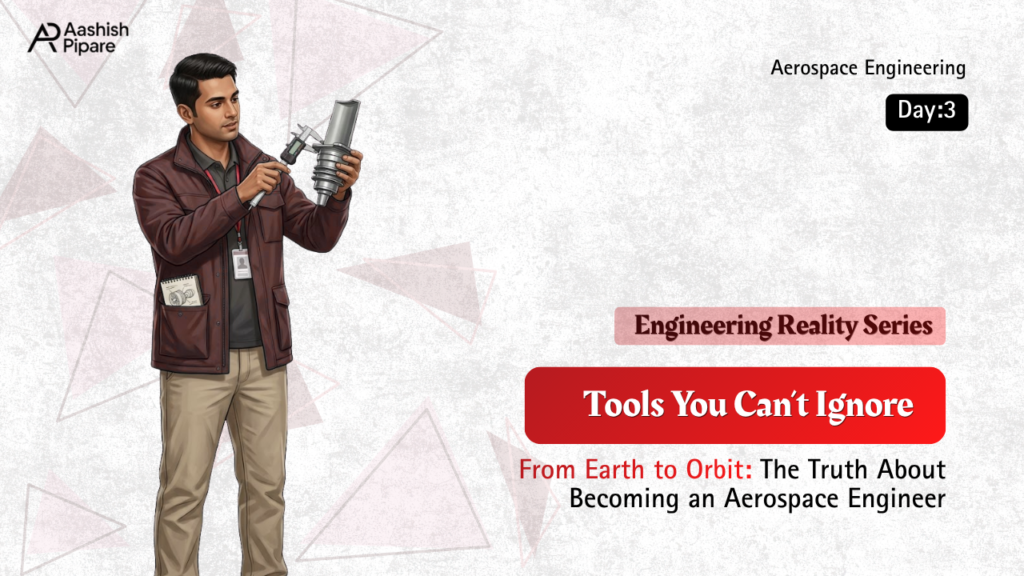
➤What software tools are essential?
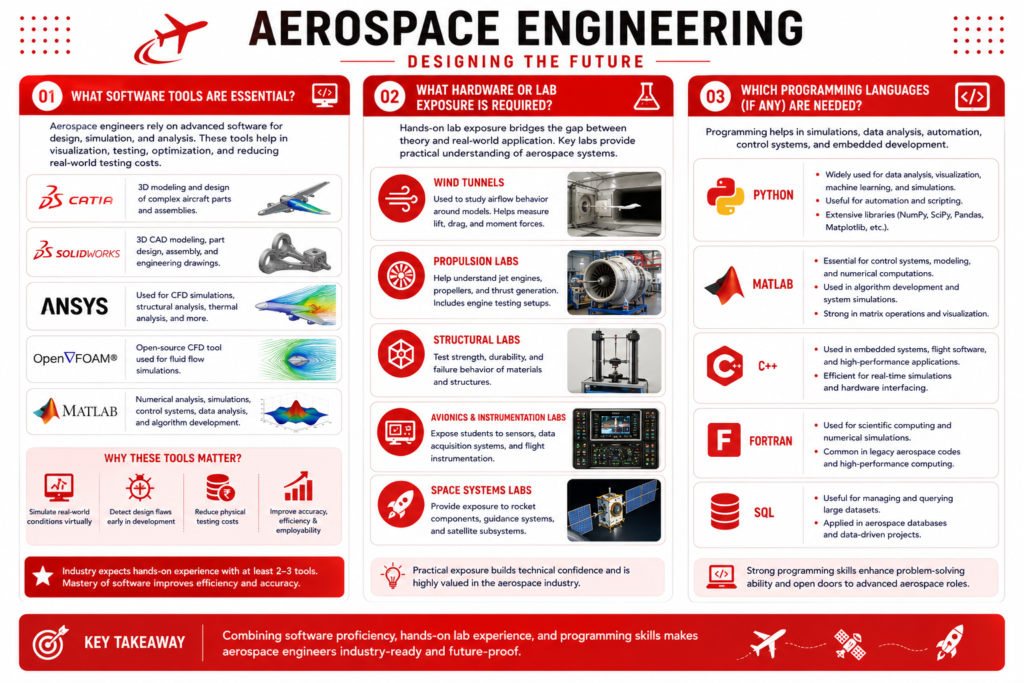
Aerospace engineers rely on advanced software for design, simulation, and analysis. Tools like CATIA and SolidWorks are used for 3D modeling of aircraft parts. ANSYS and OpenFOAM are used for Computational Fluid Dynamics (CFD) simulations. MATLAB is widely used for numerical analysis and control systems. These tools help reduce physical testing costs by simulating real conditions. For example, airflow over a wing can be tested virtually using ANSYS. Software allows engineers to detect design flaws early. Learning these tools increases employability. Industry expects hands-on experience with at least 2–3 tools. Mastery of software improves efficiency and accuracy.
➤What hardware or lab exposure is required?
Students need exposure to wind tunnels, propulsion labs, and material testing labs. Wind tunnels are used to study airflow behavior around models. Propulsion labs help understand engine working and thrust generation. Structural labs test strength and durability of materials. For example, testing a wing model in a wind tunnel shows lift and drag forces. Hands-on experience builds practical understanding. Labs help connect theory with real-world behavior. Exposure to instruments and sensors is important. It improves technical confidence. Practical knowledge is highly valued in industry.
➤Which programming languages (if any) are needed?
Programming plays a key role in modern aerospace engineering. Languages like Python, MATLAB, and C++ are commonly used. Python is useful for data analysis and simulations. MATLAB is widely used for control systems and modeling. C++ is used in embedded systems and avionics. For example, Python can simulate flight trajectories. Coding helps automate complex calculations. It also supports AI integration in aerospace. Learning programming increases versatility. Engineers with coding skills have better opportunities.
➤What are the must-have technical skills for freshers?
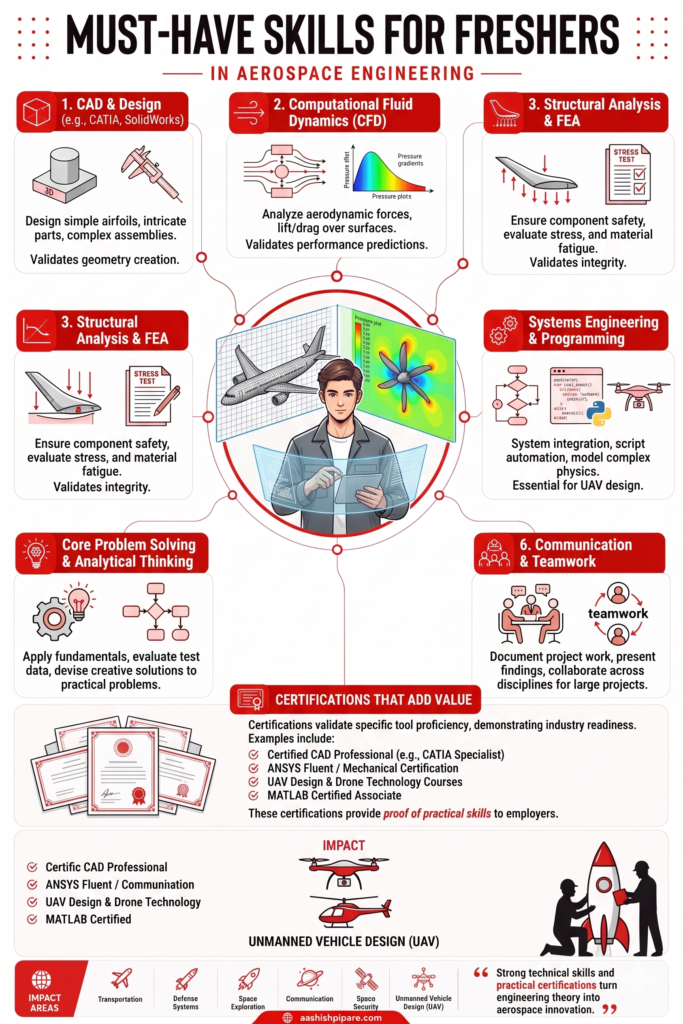
Freshers must have skills in CAD design, simulation, and basic programming. Understanding aerodynamics and structures is essential. Analytical thinking and problem-solving are critical. For example, being able to design a simple airfoil using CAD is a valuable skill. Communication skills are also important for teamwork. Knowledge of industry tools gives an advantage. Practical project experience is highly valued. Freshers should focus on applying concepts. Strong fundamentals improve learning ability. Continuous skill development is necessary.
➤What certifications add value in this domain?
Certifications in CAD, CFD, UAV design, and simulation tools add strong value. Courses in ANSYS, MATLAB, and drone technology are useful. These certifications validate your practical skills. For example, a CFD certification shows your ability to analyze airflow. Online platforms offer industry-relevant courses. Certifications improve your resume and job chances. They also help in internships. Choosing the right certification is important. Focus on skill-based learning rather than just certificates. Practical knowledge matters more than theory.
Conclusion
Tools and skills are the bridge between theory and industry, and mastering software, labs, and programming is essential to becoming a job-ready aerospace engineer.