
➤What are the current industry trends?
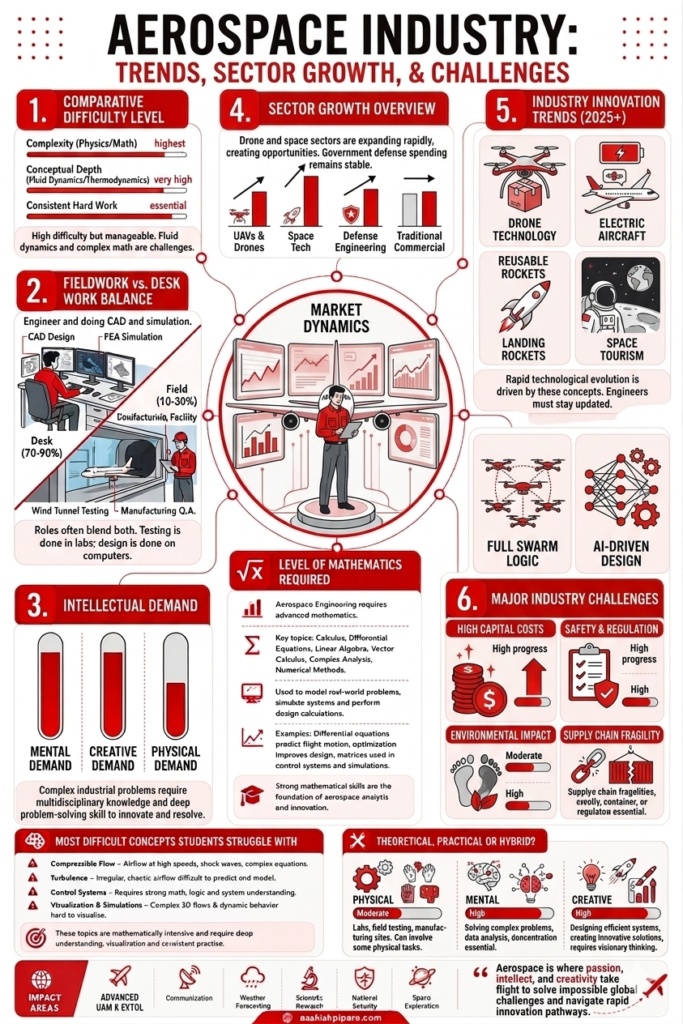
The aerospace industry is rapidly evolving with advancements in drones, electric and hybrid aircraft, reusable rockets, artificial intelligence (AI), autonomous flight systems, and sustainable aviation technologies. Space exploration and commercial space tourism are also creating new opportunities. For example, companies like SpaceX have transformed space travel with reusable rockets. Engineers must continuously update their skills to keep pace with these innovations and remain competitive in the industry.
➤Which sectors are growing or declining?
Growing sectors include drones (UAVs), defense, space technology, electric aircraft, and satellite services due to increasing demand and innovation. Traditional aviation and commercial aircraft manufacturing remain stable but grow at a slower pace. For example, the drone industry is expanding rapidly in agriculture, surveillance, and logistics, creating many new career opportunities for aerospace engineers.
➤What are the major challenges faced in this field?
Aerospace engineering faces several challenges, including high development and testing costs, strict safety regulations, complex system design, and the need for continuous innovation. Engineers must ensure that aircraft and spacecraft are safe, reliable, and efficient while meeting international standards. For example, aircraft testing and certification are expensive and time-consuming because every component must undergo rigorous evaluation. Overcoming these challenges requires strong technical skills, creativity, and effective problem-solving
➤Are there government initiatives supporting this branch?
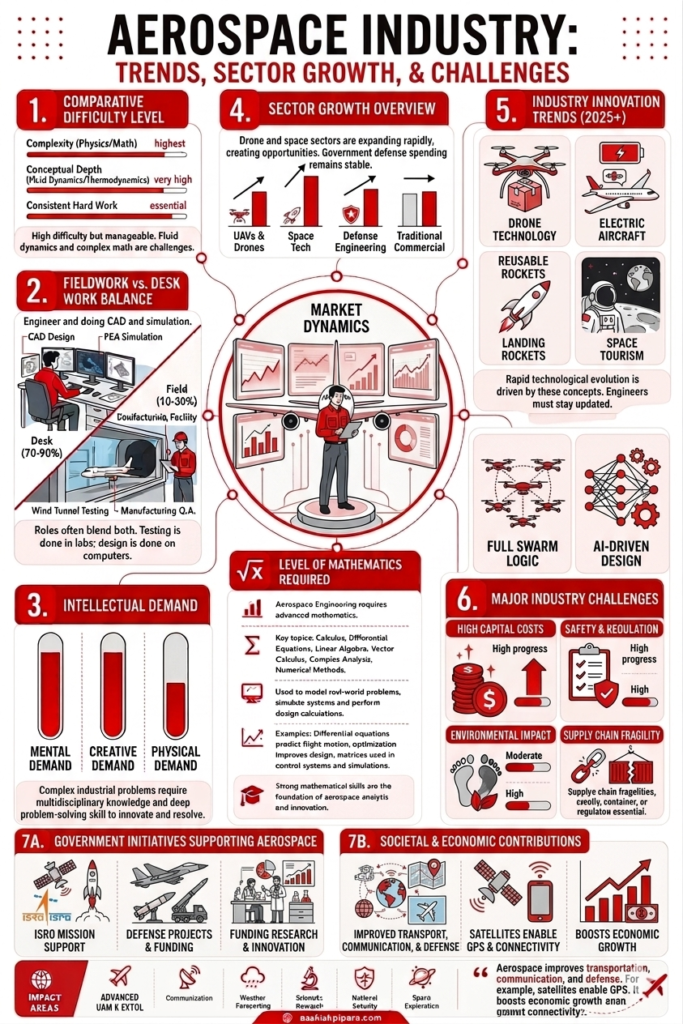
Yes, governments actively support aerospace engineering through space missions, defense programs, research funding, and skill development initiatives. In India, organizations like ISRO, DRDO, and HAL provide opportunities for research, innovation, and employment. For example, ISRO’s satellite launches and missions such as Chandrayaan and Gaganyaan promote technological advancement and create career opportunities. Government funding also supports aerospace research, startups, and infrastructure development.
➤How does this field contribute to society and economy?
Aerospace engineering improves transportation, communication, national defense, and space exploration. It supports technologies such as satellites, GPS, weather forecasting, and global internet connectivity. For example, satellites enable navigation, disaster monitoring, and communication services worldwide. The aerospace industry also creates high-skilled jobs, drives innovation, and contributes significantly to economic growth and global connectivity.
Conclusion
Aerospace is a high-impact industry with strong government support and growing global relevance.