

🔹 What are the current industry trends?
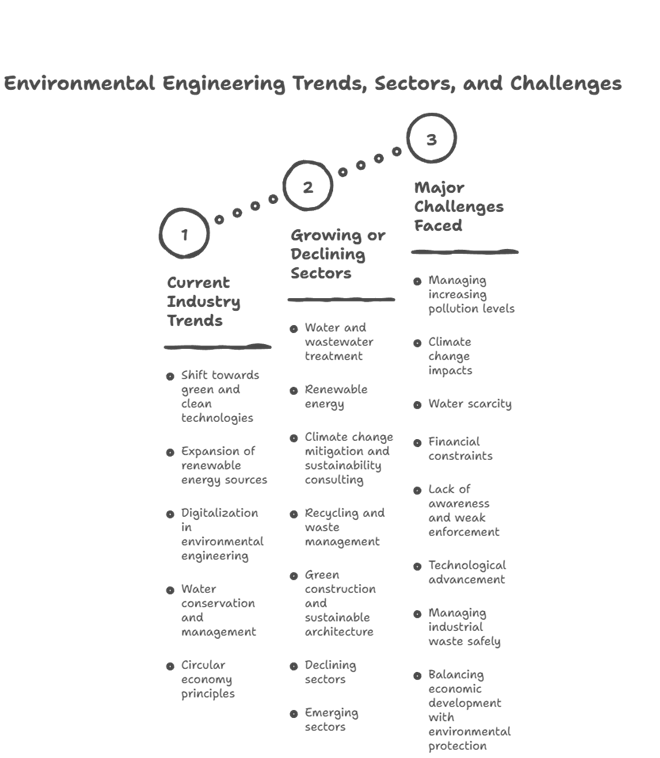
Environmental engineering is currently undergoing rapid transformation due to increasing global awareness about sustainability, climate change, and environmental protection. One of the most significant trends is the shift toward green and clean technologies that aim to reduce pollution and conserve natural resources. Industries are actively adopting eco-friendly production methods to minimize their environmental footprint. For instance, manufacturing companies are now using cleaner fuels and energy-efficient processes to reduce emissions.
Another major trend is the expansion of renewable energy sources such as solar, wind, and bioenergy. These alternatives are gradually replacing fossil fuels, which are a major cause of environmental pollution. For example, solar power plants are being installed in both urban and rural areas to provide clean electricity. Waste-to-energy technologies are also gaining popularity, where municipal solid waste is converted into usable energy, reducing landfill problems and generating power simultaneously.
Digitalization is also playing a key role in modern environmental engineering. Smart monitoring systems using IoT (Internet of Things) sensors are used to track air and water quality in real time. These systems help authorities take immediate action when pollution levels rise. Tools like GIS (Geographic Information Systems) and AI are being used for environmental planning and predictive analysis. For example, AI models can forecast air pollution levels in cities, allowing preventive measures to be taken.
Water conservation has become a major focus area due to increasing scarcity. Techniques like rainwater harvesting, wastewater recycling, and desalination are being widely implemented. Governments are also enforcing stricter environmental regulations, which require industries to upgrade their pollution control systems. Another emerging trend is the circular economy, where waste materials are reused and recycled instead of being discarded.
Overall, these trends indicate that environmental engineering is moving towards a more technology-driven, sustainable, and innovation-focused future. Engineers who stay updated with these trends will have better career opportunities and play a crucial role in shaping a sustainable world.
🔹 Which sectors are growing or declining?
The environmental engineering field is closely linked with global development patterns, and several sectors are experiencing significant growth due to increasing environmental concerns. One of the fastest-growing sectors is water and wastewater treatment. With rising population and urbanization, the demand for clean drinking water and efficient sewage systems is increasing rapidly. Cities are investing heavily in modern water treatment plants and recycling systems.
Renewable energy is another booming sector, including solar, wind, hydro, and bioenergy. Governments and private companies are investing in these technologies to reduce dependence on fossil fuels. For example, solar panel installations have increased significantly in both residential and industrial areas. Climate change mitigation and sustainability consulting are also emerging as high-demand sectors. Many organizations are hiring experts to reduce carbon emissions and achieve sustainability goals.
The recycling and waste management industry is evolving from traditional disposal methods to advanced recycling and resource recovery systems. For instance, plastic waste is now being converted into fuel or reused in construction materials. Green construction and sustainable architecture are also growing fields, where buildings are designed to minimize environmental impact.
On the other hand, sectors that rely heavily on polluting processes, such as outdated manufacturing industries, are gradually declining or transforming due to strict environmental regulations. Traditional waste disposal methods like open dumping are being replaced by scientific waste management systems. However, core environmental services such as water supply, sanitation, and pollution control will always remain essential.
In addition, emerging sectors like environmental data analytics, carbon trading, and climate risk assessment are gaining importance. Engineers who align their skills with these growing sectors will have better career prospects. Understanding which sectors are expanding or declining helps students make informed decisions about specialization and career paths.
🔹 What are the major challenges faced in this field?
Environmental engineering faces several critical challenges that make it both demanding and highly important. One of the biggest challenges is managing increasing levels of pollution caused by industrialization, urbanization, and population growth. Air pollution from vehicles and industries and water pollution from untreated waste are major global issues. For example, rivers in many regions are heavily polluted due to industrial discharge and sewage.
Climate change is another major challenge that affects environmental systems worldwide. Rising temperatures, changing rainfall patterns, and extreme weather events create complex problems for engineers. Water scarcity is becoming a serious concern, especially in developing countries, where demand exceeds supply. Engineers must develop sustainable solutions to manage limited water resources effectively.
Financial constraints also pose a challenge, as environmental projects often require high initial investment. Many developing regions struggle to implement advanced treatment systems due to lack of funds. In addition, lack of awareness among the public and industries can hinder environmental protection efforts. Weak enforcement of environmental laws in some areas further complicates the situation.
Technological advancement is both an opportunity and a challenge. Engineers must continuously update their knowledge to keep up with new tools, software, and treatment methods. Managing industrial waste safely and efficiently is another ongoing issue, as improper disposal can harm ecosystems and human health.
Balancing economic development with environmental protection is one of the most complex challenges. Industries aim to maximize profit, while environmental engineers focus on minimizing damage. This requires innovative thinking and collaboration between different stakeholders. Despite these challenges, the field offers opportunities to create meaningful solutions that improve both environment and society.
🔹 Are there government initiatives supporting this branch?
Yes, government support plays a vital role in the development of environmental engineering. In India, programs like the Swachh Bharat Mission aim to improve sanitation, waste management, and cleanliness across the country. This initiative has led to the construction of toilets, better waste collection systems, and increased public awareness about hygiene.
The National Green Tribunal is responsible for enforcing environmental laws and ensuring that industries follow regulations. It takes action against activities that harm the environment. Another major initiative is the Namami Gange Programme, which focuses on cleaning and restoring the Ganga River. This involves large-scale wastewater treatment and pollution control projects.
The government also promotes renewable energy through policies and subsidies, encouraging industries and individuals to adopt solar and wind energy. Environmental Impact Assessment (EIA) is mandatory for major infrastructure and industrial projects, ensuring that environmental effects are evaluated before approval.
Skill development programs and training initiatives help prepare engineers for modern environmental challenges. Government funding supports research in areas like pollution control, waste management, and sustainable technologies. International agreements and environmental policies also influence national initiatives.
These efforts create job opportunities and drive innovation in environmental engineering. Government support ensures that environmental protection remains a priority while promoting sustainable development.
🔹 How does this field contribute to society and economy?
Environmental engineering has a direct and significant impact on both society and the economy. One of its primary contributions is ensuring access to clean drinking water and proper sanitation, which reduces the spread of diseases such as cholera and typhoid. Wastewater treatment plants play a crucial role in maintaining public health by preventing contamination of natural water bodies.
Waste management systems help keep cities clean and organized, improving the quality of life for residents. For example, proper garbage collection and recycling systems reduce pollution and promote sustainable living. Industries rely on environmental engineers to meet legal standards and operate safely without harming the environment.
The field also supports sustainable use of natural resources, ensuring that future generations can benefit from them. Environmental protection helps maintain ecological balance and biodiversity, which are essential for life on Earth. Renewable energy projects contribute to economic growth by creating jobs and reducing dependence on imported fuels.
Environmental engineering also supports sectors like agriculture, construction, and energy by providing sustainable solutions. For example, efficient irrigation systems help farmers conserve water and increase productivity. The field creates employment opportunities in government, private companies, and research organizations.
Economic development is closely linked to environmental sustainability. Without proper environmental management, industries would face legal issues, resource shortages, and health crises. Therefore, environmental engineering is essential for long-term economic stability and growth. Its contribution is not only technical but also social and economic, making it one of the most impactful engineering fields.

Conclusion
Environmental engineering is no longer a niche field—it is at the center of global development and sustainability. With trends like renewable energy, smart monitoring systems, circular economy, and water conservation gaining momentum, the industry is becoming more technology-driven and impact-focused. Engineers today are not just solving pollution problems—they are shaping how cities, industries, and economies function sustainably.
Growing sectors such as water treatment, renewable energy, and sustainability consulting are creating strong career opportunities, while outdated and polluting industries are being forced to evolve. At the same time, challenges like climate change, water scarcity, and rising pollution levels make this field both demanding and highly important. These challenges require innovative thinking, interdisciplinary knowledge, and continuous skill development.
Government initiatives like the Swachh Bharat Mission and the Namami Gange Programme, along with regulatory bodies such as the National Green Tribunal, are actively supporting this domain. These efforts not only drive environmental protection but also create large-scale job opportunities and industry growth.
Most importantly, environmental engineering directly contributes to society by ensuring clean water, safe air, proper waste management, and sustainable resource use. It supports economic growth while protecting the environment—something no modern society can function without.
In summary, this field offers strong real-world relevance, long-term career stability, and the opportunity to make a meaningful impact on both society and the planet.
Step into a career that truly matters—build your skills, follow industry trends, and become an environmental engineer who drives real change. 🌱🌍
Call to Action
Take the next step to align yourself with industry needs
- Start following current trends like renewable energy, water treatment, and sustainability
- Learn one industry-relevant tool such as GIS or data analysis
- Work on a real-world problem like waste management or water conservation
- Stay updated with government initiatives and environmental policies
- Build practical knowledge along with theory
The industry is evolving, and opportunities will go to those who are prepared. Start early, stay consistent, and position yourself where the future is heading.