
Introduction
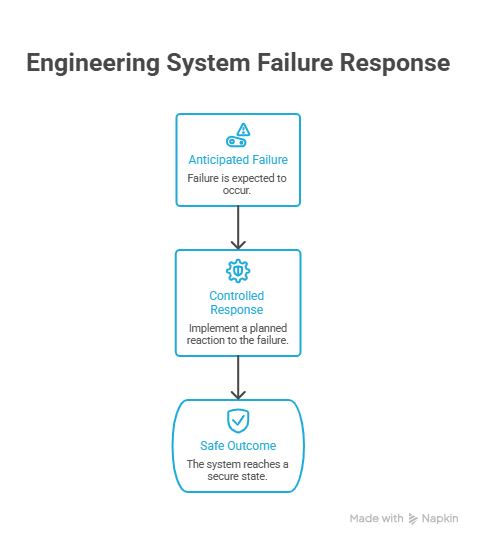
Every engineering system will eventually experience failure. The question is not whether failure will occur, but how the system behaves when it does. Good engineering design anticipates failure and ensures that when it happens, the consequences remain controlled and safe.
Failure Is Inevitable in Complex Systems
Engineering systems operate in dynamic environments where many factors influence performance. Materials wear down, components degrade, conditions change, and human errors occasionally occur.
Even the most carefully designed systems cannot guarantee perfect operation forever.
Because of this reality, engineers must approach design with an important mindset: failure is not an unexpected event — it is an inevitable possibility.
Ignoring this fact often leads to catastrophic outcomes. Systems that are designed only for normal conditions may behave unpredictably when something goes wrong.
Instead of assuming that systems will always function correctly, engineers design systems that remain safe even when something fails.
Designing the Failure Mode
A common misconception is that engineering design ends when a system performs correctly under ideal conditions. In reality, a complete design must also specify how the system behaves when something goes wrong.
This is known as the failure mode of the system.
For example, consider an elevator system. If power is suddenly lost, the elevator must not fall uncontrollably. Instead, braking systems automatically engage to stop the elevator safely.
Similarly, aircraft systems are designed with multiple redundant components so that if one system fails, another can take over.
In these examples, failure does not lead to chaos. Instead, the system transitions into a controlled and predictable state.
This is what it means to design the failure mode intentionally.
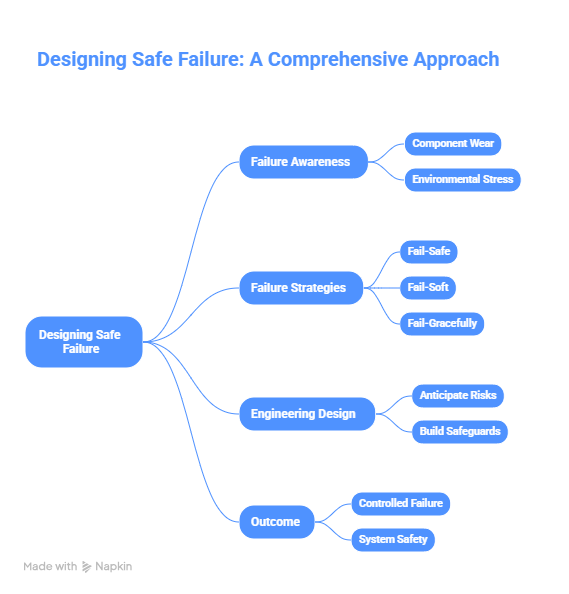
Types of Safe Failure
Engineers use several strategies to ensure systems fail safely.
Fail-Safe
A fail-safe system defaults to a safe condition when something goes wrong.
For example:
- railway signaling systems default to “stop” if communication fails
- electrical circuit breakers disconnect power during overload conditions
- industrial safety valves release pressure to prevent explosions
In these systems, failure automatically leads to the safest possible outcome.
Fail-Soft
Fail-soft systems continue operating with reduced capability instead of stopping entirely.
For example:
- aircraft may lose one engine but still maintain controlled flight
- computer systems may disable certain features while maintaining core functionality
- network systems may reroute traffic if one connection fails
Fail-soft designs prioritize continued operation while minimizing risk.
Fail-Gracefully
Fail-graceful systems degrade gradually rather than collapsing suddenly.
In these systems, performance declines in a controlled manner that allows users to respond.
For example:
- structural systems may show visible deformation before collapse
- software systems may slow down before shutting down
- battery systems may reduce power output as energy declines
This gradual degradation provides time for corrective action.
Why Catastrophic Failure Is a Design Failure
When systems fail suddenly and without warning, the consequences can be severe. Catastrophic failures often occur because failure modes were not fully considered during the design process.
For example:
- structural collapses caused by overlooked stress concentrations
- electrical fires caused by insufficient overload protection
- software crashes caused by unhandled error conditions
In many cases, the system functioned perfectly under normal conditions but lacked safeguards for abnormal ones.
This is why engineers must treat failure scenarios as part of the design itself.
Anticipating Failure Early
One of the most effective ways to design safe systems is to consider failure from the very beginning of the design process.
Engineers often ask questions such as:
- What is the most likely way this system could fail?
- What happens if a critical component stops working?
- What environmental conditions could stress the system?
- How will users respond when something goes wrong?
By exploring these possibilities early, engineers can incorporate safety features directly into the design rather than attempting to add them later.
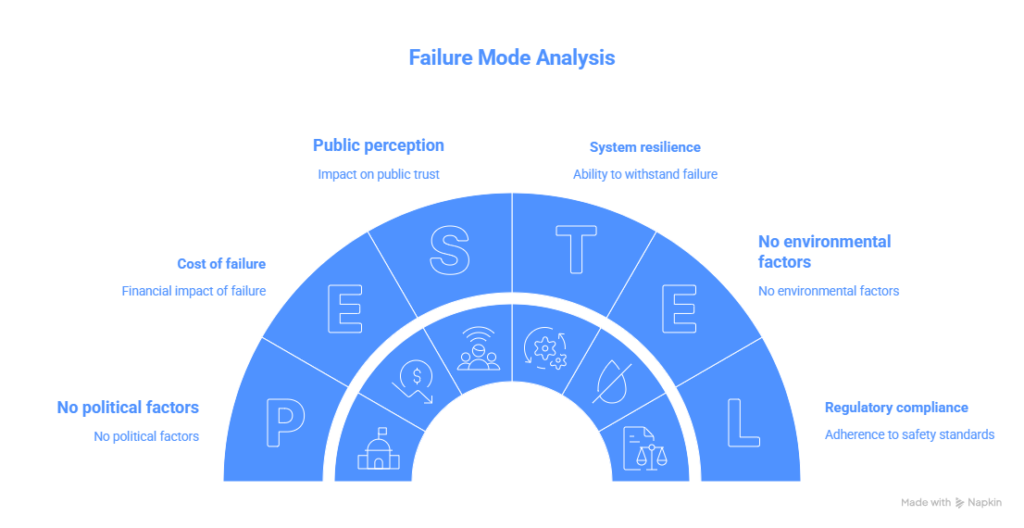
Visual Representation
Expanded concept:
Examples Across Engineering Fields
| Field | Safe Failure Strategy |
| Civil Engineering | Structures designed to show warning signs before collapse |
| Mechanical Engineering | Pressure relief valves in industrial systems |
| Electrical Engineering | Circuit breakers preventing overload damage |
| Aerospace Engineering | Redundant control systems in aircraft |
| Software Engineering | Error-handling mechanisms preventing crashes |
These examples illustrate how engineers design systems that remain safe even when parts of the system fail.
Key Takeaways
- Failure is unavoidable in complex engineering systems.
- Safe systems are designed to handle failure predictably.
- Engineers plan failure modes during the design stage.
- Strategies such as fail-safe, fail-soft, and fail-graceful reduce catastrophic outcomes.
Mind Map
Conclusion
Engineering is not only about making systems work under ideal conditions. It is also about ensuring that when systems encounter problems, they behave in predictable and safe ways.
A design that ignores failure modes is incomplete because real-world systems inevitably face unexpected conditions. By anticipating how systems might fail and building safety mechanisms into the design, engineers can prevent minor issues from becoming catastrophic events.
The best engineering designs do not attempt to eliminate failure entirely. Instead, they guide failure into controlled paths that protect people, equipment, and the surrounding environment.