
🔹 Why should I choose this branch over others?
You should choose Robotics Engineering if you have a genuine interest in technology, automation, and building intelligent machines that can interact with the real world. Unlike many other engineering branches that focus on a single domain, robotics combines multiple areas such as programming, electronics, and mechanical design. This makes it an exciting and dynamic field for students who enjoy working on practical systems and solving real-world problems. It is especially suitable for those who like creating things rather than just studying theory.
This branch is ideal for students who enjoy coding, working with electronics, and experimenting with machines. If you are curious about artificial intelligence, automation, and future technologies, robotics provides a direct pathway into these advanced areas. It allows you to not only understand how systems work but also to build and improve them. The hands-on nature of robotics makes learning more engaging and meaningful, as you can see your ideas come to life through working systems.
At a beginner level, robotics may appear exciting mainly because of its futuristic appeal and innovative projects. However, at an expert level, it becomes a powerful field where you can create impactful solutions that improve industries and everyday life. For example, if you enjoy building small gadgets or robots and want to turn that passion into a career, Robotics Engineering is a strong and rewarding choice.
Subpoints:
- Interest in technology and automation
- Enjoyment of coding and electronics
- Passion for building and experimenting
- Curiosity about AI and future technologies
- Preference for practical, hands-on learning
- Opportunity to create real-world impact
🔹 What are the biggest misconceptions about this field?
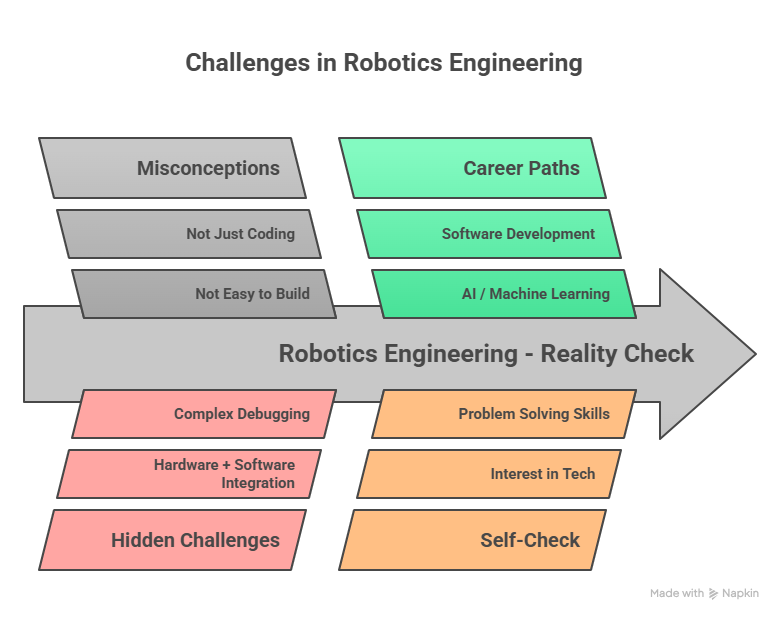
Many students enter Robotics Engineering with misconceptions that can lead to unrealistic expectations about the field. One of the most common misconceptions is that robotics is only about coding. While programming is an important part, robotics actually involves a combination of hardware, software, and artificial intelligence. Another misconception is that robots are easy to build, when in reality, developing a functional and reliable robot requires deep understanding and careful integration of multiple components.
Some students also believe that robotics is only about machines, without realizing the level of intelligence and system design involved. In reality, robotics is a highly complex field that requires problem-solving, system integration, and continuous testing. It involves not just creating machines, but designing systems that can operate efficiently in real-world conditions. This includes handling uncertainties, adapting to environments, and ensuring safety and reliability.
At a beginner level, these misconceptions may not be obvious, as initial projects are relatively simple and controlled. However, at an expert level, the true complexity of robotics becomes clear. For example, a robot that performs perfectly in theory may fail in real-world conditions due to sensor inaccuracies or environmental changes. Understanding these realities early helps in setting the right expectations and preparing for the challenges ahead.
Subpoints:
- Robotics is not just coding
- Robots are not easy to build
- Requires hardware + software + AI integration
- Involves complex system design
- Real-world conditions add challenges
- Importance of reliability and testing
🔹 What are the hidden challenges no one talks about?
Robotics Engineering comes with several hidden challenges that are often not discussed openly but play a significant role in real-world applications. One of the biggest challenges is integrating hardware and software smoothly. Even if individual components work perfectly, combining them into a single system can lead to unexpected issues such as communication delays, compatibility problems, or system failures. This makes integration one of the most difficult aspects of robotics.
Another major challenge is debugging complex systems. Unlike simple software programs, robotics systems involve both physical and digital components, making errors harder to identify and fix. A problem could arise from faulty code, hardware malfunction, or even environmental conditions. Additionally, the high cost of components and development can be a barrier, especially for students or small teams working on projects.
Continuous learning is also a hidden challenge, as robotics is a rapidly evolving field with new technologies emerging regularly. Engineers must constantly update their skills to stay relevant. At a beginner level, projects may seem simple and manageable. However, at an expert level, systems become highly complex and require precision and reliability. For example, a small coding mistake or hardware fault can stop an entire robot from functioning, highlighting the importance of attention to detail.
Subpoints:
- Hardware and software integration challenges
- Complex debugging processes
- High cost of components and development
- Rapid technological changes
- Need for continuous learning
- Sensitivity to small errors
🔹 If I fail in core roles, what are my backup career paths?
One of the major advantages of Robotics Engineering is its interdisciplinary nature, which provides multiple backup career paths. Even if you do not continue in core robotics roles, the skills you gain—such as programming, problem-solving, and system design—are highly transferable to other fields. This flexibility ensures that students have a wide range of career options to explore.
Some of the most common backup career paths include software development, where programming skills can be applied to build applications and systems. Artificial Intelligence and Machine Learning are also natural extensions of robotics, allowing students to work on data-driven and intelligent systems. Embedded systems is another option, focusing on hardware programming and real-time systems. Additionally, fields such as data analytics and automation engineering offer opportunities to apply robotics knowledge in different contexts.
At a beginner level, this flexibility provides a sense of security, as students are not limited to a single career path. At an expert level, it allows professionals to shift careers based on their interests and market demand. For example, a robotics student with strong skills in Python and AI can transition into data science or software engineering roles, ensuring long-term career stability.
Subpoints:
- Software development
- Artificial Intelligence / Machine Learning
- Embedded systems
- Data analytics
- Automation engineering
- Flexible career transitions
🔹 Is this branch aligned with my interest, aptitude, and long-term vision?
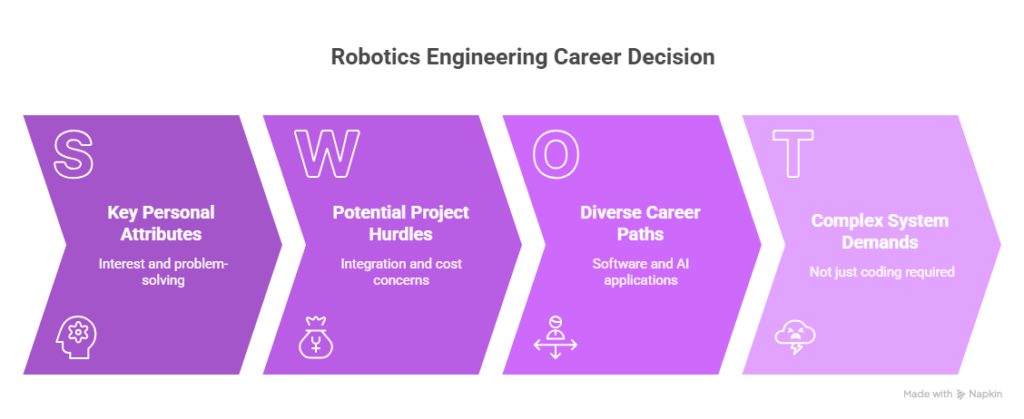
This is the most important question when choosing Robotics Engineering, as it determines whether the field is the right fit for you. You should choose this branch if you genuinely enjoy technology, innovation, and solving complex problems. Robotics requires a combination of technical skills and creativity, so having an interest in both coding and electronics is essential. It is also important to be comfortable with continuous learning, as the field evolves rapidly.
Students who are naturally curious about how machines work and enjoy building and experimenting are well-suited for robotics. The field often involves tackling challenging problems and finding innovative solutions, so a problem-solving mindset is crucial. If you are motivated by creating systems that have real-world impact, robotics can be a highly fulfilling career choice.
However, you may need to reconsider this branch if you prefer purely theoretical study, are not interested in programming or hardware, or tend to avoid complex problem-solving tasks. Robotics demands both effort and persistence, and success depends on your willingness to engage deeply with the subject. For example, if you enjoy understanding how machines function and aspire to build intelligent systems, Robotics Engineering is a strong fit for your long-term goals.
Subpoints:
- Interest in technology and innovation
- Comfort with coding and electronics
- Strong problem-solving ability
- Willingness for continuous learning
- Preference for practical over theoretical work
- Alignment with long-term career goals
🔹Conclusion
The reality check for Robotics Engineering highlights that while the field is exciting and full of opportunities, it also requires careful consideration and self-awareness. Choosing this branch should be based on genuine interest and passion for technology, rather than trends or external influence. Robotics offers a unique combination of creativity, technical skills, and real-world impact, making it an excellent choice for the right kind of student.
Understanding the misconceptions and hidden challenges of the field is essential for setting realistic expectations. Robotics is not an easy path—it requires effort, patience, and continuous learning. However, those who are willing to embrace these challenges can gain highly valuable skills and build a strong foundation for a successful career.
One of the greatest strengths of Robotics Engineering is its flexibility, as it opens doors to multiple career paths beyond core robotics roles. This ensures long-term career security and adaptability in a rapidly changing technological landscape. Whether you choose to specialize in robotics or transition into related fields, the skills you gain will remain highly relevant.
Ultimately, the decision to pursue Robotics Engineering should align with your interests, strengths, and long-term vision. If you are passionate about building intelligent systems, solving complex problems, and contributing to technological innovation, this field offers immense potential for growth and success.