
🔹 How difficult is this branch compared to others?
Robotics Engineering is generally considered a high-difficulty branch because it requires mastering and integrating multiple complex domains rather than focusing on a single area. Unlike traditional branches that specialize in one discipline, robotics combines mechanical systems, electronics, and programming into one unified field. This means students must not only understand each subject individually but also learn how to connect them into a working system. The challenge lies not just in learning concepts, but in applying them together effectively.
At a beginner level, the individual concepts—such as basic programming, simple circuits, or mechanical design—may seem manageable when studied separately. However, as students progress, the difficulty increases significantly when they are required to integrate these concepts into a single robotic system. Real-world robotics involves synchronizing hardware and software in real time, which introduces complexities such as delays, errors, and system failures that must be handled carefully.
For example, writing code for a robot is one task, and building its hardware is another. But ensuring that both work together seamlessly without errors in real-time operation is the real challenge. This integration aspect is what makes robotics more demanding compared to many other engineering fields, requiring both depth and breadth of knowledge.
Subpoints:
- Combines mechanical, electronics, and programming domains
- Requires system integration, not just individual knowledge
- Increasing complexity from beginner to advanced levels
- Real-time system challenges
- High learning curve due to multidisciplinary nature
🔹 What type of students excel in this field?
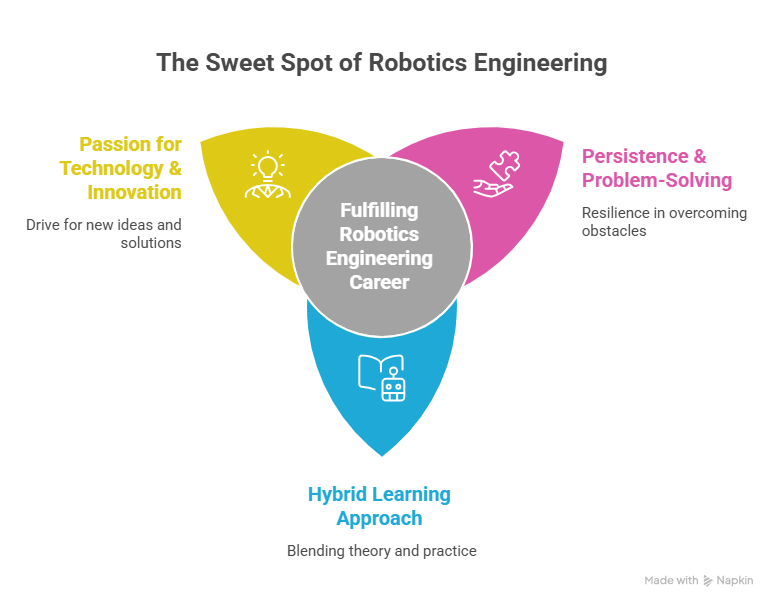
Students who excel in Robotics Engineering typically possess a strong interest in technology, innovation, and problem-solving. Since robotics involves building and improving systems, curiosity plays a major role in success. Students who enjoy understanding how machines work, experimenting with new ideas, and exploring advanced technologies are naturally drawn to this field. Logical and analytical thinking is also essential, as robotics often involves solving complex problems and optimizing system performance.
Another important trait is the willingness to experiment and learn from failure. Robotics projects rarely work perfectly on the first attempt, and debugging is a major part of the learning process. Students who are patient and persistent, and who view failures as learning opportunities, tend to perform better. The ability to stay motivated despite challenges is crucial for long-term success in this field.
At a beginner level, having an interest in robotics and technology is enough to start learning. However, at an expert level, continuous learning and persistence become essential, as the field is constantly evolving. For example, a student who enjoys building gadgets, coding, and solving technical problems will naturally excel in robotics, as these activities align closely with the skills required in the field.
Subpoints:
- Interest in technology and innovation
- Logical and analytical thinking
- Curiosity about machines and systems
- Willingness to experiment and learn from failure
- Patience and persistence
- Continuous learning mindset
🔹 Does it require fieldwork, desk work, or both?
Robotics Engineering involves a balanced combination of both desk work and lab (practical) work, making it a hybrid field in terms of working style. Desk work typically includes activities such as programming, simulation, system design, and algorithm development. Engineers spend time writing code, designing control systems, and testing models in virtual environments before implementing them physically.
On the other hand, lab work involves building robots, assembling hardware components, testing circuits, and integrating systems. This hands-on aspect is essential because real-world performance often differs from theoretical predictions. Engineers must physically test and refine their designs to ensure that robots function correctly in practical scenarios. This combination of theoretical and practical work makes robotics both challenging and engaging.
At a beginner level, students may spend more time in classrooms and on simulations to build foundational knowledge. However, at an expert level, most work involves hands-on experimentation in labs or real-world environments. For example, a robot may first be designed and programmed on a computer (desk work), and then built and tested in a lab (practical work). This dual approach ensures a complete understanding of robotic systems.
Subpoints:
- Desk work (coding, simulation, system design)
- Lab work (building, testing, hardware integration)
- Balance between theory and practice
- Increasing practical exposure at advanced levels
- Real-world testing and experimentation
🔹 What is the typical work-life balance?
The work-life balance in Robotics Engineering varies depending on the role, company, and type of projects involved. In startups and research environments, work hours may be longer due to tight deadlines, innovation-driven tasks, and the need for rapid development. These environments often require engineers to invest extra time in experimentation, testing, and debugging, especially during critical project phases.
In contrast, established companies and large organizations tend to offer a more structured and stable work environment, with defined working hours and better work-life balance. However, even in these settings, engineers may need to work additional hours during product development cycles, system deployments, or when facing technical challenges. The nature of robotics projects often requires attention to detail and thorough testing, which can extend working hours when necessary.
At a beginner level, work pressure is generally moderate, as roles involve learning, assisting, and contributing to smaller tasks. At an expert level, responsibilities increase significantly, especially when leading projects or managing teams. For example, during the development of a robotic product, engineers may need to work extra hours to complete testing and debugging before launch. Overall, work-life balance in robotics depends on the specific career path and work environment chosen.
Subpoints:
- Varies by company (startups vs established firms)
- Longer hours in research and development roles
- More stable balance in corporate environments
- Increased responsibility at advanced levels
- Deadline-driven work during product development
🔹 Does it involve high physical, mental, or creative demand?
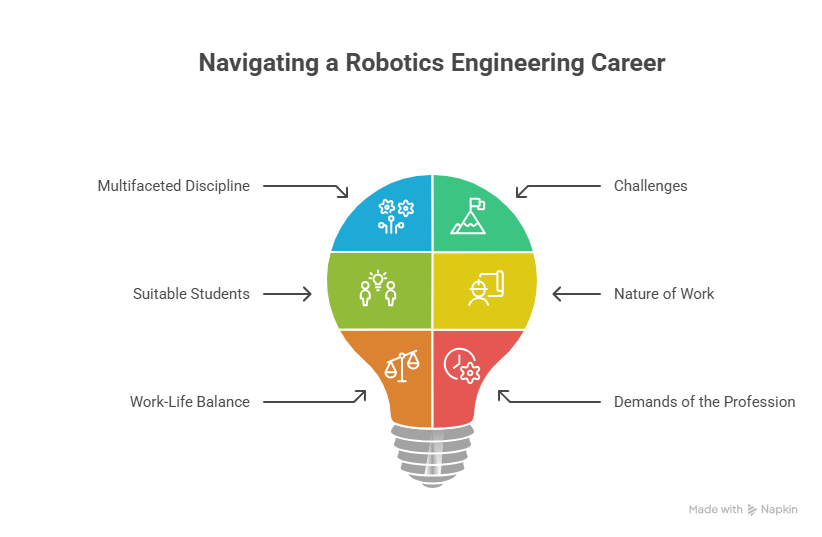
Robotics Engineering involves a combination of high mental demand, high creative demand, and moderate physical demand, making it a well-rounded and challenging field. The mental demand is significant because engineers must solve complex problems, analyze systems, and ensure that all components work together seamlessly. This requires strong analytical thinking, attention to detail, and the ability to handle complex technical challenges.
Creative demand is also high, as robotics often involves designing innovative solutions to real-world problems. Engineers must think creatively to develop new systems, improve existing technologies, and adapt to changing requirements. This creativity is especially important in areas such as AI, automation, and system design, where new ideas can lead to significant advancements.
The physical demand in robotics is moderate and mainly involves handling hardware components, assembling systems, and conducting tests. While it is not physically intensive compared to some other fields, it still requires hands-on work and interaction with equipment. At a beginner level, the focus is on understanding concepts and basic implementation, while at an expert level, engineers tackle complex challenges that require a combination of technical expertise, creativity, and problem-solving skills. For example, designing a robot that can navigate unknown environments requires logical reasoning, creative thinking, and advanced technical knowledge.
Subpoints:
- High mental demand (analysis, problem-solving)
- High creative demand (innovation, design thinking)
- Moderate physical demand (hardware handling, testing)
- Complex system integration challenges
- Real-world problem-solving requirements
🔹Conclusion
Robotics Engineering is a challenging yet highly rewarding field that demands a combination of technical knowledge, creativity, and persistence. Its difficulty arises from the need to master multiple domains and integrate them into a single functional system. While the learning curve may seem steep, the skills gained through this process are highly valuable and applicable across various industries.
The field is best suited for students who are curious, analytical, and willing to experiment and learn from failures. Success in robotics requires not only intelligence but also patience and a strong desire to continuously improve. As the field evolves, staying updated with new technologies and approaches becomes essential for long-term growth.
The hybrid nature of robotics, involving both desk work and practical work, makes it an engaging and dynamic career choice. It offers a balance between theoretical understanding and hands-on experience, allowing engineers to see their ideas come to life. This combination makes robotics both intellectually stimulating and practically fulfilling.
Overall, Robotics Engineering involves high mental and creative demands, but it also offers immense opportunities for innovation and impact. For those who are passionate about technology and problem-solving, it provides a platform to create advanced systems that can transform industries and improve everyday life.